

What Is a Client-Funded Card and Why Every Ad Agency Needs One
Executive Summary
-
The Liability Gap is the problem: it happens when agencies front client and spend, and wait for reimbursement.
-
A Client-Funded Card is the solution: a virtual charge card where client budgets pre-fund ad spend directly, so agencies never use their own working capital to run campaigns.
Traditional business cards are unfit for this model because they rely on agency credit, create co-mingled spend, and introduce limits and personal guarantees.
Agencies that choose Opal's Client-Funded Card model eliminate fronting costs, earn unlimited 1% cashback as a new revenue line, and gain clean per-client spend attribution without manual reconciliation.
If you run a digital marketing agency, you already know the drill: your client approves a $500,000 ad budget, you load the campaigns, the platforms charge your card, and then you wait 30, 45, sometimes 60 days to get reimbursed. For that entire window, you are floating half a million dollars of someone else's money on your own balance sheet.
That arrangement has a name. We call it the Liability Gap, and it is the single biggest financial structural problem facing ad agencies today.
A Client-Funded Card is the solution. Here is the exact definition:
A Client-Funded Card is a virtual charge card where ad spend is funded directly from the client's budget rather than the agency's working capital. The client pre-funds the card before campaigns go live, so the agency never uses its own cash to cover media costs. Spend flows through the card, attribution is tracked per client, and the agency earns unlimited 1% cashback on every dollar spent, all without taking on any financial liability.
This model eliminates the Liability Gap entirely. It is a fundamentally different financial architecture from a traditional business credit card, and it changes the economics of running an agency.
Opal pioneered the Client-Funded Card as a product category. This post explains what it is, how it works mechanically, why traditional cards cannot replicate it, and what agencies gain when they make the switch.
What Is the Liability Gap and Why Does It Hurt Agencies?
Most people outside the agency world do not realize how the money actually flows. Clients approve budgets. Agencies execute campaigns. But the timing between those two events creates a structural trap.
Here is how it works in practice: an agency manages $2 million per month in client ad spend. The platforms (Google, Meta, TikTok, and so on) charge the agency's card daily or weekly. The agency then invoices clients and waits for payment. During that gap, the agency is effectively acting as a bank, extending interest-free credit to its clients on a rolling basis.
The Liability Gap is not a cash flow inconvenience. It is a structural risk that compounds as agencies grow.
The Real Cost of Fronting Client Ad Spend
The financial toll shows up in several ways:
-
Tied-up working capital. Every dollar fronted for a client is a dollar the agency cannot use for hiring, tools, operations, or growth.
-
Credit ceiling risk. As client budgets grow, agencies hit the limits of their business cards. Campaigns get paused. Clients get frustrated. Growth stalls.
-
Personal liability exposure. Many agency owners sign personal guarantees on their business cards. A bad quarter, a client who pays late, or a single large charge-back can put personal assets at risk.
-
Bookkeeping chaos. When all client spend runs through one or two shared cards, reconciling which charges belong to which client becomes a weekly manual nightmare.
The agencies most affected are not small shops running $10,000 per month. They are mid-market and growth-stage agencies managing multiple clients with combined budgets in the hundreds of thousands or millions per month. For them, the Liability Gap is not theoretical. It is a constant operational constraint.
How Does a Client-Funded Card Actually Work?
The mechanics are straightforward, and that simplicity is part of what makes this model so powerful.
Step-by-Step: The Client-Funded Card Flow
-
Client pre-funds the card. Before campaigns launch, the client transfers their ad budget directly to fund the virtual card assigned to their account. The agency's own cash never enters the equation.
-
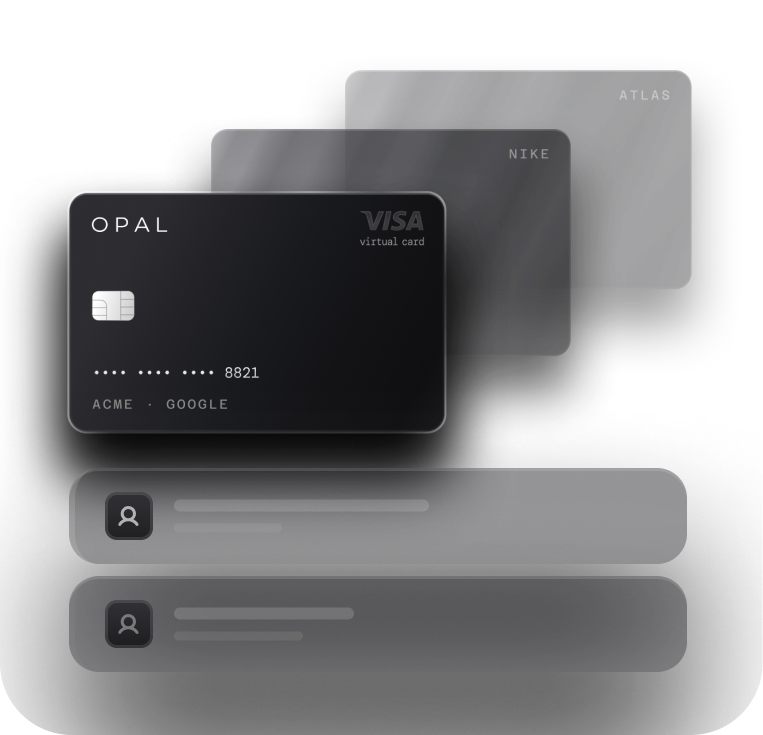
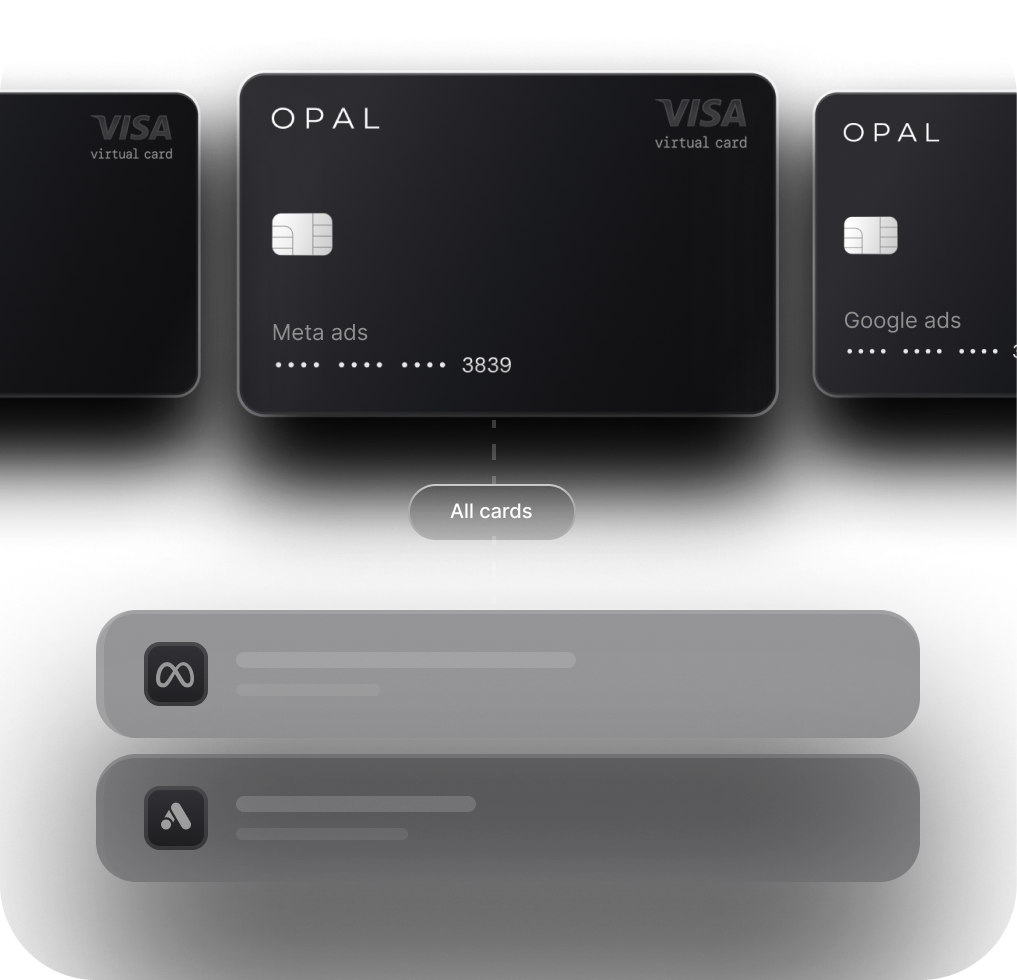
Agency issues a dedicated virtual card per client. Each client gets their own virtual card with a spend limit tied to their budget. There is no co-mingling of funds across clients.
-
Campaigns run against the client's balance. Ad platforms charge the virtual card as campaigns run. Spend is drawn from the client's pre-funded balance, not from agency credit.
-
Agency earns cashback on every dollar. Even though the money belongs to the client, the cashback accrues to the agency. On $1 million in monthly spend, that is $10,000 per month in new revenue.
-
Reporting and attribution are automatic. Because each client has their own card, spend data is already segmented. No manual reconciliation. No spreadsheet gymnastics.
What This Looks Like in Practice
Consider an agency managing five clients, each with $200,000 per month in ad budgets. Under the traditional model, the agency fronts $1 million per month, waits for reimbursement, and hopes its credit limit holds.
Under the Client-Funded Card model:
Traditional Card |
Client-Funded Card |
|
|---|---|---|
Working capital required |
$1,000,000/month |
$0 |
Per-client spend tracking |
Manual reconciliation |
Automatic (one card per client) |
Cashback earned |
Varies, often 0-1% |
Unlimited 1% ($10,000/month) |
Credit ceiling risk |
High |
None (client funds the card) |
Personal guarantee required |
Often yes |
No |
The agency is no longer a bank. It is a service provider. The financial risk stays with the client, where it belongs.
Why Traditional Business Cards Cannot Solve This Problem
General-purpose business cards were not designed for the agency model. They were built for companies spending their own money, not companies spending on behalf of others. That fundamental mismatch creates three problems that no rewards program or high credit limit can fix.
Problem 1: Personal Liability
Most traditional business cards require a personal guarantee from the business owner. That means your personal credit, and in some cases your personal assets, are on the line for your clients' ad spend. If a client is slow to pay, disputes an invoice, or goes out of business, the liability does not disappear. It lands on you.
Problem 2: Credit Ceiling Risk
Traditional cards assign a fixed credit limit based on the agency's financials, not the client's budget. As agencies scale, they routinely hit those limits. The result: campaigns get paused mid-flight, ad platform accounts get flagged, and clients lose confidence. Agencies have lost client relationships because their card declined during a critical campaign window.
Problem 3: Co-Mingled Spend
When five clients all run through the same card, the statement is a mess. Finance teams spend hours each week matching transactions to clients, campaigns, and platforms. That time is not billable. It is pure overhead that grows linearly with the number of clients.
The core issue is architectural, not cosmetic. A higher credit limit on a traditional card does not eliminate personal liability. More virtual cards on a shared account does not solve co-mingled attribution. The Client-Funded Card is not a feature upgrade. It is a different model entirely.
Who Is a Client-Funded Card For?
The Client-Funded Card model is purpose-built for a specific type of business. If you fit one of the following profiles, this is designed for you.
-
Digital marketing agencies managing paid media across multiple clients on platforms like Google Ads, Meta, TikTok, Snapchat, LinkedIn, and Amazon.
-
Performance marketing shops where ad spend volumes are large, margins are tight, and the cost of fronting client budgets directly eats into profitability.
-
Multi-client media buyers who operate across dozens of accounts simultaneously and need clean, client-level spend attribution without manual reconciliation.
-
Full-service agencies that handle both creative and media, where the finance team is already stretched and adding manual bookkeeping overhead is not an option.
If your agency fronts client ad spend and waits to be reimbursed, the Client-Funded Card model was built specifically to solve your problem.
The model is less relevant for in-house marketing teams spending their own company's budget, or for agencies that require clients to pay platforms directly. But for any agency in the middle, handling client money through their own accounts, this is the category that changes the business.
What Do Agencies Actually Gain?
Switching to a Client-Funded Card is not just about eliminating a problem. It creates concrete, measurable advantages that show up in the P&L.
Zero Working Capital Required for Ad Spend
This is the headline benefit. When client budgets pre-fund the card, agencies stop using their own cash to run campaigns. The capital that was previously locked up in client ad spend cycles becomes available for everything else: hiring, tooling, business development, and growth.
Cashback Becomes a New Revenue Line
Because the agency controls the card, it earns the cashback, even though the spend belongs to the client. With Opal, that is unlimited 1% on every dollar. For an agency running $500,000 per month in client spend, that is $5,000 per month. Over a year, that is $60,000 in incremental revenue that did not exist before.
Cashback on client ad spend is not a perk. It is a profit center.
Unlimited Free Virtual Cards with Per-Client Attribution
Each client gets their own dedicated virtual card. Spend is automatically attributed to the right client, the right campaign, and the right platform without any manual work. Finance teams stop spending 15+ hours per week on reconciliation and start spending that time on higher-value work.
No Personal Guarantee Required
Opal does not require a personal guarantee or a credit check. Credit limits scale with client budgets, not the agency owner's personal financial profile. Larger clients, larger budgets, zero personal exposure.
Credit Limits That Scale with Client Budgets
Traditional cards cap out. Opal offers limits up to $10 million, structured around the actual spend the agency manages rather than the agency's own balance sheet. Campaigns never get paused because a card hit its ceiling.
A Real-World Example: Before and After
Outsmart Labs is a full-service digital agency based in Miami, working with brands like Hilton and Bosch across e-commerce, hospitality, entertainment, and luxury fashion. Before switching to Opal, they were dealing with the same structural problems most agencies face at scale.
Before: The Liability Gap in Practice
Cash was constantly tied up in client campaigns, waiting for reimbursement
Reconciling ad spend across Meta, Google, and TikTok for dozens of clients consumed hours of manual work every week
Invoicing was slow, payments were delayed, and the ops team was buried in financial admin
The risk of scaling was real: more clients meant more capital at risk, not more profit
After: The Client-Funded Card Model
Once Outsmart Labs implemented Opal, the picture changed immediately:
-
Fronting costs eliminated. Client budgets pre-funded the cards. Agency working capital was no longer tied to campaign cycles.
-
15+ hours per week saved on financial admin, reconciliation, and invoicing.
-
Cashback became a new revenue stream worth tens of thousands of dollars per year, a number that grows as client budgets grow.
-
Clients gained transparency. With per-client virtual cards and real-time spend visibility, clients could see exactly where their budget was going.
"Opal has transformed how we manage finances. What used to take hours each week now happens automatically. The cashback alone has become a significant revenue stream, we're more profitable, more efficient, and our clients love the transparency." — Operations Lead, Outsmart Labs
The Outsmart Labs story is not unique. It is the standard outcome when agencies stop using general-purpose cards and move to a model built for how agency finances actually work.
How Opal Pioneered the Client-Funded Card
Opal was founded in Vancouver, BC and is now built out of San Francisco, with a single focus: build the financial infrastructure that ad agencies actually need. Not a general-purpose corporate card with a rewards program bolted on. Not a spend management tool designed for SaaS companies. A purpose-built vertical fintech platform for the specific way agencies manage client money.
The Client-Funded Card is the core product. Opal built the model from the ground up: card infrastructure, virtual card issuance, per-client attribution, and the cashback mechanics that make the economics work for agencies at every stage of growth.
Opal has been covered by Axios, Betakit, and the Financial Post, and is backed by investors who recognized that the ad agency financial stack was broken and needed a vertical solution, not a horizontal one.
The platform supports agencies from onboarding (2-3 minutes to get started) to scale (credit limits up to $10 million), with no annual fees, no credit checks, and no personal guarantees required.
The Bottom Line
A Client-Funded Card is not a better version of a business credit card. It is a different category of financial product, designed for a specific structural problem that general-purpose cards were never built to solve.
If your agency is fronting client ad spend, you are operating with unnecessary financial risk, unnecessary operational overhead, and unnecessary opportunity cost. The Liability Gap is not a cost of doing business. It is a solvable problem.
The Client-Funded Card model exists. Opal built it. And agencies that adopt it stop being banks for their clients and start being more profitable businesses.
Ready to see how it works for your agency? Visit opalspend.com to apply or schedule a demo. Onboarding takes minutes.
Frequently Asked Questions
What is a Client-Funded Card?
A Client-Funded Card is a virtual charge card where the client's own budget funds ad spend before campaigns go live. The agency never uses its own working capital to cover media costs. Spend flows through a dedicated card per client, attribution is tracked automatically, and the agency earns cashback on every dollar, without taking on any financial liability.
How is a Client-Funded Card different from a regular business credit card?
A traditional business card draws from the agency's own credit line, requires a personal guarantee, and co-mingles spend across all clients on a single statement. A Client-Funded Card is pre-funded by the client, carries no personal liability for the agency, and issues a separate virtual card per client so spend attribution is automatic.
What is the Liability Gap?
The Liability Gap is the period between when an agency pays for client ad spend and when the client reimburses them. It can stretch 30 to 60 days or longer. During that window, the agency is effectively extending interest-free credit to its clients, tying up working capital, and absorbing financial risk that belongs to the client.
Who is the Client-Funded Card designed for?
It is built for digital marketing agencies, performance marketing shops, and multi-client media buyers who manage paid media campaigns across platforms like Google Ads, Meta, TikTok, Snapchat, LinkedIn, and Amazon on behalf of multiple clients.
Does the agency earn cashback even though the client funds the card?
Yes. The cashback accrues to the agency, not the client. With Opal, that is unlimited 1% on every dollar of ad spend. For an agency managing $500,000 per month in client budgets, that translates to $5,000 per month in incremental revenue.
Does Opal require a personal guarantee or credit check?
No. Opal does not require a personal guarantee or a credit check. Credit limits scale with client budgets rather than the agency owner's personal financial profile, with limits available up to $10 million.
How quickly can an agency get started with Opal?
Onboarding takes 2 to 3 minutes. Virtual cards are typically issued within 24 to 48 hours after the initial form is submitted. There are no annual fees and no cancellation fees.