

Best Credit Cards for Google Ads With High Limits
TL;DR and Key Findings
TL;DR: If your Google Ads budget is serious, your payment infrastructure needs to be too, and most business cards were never built for this.
If you have ever watched a campaign pause mid-flight because a card hit its limit, you already know this is not a billing inconvenience. It is a performance event. Google Ads does not hold your position while you sort out the payment. It pauses your campaigns, and the recovery costs you more than the missed spend. Standard business cards were underwritten for general business expenses, not for the compounding, high-frequency charge patterns that media buying creates. General fintech cards get closer, but most still fall short when budgets scale past $100K per month. Purpose-built ad spend infrastructure is the only category that actually solves the problem.
Key findings:
Google Ads automatically pauses campaigns when a payment fails, and rebuilding optimization momentum can take days
Standard business cards use underwriting models that cap limits well below what scaling media budgets require
Google removed personal credit cards as a valid payment method in 2024, pushing advertisers toward business-grade solutions
Opal offers up to 2% cashback on ad spend, meaning $500K/month in spend can generate up to $120,000/year in cashback
Opal's Client-Funded Card model eliminates personal liability and credit ceiling risk by funding spend directly from client or business budgets
Virtual cards assignable per client or campaign let agencies separate spend cleanly, and automated reconciliation removes the manual finance work that scales badly
Why Google Ads Specifically Breaks Generic Business Cards
Most business credit cards were designed for a world where expenses are spread across vendors, categories, and billing cycles. A SaaS subscription here, a vendor invoice there, a few travel charges. The underwriting models that set your credit limit are built around that pattern.
Google Ads does not work that way.
A single account spending $100K per month hits Google's billing threshold multiple times per week. Google charges when you hit that threshold, not on a monthly cycle. A $100K monthly budget can generate 10 to 20 individual charges depending on your settings. That charge frequency, combined with the volume, is exactly what generic business card underwriting is not designed to handle.
The result: limits that feel reasonable for general business use become a hard ceiling for media buying almost immediately.
There is a second problem that does not get discussed enough. In 2024, Google began removing card payments as a valid option for high-spending Google Ads accounts, as reported by Search Engine Land. This was not a minor policy update. It pushed every advertiser who had been using a personal card toward business-grade payment solutions. Many used personal cards specifically to get around business card limits. If you have not updated your payment infrastructure since then, you are either already on a business card that may not be built for this, or you are one failed charge away from a campaign pause.
The irony is that the advertisers most at risk are often the ones scaling fastest. A campaign that is working gets more budget. More budget means more charges. More charges means a higher chance of hitting a limit at exactly the wrong moment.
What High Limits Actually Mean for Campaign Performance
When most people think about credit limits and Google Ads, they think about cash flow. That is the wrong frame. The real issue is algorithmic continuity.
Google's Smart Bidding and Performance Max campaigns learn from conversion data. They adjust bids in real time based on signals: time of day, device, audience segment, historical performance. This optimization is continuous and compounding. Every day a campaign runs cleanly, the algorithm gets smarter.
When a payment fails and a campaign pauses, that continuity breaks.
What a paused campaign actually costs you
It is not just the spend you missed while the campaign was down. The algorithm loses its momentum. Quality Score signals decay. Remarketing audiences go cold. If you are running competitive keywords, competitors absorb the impression share you vacated, and winning it back requires time and often higher bids.
Advertisers who have been through this describe it as losing a week of optimization for every day the campaign was paused. That is not an exaggeration. Rebuilding the conversion data the algorithm needs takes time that cannot be bought back.
The practical implication: a payment failure on a $200K per month account is not a $6,700 problem. It is a 10 to 14 day performance recovery problem that affects every campaign in the account.
A high limit is not about having more spending room. It is about guaranteeing that your campaigns never stop. The limit only matters when you hit it. Purpose-built infrastructure is built so you never do.
What to Look for Beyond the Limit
The limit is the headline, but it is not the whole story. Once you get past the ceiling problem, the next question is whether the card actually works for how agencies and media buyers operate. Most do not.
Here is what actually matters when you are running $50K or more per month in Google Ads:
-
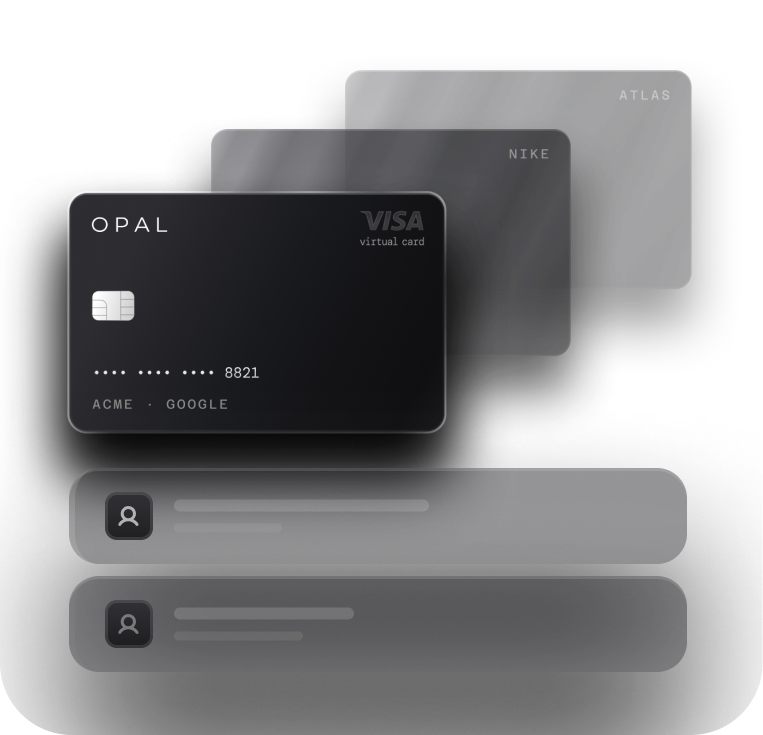
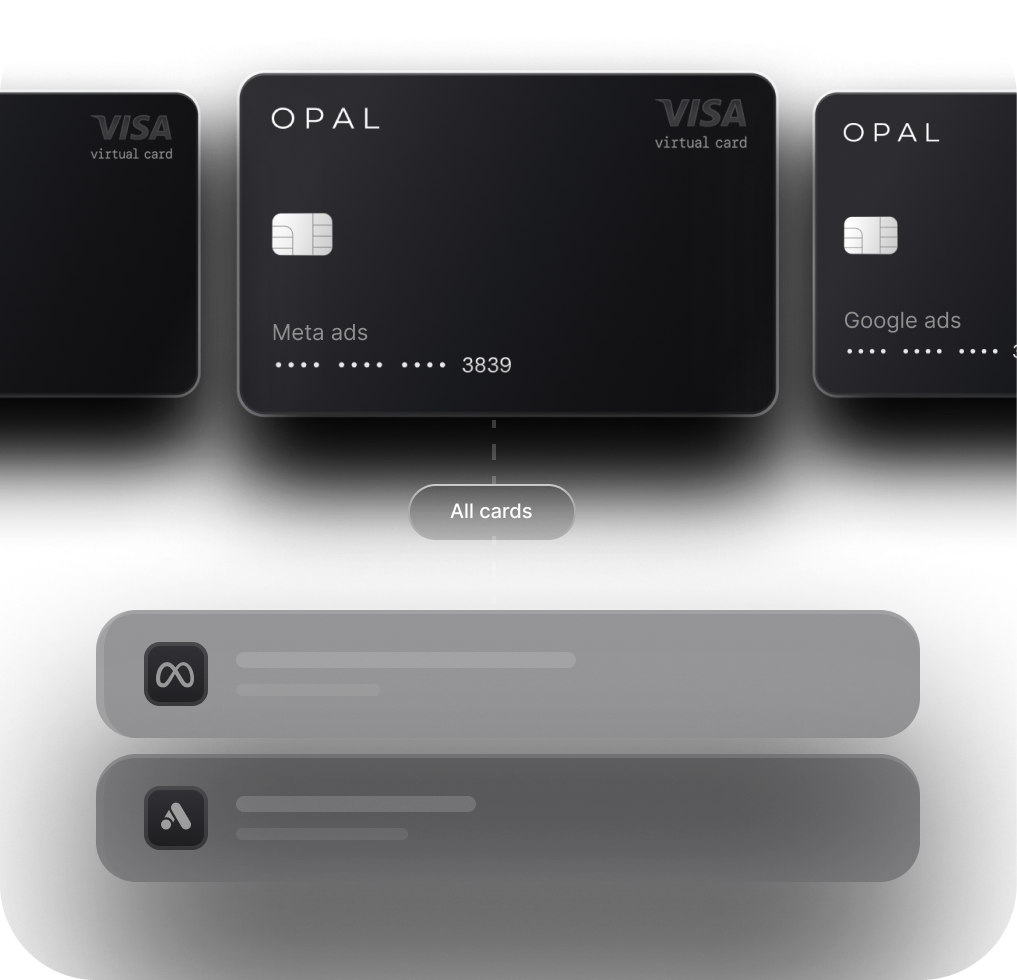
Virtual cards per client or campaign. Agencies managing multiple clients on a single card is a reconciliation nightmare. Virtual cards that can be assigned per client, per campaign, or per platform give you clean spend separation without juggling physical cards or shared credentials.
-
Reconciliation that does not require a spreadsheet. At scale, manual reconciliation is a full-time job. The right infrastructure syncs directly with ad platforms, so your finance team is not manually matching charges to campaigns at the end of every month.
-
No personal guarantee. Standard business cards often require a personal guarantee, which means the business owner is personally liable if the account goes delinquent. At $500K per month in ad spend, that is not a risk that should sit on one person's personal credit profile.
-
Cashback that scales with your spend. A capped rewards program is almost useless at high spend levels. If the cashback ceiling is $1,000 per month, it is irrelevant to an account spending $200K. Uncapped cashback is the only structure that actually rewards scale.
-
Ad platform compatibility. Not every card works seamlessly as a Google Ads payment method. Fintech cards occasionally trigger fraud flags or platform-side payment failures that have nothing to do with your limit. Compatibility matters.
The card that checks all of these boxes is a different product category than a standard business card. It is infrastructure.
How the Best Options Compare
There are three meaningful categories of payment solutions for high-volume Google Ads spend. Here is how they stack up across the dimensions that actually matter at scale.
|
Standard Business Card |
General Fintech Card (Ramp/Brex style) |
Opal |
|
|---|---|---|---|
|
Card type |
Revolving credit card |
Varies by provider |
Pay-in-full charge card |
|
Typical credit limit |
$10K to $50K |
$50K to $500K (spend-based) |
Up to $10M (Client-Funded model) |
|
Cashback structure |
1 to 2% with caps or category restrictions |
1.5% flat or category-based, often capped |
Up to 2% on eligible ad spend |
|
Virtual card support |
Limited or none |
Yes, but not ad-platform optimized |
Yes, unlimited, assignable per client or campaign |
|
Ad platform compatibility |
Variable; fraud flags common at high volume |
Moderate; occasional platform-side declines |
Built for ad platforms; Google, Meta, and others |
|
Reconciliation automation |
None; manual matching required |
Basic exports; limited platform sync |
Direct ad platform sync; automated reconciliation |
|
Personal guarantee required |
Usually yes |
Typically no |
No; Client-Funded model removes personal liability |
|
Best fit spend level |
Under $25K/month |
$25K to $150K/month |
$50K to $10M+/month |
The pattern is clear. Standard business cards are built for general business use and break down quickly as media budgets scale. General fintech cards improve on limits and virtual card support but were not designed specifically for the charge frequency and platform compatibility requirements of large ad accounts. Opal was built for this specific use case from the ground up, which is why the feature set looks different at every row of that table.
The cashback math alone is worth noting. A business spending $500K per month in Google Ads can earn up to $120,000 per year in cashback at Opal's rate of up to 2%. There is no category restriction. Standard cards with capped rewards programs would return a fraction of that at the same spend level.
Why Purpose-Built Ad Spend Cards Win at Scale
There is a version of this conversation that treats payment infrastructure as a finance decision. It is not. It is a performance decision.
Every agency or brand running serious Google Ads spend eventually hits the same realization: the card is not a utility. It is part of the stack. And like every other part of the stack, if it is not built for the job, it becomes the bottleneck.
Opal is a charge card, not a credit card. The full statement balance is paid each month, so there is no revolving balance and no interest. It is covered here because it does the same job as a credit card for funding Google Ads budgets, with a limit sized on managed ad spend rather than a credit file.
The Client-Funded Card model changes the equation
Opal's Client-Funded Card model is worth understanding specifically because it reframes how the limit works. Instead of borrowing against a credit line and hoping the limit is high enough, spend is funded directly from client or business budgets. The practical result is that the ceiling is not a fixed number determined by a bank's underwriting model. It scales with your actual spend.
This also eliminates personal liability. A standard business card with a personal guarantee means the business owner is on the hook personally if the account cannot pay. At $500K per month in ad spend, that is a meaningful risk. The Client-Funded model removes it entirely.
Operational scale matters as much as financial scale
Agencies managing 10 or 20 clients on a single payment method face a problem that has nothing to do with limits. Spend attribution, client billing, and reconciliation become unmanageable at scale without the right infrastructure. Virtual cards assignable per client or campaign solve this cleanly. Each client's spend lives on its own card. Reconciliation is automated. The finance team is not building pivot tables at the end of every month to figure out which charges belong to which client.
This is the part of the conversation that generic card comparisons miss entirely. The limit is the entry requirement. The operational features are what make the infrastructure actually work.
FAQ
What is the best credit card for Google Ads with high limits?
For advertisers spending $50K or more per month in Google Ads, the best option is a purpose-built ad spend card rather than a traditional business credit card. Standard business cards use underwriting models designed for general business expenses and typically cap limits well below what high-volume media buying requires. Cards like Opal, which offer limits up to $10M through a Client-Funded model, are designed specifically for the charge frequency and volume that large Google Ads accounts generate. The right answer depends on your spend level, but at serious scale, you need infrastructure built for media buying, not a general business card with a high limit.
Is Opal a credit card?
No. Opal is a pay-in-full charge card built for ad spend. The full statement balance is debited each month, so there is no revolving balance and no interest. It is covered in this guide because it does the same job as a credit card for funding Google Ads budgets, with limits sized on managed ad spend rather than a credit file.
Why do Google Ads campaigns get paused for payment issues?
Google Ads automatically pauses campaigns when a payment method fails or a billing threshold cannot be charged. This happens when a card hits its credit limit, when a charge is declined due to fraud flags, or when the billing threshold is reached and the payment method cannot cover it. The pause is immediate, and Google does not hold your campaign position or Quality Score signals while the issue is resolved. Rebuilding algorithmic momentum after a pause can take days, making payment failures a performance problem, not just a billing inconvenience.
How do agencies fund large Google Ads budgets without hitting limits?
Agencies running large Google Ads budgets typically solve the limit problem in one of three ways: requesting a credit limit increase on their existing card (which is slow and often insufficient), spreading spend across multiple cards (which creates reconciliation complexity), or switching to a purpose-built ad spend solution with limits that scale with actual media buying volume. The most effective approach is the third option. Solutions like Opal's Client-Funded Card model fund spend directly from client or business budgets, removing the credit ceiling entirely and eliminating the personal liability that comes with standard business card guarantees.
What is uncapped cashback and why does it matter for Google Ads spend?
Uncapped cashback means there is no monthly or annual ceiling on how much cashback you can earn. Most standard business cards offer cashback with category restrictions, spend caps, or both, which makes them effectively useless for high-volume ad spend. At $200K per month in Google Ads, a card with a $1,000 monthly cashback cap returns less than 0.5% in practice. Opal's cashback of up to 2% on ad spend means the reward scales directly with your budget. A business spending $500K per month can earn up to $120,000 per year in cashback, which is a meaningful return that compounds as budgets grow.
How does Opal compare to standard business cards for Google Ads?
Standard business cards were not designed for the charge frequency or volume that high-budget Google Ads accounts generate. They use conservative underwriting models that cap limits well below what scaling campaigns require, often require a personal guarantee, and offer no reconciliation automation or ad platform integration. Opal was built specifically for media buyers and agencies, offering limits up to $10M through a Client-Funded model, unlimited virtual cards assignable per client or campaign, automated reconciliation that syncs with ad platforms, and up to 2% cashback on eligible ad spend. The difference is not incremental. It is a different product category designed for a different use case.
If your Google Ads budgets are at the level where payment infrastructure is a performance variable, the decision about which card to use is not a minor finance call. It is a strategic one. Businesses running serious ad spend need a solution that grows with them, handles the charge frequency that high-volume campaigns generate, and never becomes the reason a campaign goes dark. Visit opalspend.com to see how Opal is built for exactly that scale, and how the Client-Funded model, uncapped cashback, and automated reconciliation work together to remove payment infrastructure as a bottleneck entirely.