

Upgrade your ad spend from Mercury to Opal
Opal is built for agencies running client ad spend. Mercury is built for business banking and general company expenses.




.svg)

.avif)
.avif)
.avif)


Opal is purpose-built for agencies managing client ad spend across Google, Meta, TikTok, and other ad platforms. Mercury IO is a strong banking product built for startups and general business expenses.
The difference comes down to structure. Mercury IO spend capacity is tied to balances held with Mercury, which can work well for general expenses. Opal’s model is different: agencies can access credit limits up to $10M, based on managed spend, cash flow, and underwriting, without tying up their own deposits. No personal guarantee or hard credit check required. Apply online in minutes.
On cashback, Opal offers up to 2% uncapped on ad spend. Mercury IO may offer 1.5%, but that cashback is earned on spend backed by balances held in your Mercury account. At $200K in monthly managed spend, Opal’s up to $4,000 in cashback comes without deploying your own capital. Mercury’s $3,000 assumes you are carrying the spend through your Mercury balance each billing cycle.
.avif)
.avif)
Mercury product terms verified September 2026 and subject to change. Review Mercury's current IO card terms before making a decision. Mercury and IO are marks of their respective owners. Opal is not affiliated with or endorsed by Mercury. Opal credit availability, limits and cashback rates are subject to underwriting, product availability and applicable terms.
Your credit limit should not depend on your own cash balance.
Mercury IO limits are tied to balances held with Mercury. If you are managing $300K per month in client spend but holding $50K in your Mercury account, your spend capacity may be constrained by the balance available in that account. Win a new client with an $80K monthly budget and you may need to increase your own deposits just to support their campaigns.
That is a real constraint for growing agencies. Your ability to take on new clients becomes tied to your own liquidity.
Opal works differently. Opal extends up to $10M in credit to your agency based on your managed spend volume, not your cash on hand. No deposit required, no personal guarantee, no credit check. Outsmart Labs used this to support multiple high-volume clients simultaneously without tying up their own capital.
The capacity to grow should come from your book of business. Not your bank balance.
Up to 2% cashback. Without tying up your own capital.
With Mercury IO, cashback is earned on spend backed by balances held in your Mercury account. For agencies fronting client ad spend, that can mean carrying the float until clients reimburse you.
With Opal, you spend against a credit line instead of your own cash. Eligible agencies can earn up to 2% cashback on ad spend while preserving working capital and keeping client campaigns running.
Cashback is only part of the equation. For agencies managing client media budgets, preserving working capital can be just as valuable as the reward itself. With Opal, eligible agencies can earn up to 2% cashback while avoiding the need to fund client ad spend with their own cash.
Outsmart Labs recovered 15 hours per week in reconciliation time, reduced the need to front client spend, and added a recurring cashback revenue stream on ad spend they were already running.
Shared cards were not built for multi-client ad spend.
Mercury IO works well for team spend management: employee cards, merchant controls, and per-card limits. That structure can support a startup’s internal expenses, but it is not optimized for one card per client, per platform.
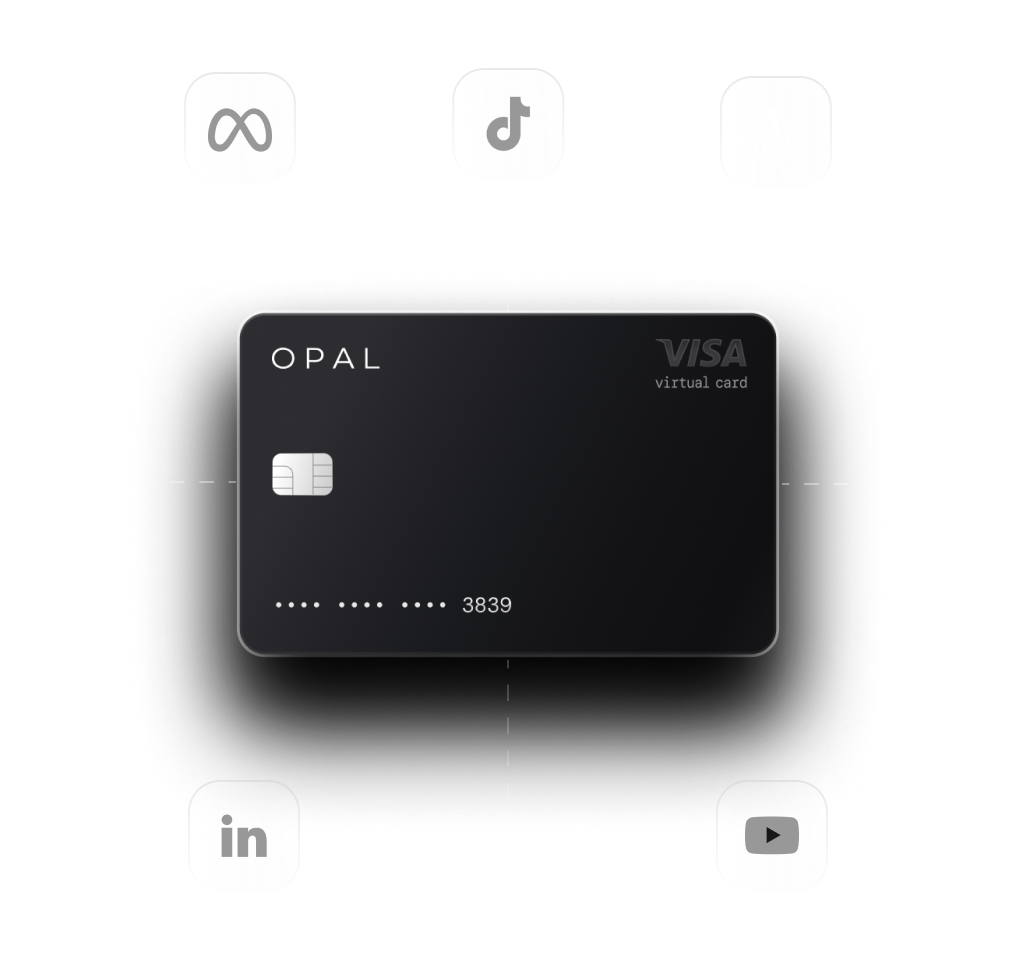
Agencies using general-purpose cards for ad spend often end up with one or two cards running multiple clients and platforms: Google, Meta, TikTok, all on the same statement, with limited client attribution and more manual reconciliation at month end.
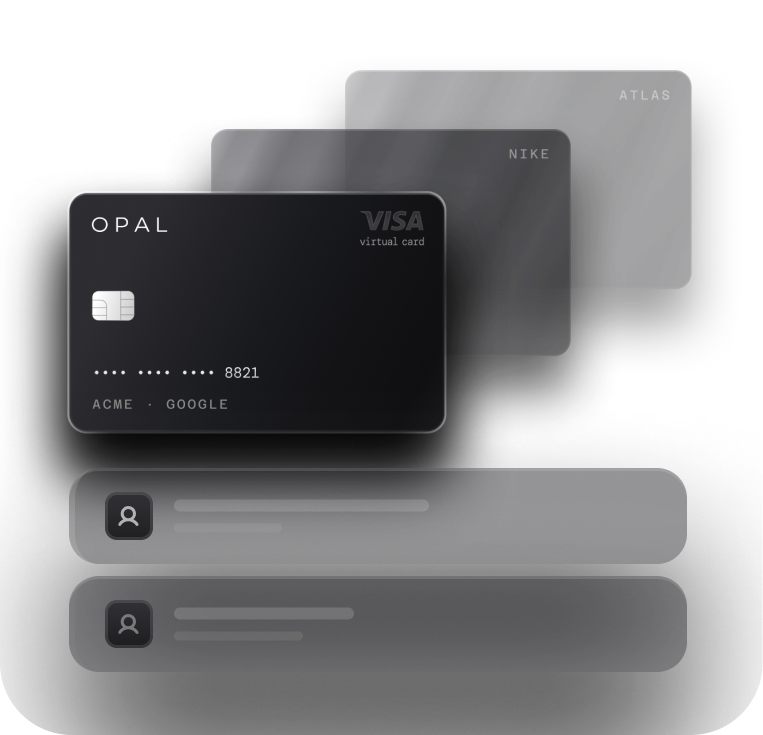
Opal issues dedicated virtual cards by client and/or by platform. Dedicated cards help isolate spend by client and platform, reducing the risk that an issue on one card affects unrelated campaigns. The structure mirrors how your agency actually operates. Outsmart Labs used this setup across multiple clients simultaneously with cleaner separation across client billing.
Generic accounting sync is not agency reconciliation.
Mercury connects to QuickBooks, Xero, and NetSuite. That is useful for general bookkeeping, but it is not purpose-built to map transactions to client accounts or campaign structures. That work can still fall on your team.
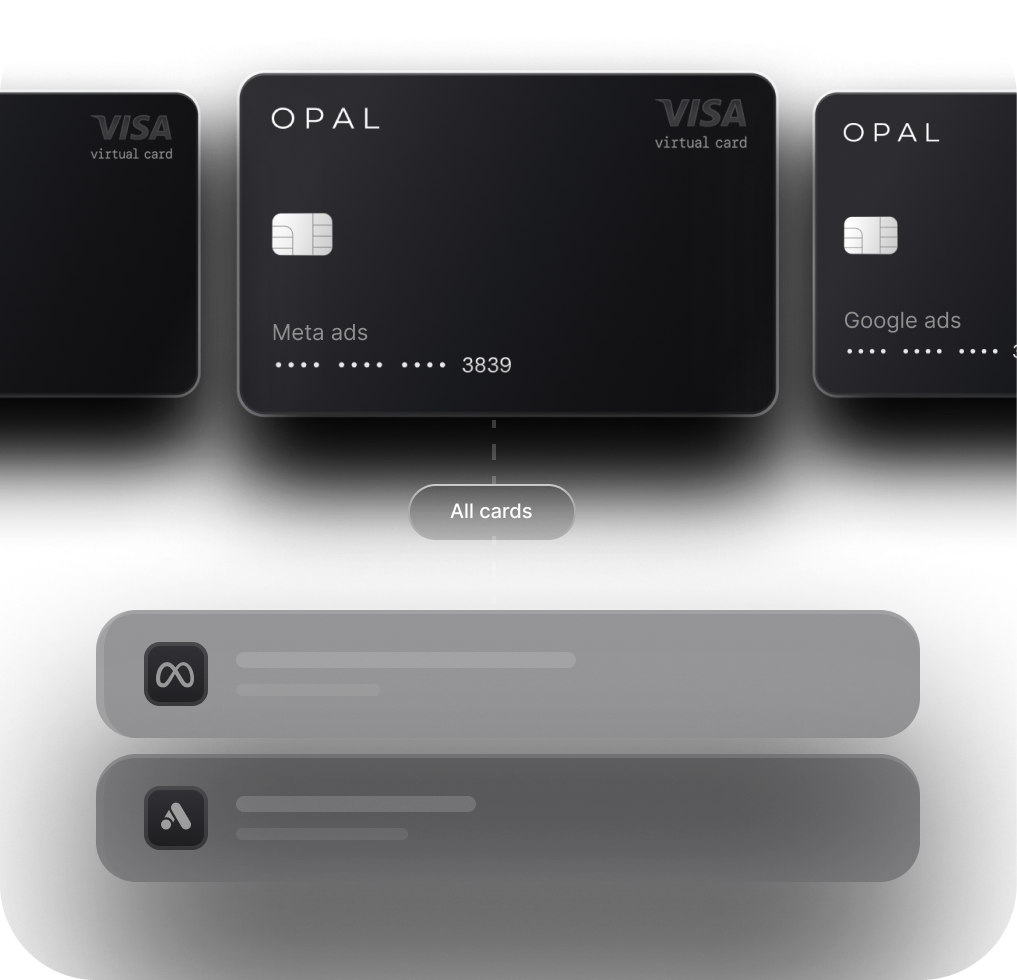
Opal has a built-in QuickBooks integration, plus reconciliation built specifically for agency workflows. Transactions can be categorized by client, platform, and campaign, helping reduce manual reconciliation.
Where Mercury may still
be the better fit
Mercury is a strong choice for general business banking and startup finance workflows.
Business Banking
Checking, savings, treasury, ACH, wires, and general operating accounts.
Startup Finance Stack
A strong fit for startups that want banking, cards, bill pay, and treasury tools in one place.
General Expenses
Useful for software, vendors, travel, and internal team spend that is not tied to client ad budgets.
Who Opal is for
Opal is the right fit if you are:
Outsmart Labs faced these same challenges. After switching, they recovered 15 hours per week in reconciliation time and added a recurring cashback revenue stream on client spend they were already running.
Apply online in minutes.
Frequently asked questions
Opal is the better fit for agencies managing client ad spend. Mercury is a strong banking platform for startups and general business expenses, while Opal is purpose-built for agency workflows like client-level cards, ad platform reconciliation, higher spend capacity, and up to 2% uncapped cashback on ad spend.
The main difference is structure. Mercury IO spend capacity is tied to balances held with Mercury. Opal extends credit based on managed spend, cash flow, and underwriting, so agencies can run client ad spend without tying up their own deposits. Opal also supports dedicated virtual cards by client and platform, automated reconciliation, and up to 2% uncapped cashback on ad spend.
Yes. Opal offers up to 2% uncapped cashback on ad spend. Agencies earn cashback while spending against Opal’s credit line, rather than deploying their own capital to front client media spend.
Yes. Many agencies can use Mercury for business banking and Opal for client ad spend. Mercury can remain your operating bank account, while Opal handles agency-specific ad spend workflows like credit, virtual cards, cashback, and reconciliation.
Mercury IO spend capacity is tied to balances held with Mercury. Opal can support credit limits up to $10M based on managed spend, cash flow, and underwriting. That means your ability to scale client ad spend is not limited only by the cash sitting in your bank account.
Opal does not require a personal guarantee or hard credit check. Eligibility and credit limits are based on factors like managed ad spend, cash flow, and underwriting.
Agencies can save significant time by using dedicated virtual cards and reconciliation workflows built for client ad spend. Outsmart Labs recovered 15 hours per week that had previously been spent on manual reconciliation.