

Opal vs. Parker: Which Ad Spend Card Is Right for Your Business?
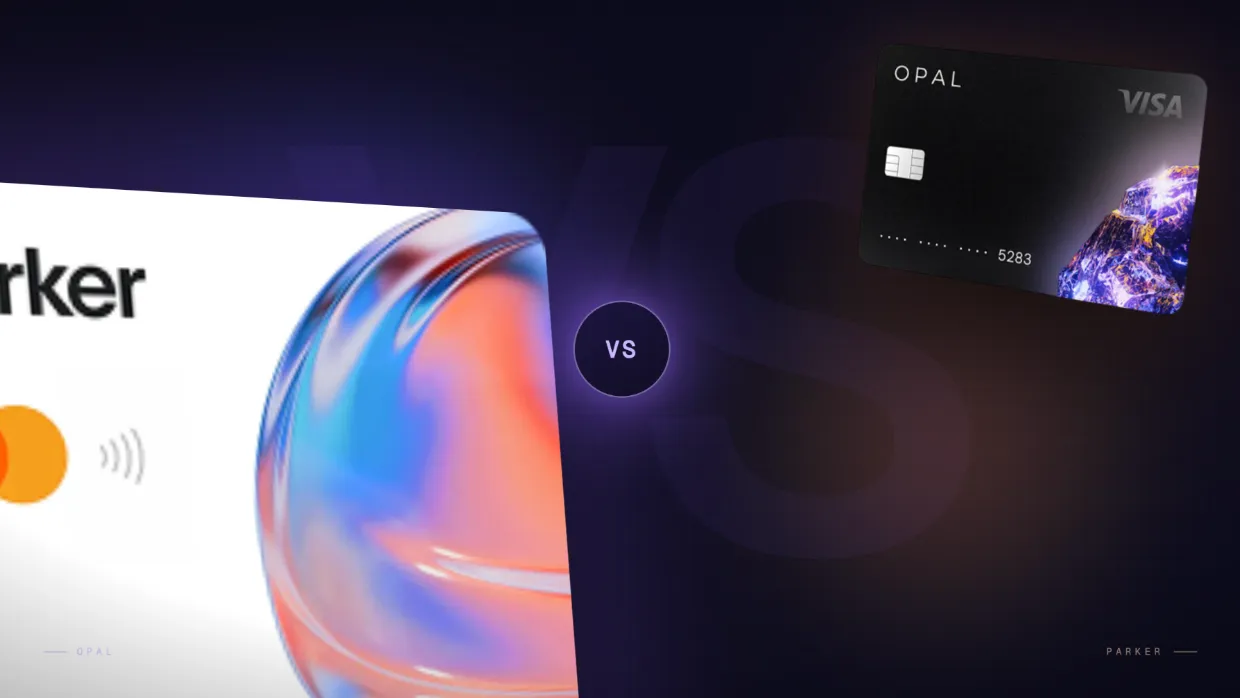
TL;DR: If ad spend is your primary use case, Opal is purpose-built for it. Parker is a strong general fintech for internet businesses, but it was not designed around the specific demands of high-volume ad buying.
Both Opal and Parker serve growing businesses that have outgrown traditional credit cards, but they solve different problems. Parker is a broad financial platform built for internet businesses managing general growth capital, with extended payment terms and a full banking stack. Opal is purpose-built for businesses where ad spend is the core operational challenge, with infrastructure designed specifically around how performance marketers, agencies, and e-commerce brands actually run their budgets.
The right choice depends on what problem you are actually trying to solve.
Key decision factors:
-
Primary use case: Parker serves general business finance. Opal is built specifically for ad spend.
-
Spending model: Parker uses a credit line. Opal's Client-Funded Card model draws from your actual business or client budgets, eliminating credit ceiling risk entirely.
-
Cashback: Parker offers 2x rewards points on all spend. Opal offers 1% uncapped cash back with no monthly or annual ceiling.
-
Reconciliation: Opal's automated reconciliation syncs directly with ad platforms. Parker does not offer equivalent ad-specific reconciliation tooling.
-
Payment terms: Parker's 90-day rolling terms are a genuine advantage for businesses managing cash flow timing. Opal does not offer equivalent extended terms.
-
Platform fee: Opal charges no platform fee. Parker's fee structure varies by plan.
Who Each Product Is Actually Built For
Understanding the target customer for each product is the fastest way to orient this comparison.
Parker positions itself as a financial platform for "internet businesses." That is a deliberately broad category. Parker's customer base includes e-commerce operators, SaaS companies, DTC brands, and any scaling business that needs higher credit limits than traditional banks will extend, along with tools like bill pay, high-yield savings, and flexible payment terms. Parker has raised over $200M in funding and serves more than 1,000 scaling businesses. The product is designed to be a full financial operating layer, not a single-use tool.
Opal starts from a narrower and more specific premise: the business's primary financial challenge is managing large ad budgets across platforms like Google, Meta, and TikTok. That includes performance marketing agencies managing client budgets, e-commerce brands running aggressive paid acquisition, and any company where ad spend is a significant line item that requires dedicated infrastructure. Opal is not exclusively for agencies. Any business running serious ad budgets fits the use case.
The core distinction: Parker asks "what does a scaling internet business need from its financial stack?" Opal asks "what does a business with high ad spend need to operate efficiently?" Those are related questions, but they lead to very different product decisions.
If your business needs a general financial platform with extended credit and banking services, Parker was designed with you in mind. If your primary operational problem is managing, funding, and reconciling large ad budgets, Opal was built specifically for that.
Credit Limits and Spending Capacity
For businesses spending $100K or more per month on ads, credit limits are not a minor detail. Hitting a ceiling mid-month is a real operational risk that can pause campaigns and disrupt performance.
Parker offers higher credit limits than traditional business cards and positions this as a core advantage over legacy banking products. Limits are extended based on business performance and financial history. The product is credit-based, meaning spend draws against a line that resets on a rolling basis.
Opal approaches this problem differently with its Client-Funded Card model (covered in detail in the next section). Rather than competing on the size of a credit line, Opal eliminates the credit ceiling question entirely by funding spend from the business's actual budgets. For agencies, that means client budgets. For brands, that means operating capital. The card is not a credit instrument in the traditional sense.
What this means for high-volume ad buyers
If you are running $500K per month across platforms, a credit line, however generous, introduces a ceiling and a billing cycle that your ad platform spend does not naturally align with. Opal's model removes that structural tension. Parker's model manages it with higher limits and flexible terms, which is a meaningful improvement over a standard business card but still operates within the credit framework.
Bottom line: Parker wins on extended payment terms. Opal wins on eliminating the credit ceiling entirely.
Rewards and Cashback: Reading the Fine Print
Rewards programs look similar on the surface. The details matter more than the headline number.
Parker advertises 2x rewards on all spend. Those rewards are points, not cash. The actual value of those points depends on how they are redeemed, and like most points programs, the effective value per dollar varies. For businesses spending heavily on ads, the distinction between points and cash is worth examining carefully. Points require redemption decisions and may not convert to dollar-for-dollar value.
Opal offers 1% uncapped cash back on ad spend. That is a straightforward cash return with no monthly or annual ceiling. At $200K per month in ad spend, that is $2,000 back per month, or $24,000 per year, with no cap. The rate is lower than Parker's headline 2x, but cash back is cash back. There is no redemption layer, no points conversion, and no ceiling.
The comparison that actually matters
Parker |
Opal |
|
|---|---|---|
Rewards rate |
2x points on all spend |
1% cash back on ad spend |
Rewards type |
Points |
Cash |
Cashback cap |
Varies by plan |
None |
Annual fee |
Varies by plan |
No platform fee |
The honest take: Parker's 2x headline is higher, but points and cash are not the same thing. For businesses that want a simple, uncapped cash return on ad spend specifically, Opal's 1% cash back is straightforward and predictable. If you value points and can optimize redemptions, Parker's program may return more. If you want cash with no ceiling and no complexity, Opal wins.
The Client-Funded Card Model (Opal Only)
This is Opal's most structurally differentiated feature, and it has no equivalent in Parker's product.
The Client-Funded Card model works by funding ad spend directly from business or client budgets rather than drawing against a credit line. For a performance marketing agency, that means a client's budget funds the card used to run that client's campaigns. For an e-commerce brand, it means operating capital funds the card directly.
Why this matters for high-spend businesses
Three problems disappear with this model:
-
No personal guarantee. Because spend is drawn from the actual budget rather than extended credit, there is no personal liability attached to the card.
-
No credit ceiling. If the budget exists, the card can spend it. There is no credit line to hit, no approval cycle to wait for, and no risk of campaigns pausing because a limit was reached.
-
No commingling of funds. Agencies managing multiple client budgets can keep each client's spend isolated, which simplifies billing, reporting, and accountability.
Parker operates on a credit model. That is a well-understood and widely used structure, and Parker executes it well. But it does not offer a funded card model. If eliminating personal liability and credit ceiling risk are priorities for your business, that feature exists only in Opal.
For agencies in particular: the ability to run client budgets through dedicated funded cards, rather than a shared credit line, changes how you structure client relationships and how you account for spend. It is a workflow change, not just a product feature.
Reconciliation, Reporting, and Ad Spend Workflows
For finance teams managing large ad budgets, reconciliation is one of the most time-consuming parts of the job. Matching platform spend data to card transactions, across multiple campaigns and platforms, is manual work that compounds with scale.
Opal built its reconciliation tooling specifically for ad platform workflows. Automated reconciliation syncs directly with ad platforms, reducing the manual work required to close the books each month. Outsmart Labs, a performance marketing agency, reported saving 15 hours per month on reconciliation after switching to Opal. That is not a marginal improvement. At any reasonable hourly rate for finance or operations staff, that is a meaningful cost reduction.
Parker offers financial reporting and spend management tools as part of its broader platform, but it was not built around the specific reconciliation challenges of ad platform spend. Its reporting infrastructure is designed for general business finance, not the campaign-level granularity that performance marketers need.
The operational gap
If your finance team is spending hours each month manually reconciling Google Ads, Meta, and TikTok transactions against card statements, that is a solvable problem. The question is whether you solve it with a general financial tool or one built specifically for that workflow.
Opal's answer is purpose-built reconciliation. Parker's answer is a solid general reporting layer that was not designed for this specific problem. For businesses where ad spend reconciliation is a significant operational burden, the difference in tooling is not cosmetic.
Where Parker Wins
A fair comparison requires saying clearly where Parker has a genuine edge.
90-day rolling payment terms. This is Parker's most compelling advantage for cash-flow-sensitive businesses. If your business needs to spend now and settle later, Parker's extended terms give you flexibility that Opal does not offer. For businesses managing tight cash cycles alongside high ad spend, this is a real structural benefit.
Broader financial stack. Parker is not just a card. It includes high-yield banking at up to 3.0% APY, bill pay, and a more complete set of general business financial tools. If you want a single platform that handles more of your business finance beyond ad spend, Parker's breadth is an advantage.
General business credit. For businesses that need credit flexibility across a wide range of operational expenses, not just ad spend, Parker's model serves a broader set of use cases. Opal is optimized for ad spend. Parker is optimized for internet businesses generally.
Scale and backing. Parker has raised over $200M in funding and serves a large and growing customer base. That is a signal of product maturity and financial stability that matters when evaluating a financial infrastructure partner.
Where Opal Wins
For businesses where ad spend is the primary operational challenge, Opal's advantages are structural, not cosmetic.
The Client-Funded Card model. No other product in this category offers funded cards drawn from business or client budgets. This eliminates personal liability, removes credit ceiling risk, and enables clean budget isolation across clients or campaigns. For any business where these constraints matter, Opal is the only option that solves them.
Purpose-built reconciliation. Saving 15 hours per month on reconciliation, as Outsmart Labs did, is the kind of outcome that comes from tooling built specifically for the problem. General financial platforms do not produce those results because they were not designed for ad platform workflows.
No platform fee. Opal charges no platform fee. The product is free to use, and the 1% uncapped cash back on ad spend is a return on spend you were already going to make.
Uncapped cash back. There is no ceiling on Opal's cash back. For businesses spending $500K or more per month on ads, the compounding value of uncapped cash back is significant. There is no tier to hit, no cap to plan around, and no redemption strategy required.
Built for the ad spend use case. Every feature in Opal's product, from the funding model to the reconciliation tooling to the virtual card infrastructure, was designed around how high-volume ad buyers actually operate. That specificity shows up in the product in ways that a general financial platform cannot replicate.
Head-to-Head Comparison
Criteria |
Parker |
Opal |
|---|---|---|
Primary audience |
Internet businesses broadly |
High ad spend businesses, agencies, e-commerce brands |
Credit structure |
Credit line (rolling) |
Client-Funded Card (budget-backed) |
Rewards rate |
2x points on all spend |
1% cash back on ad spend |
Rewards type |
Points |
Cash |
Cashback cap |
Varies by plan |
None |
Virtual card support |
Yes |
Yes |
Client-Funded Card model |
No |
Yes |
Ad platform reconciliation |
General financial reporting |
Purpose-built ad platform sync |
Billing terms |
Up to 90-day rolling |
Standard |
High-yield banking |
Up to 3.0% APY |
Not applicable |
Platform fee |
Varies by plan |
None |
Best fit for |
Scaling internet businesses needing extended terms and a full banking stack |
Businesses where ad spend is the primary use case and operational challenge |
Who Should Choose Which
The decision comes down to what problem you are actually trying to solve.
Choose Parker if:
Cash flow timing is your primary constraint and 90-day rolling terms would materially change how you operate
You want a single platform that handles general business banking, bill pay, and financial management beyond ad spend
Your spend is distributed across many business expense categories, not concentrated in ad platforms
You want a broad fintech partner as your primary financial operating layer
Choose Opal if:
Ad spend is your primary use case and the largest line item in your operating budget
You need to eliminate credit ceiling risk, whether because of spend volume or the nature of client-funded work
Your finance team is spending significant time on manual reconciliation across ad platforms
You manage multiple client budgets and need clean budget isolation and accountability
You want uncapped cash back in actual cash, with no redemption complexity
The honest summary: Parker is a strong product for internet businesses that need a complete financial stack with extended payment terms. Opal is the right choice when ad spend is the operational core of your business and you need infrastructure built specifically for that problem. If you are running $100K or more per month on Google, Meta, TikTok, or similar platforms, the purpose-built tool will serve you better than a generalist one.
Frequently Asked Questions
What is the difference between Opal and Parker for ad spend?
Opal and Parker both serve businesses that have outgrown traditional credit cards, but they are built around different core use cases. Parker is a broad financial platform designed for internet businesses managing general growth capital, with extended payment terms, high-yield banking, and a full financial stack. Opal is purpose-built for businesses where ad spend is the primary operational challenge, offering a Client-Funded Card model that draws from business or client budgets rather than a credit line, automated reconciliation that syncs directly with ad platforms, and 1% uncapped cash back on ad spend. For businesses where ad spend is the central problem, Opal's infrastructure is specifically designed for that use case in a way Parker's generalist platform is not.
Does Parker or Opal offer better cashback on ad spend?
Parker advertises 2x rewards on all spend, but those rewards are points rather than cash. The effective value of those points depends on how they are redeemed and may not convert to dollar-for-dollar cash value. Opal offers 1% cash back on ad spend with no monthly or annual ceiling. Parker's headline rate is higher, but Opal's return is in cash with no redemption complexity and no cap. For businesses spending $200K or more per month on ads, Opal's uncapped cash back compounds meaningfully over time without requiring any points management or redemption strategy.
What is a Client-Funded Card and does Parker offer one?
A Client-Funded Card is a card that draws spend from a designated business or client budget rather than a credit line. For a performance marketing agency, this means a client's budget funds the card used to run that client's campaigns directly. For a brand, it means operating capital funds the card. This model eliminates personal liability, removes credit ceiling risk, and enables clean budget isolation across clients or campaigns. Parker does not offer a Client-Funded Card model. Parker operates on a traditional credit structure where spend draws against an extended line of credit.
Which card is better for businesses with high ad spend?
For businesses where ad spend is the primary use case, Opal is purpose-built for that problem in a way Parker is not. Opal's Client-Funded Card model eliminates credit ceiling risk, its reconciliation tooling syncs directly with ad platforms to reduce manual finance work, and its 1% uncapped cash back returns value on spend with no ceiling or redemption complexity. Parker is a strong product for internet businesses that need extended payment terms and a broader financial stack, but it was not designed around the specific demands of high-volume ad buying. If ad spend is your core operational challenge, the purpose-built tool will serve you better.
Is Parker built specifically for ad spend management?
Parker is not built specifically for ad spend management. It is a broad financial platform designed for internet businesses managing general growth capital, with features including higher credit limits, up to 90-day rolling payment terms, high-yield banking at up to 3.0% APY, and bill pay. Parker's 2x rewards apply to all spend, not specifically to ad platforms, and its reporting tools are designed for general business finance rather than campaign-level ad spend reconciliation. Businesses that need infrastructure specifically designed for ad platform workflows, including funded cards, ad platform reconciliation, and budget isolation by client or campaign, will find that Opal addresses those needs directly while Parker does not.
If your business is running serious budgets on Google, Meta, TikTok, or similar platforms, the infrastructure you use to fund, manage, and reconcile that spend matters more than most businesses realize until they hit a ceiling or spend a month closing the books manually. Opal was built specifically for that problem. No platform fee, no credit ceiling, uncapped cash back, and reconciliation tooling that works the way ad buyers actually work. Visit opalspend.com to see how it fits your operation.