

LinkedIn Ads Billing for Agencies: Limits, Virtual Cards, and Failed Payments

Key Takeaways
-
It bills on thresholds, not a monthly cycle. LinkedIn charges the card on file every time spend crosses a set amount, so one account can be billed several times a day.
-
Frequency scales with spend. Balances over $100 are charged daily, $20–$99.99 weekly, and under $20 monthly, plus a ~$200–$300 threshold charge on top.
-
Four things cause failed payments. Insufficient funds, a bank fraud block, wrong card details, or mismatched info will put the ad account on hold and pause live campaigns.
-
A hold costs more than the fee. A paused campaign loses pacing and momentum, and LinkedIn won't lift a hold until the root cause is fixed.
-
Virtual cards contain the risk. One card per client keeps a single decline from taking down the whole book of business and makes reconciliation clean.
-
The right card is infrastructure. A card sized to managed spend (like Opal), with uncapped cashback, no personal guarantee, and unlimited virtual cards, fits high-volume agency billing far better than a traditional business card.
LinkedIn is now the single biggest ad channel in B2B. It commands 41% of B2B paid social budgets and is on track for $9.7 billion in ad revenue in 2026. It is also the only major platform delivering positive return on ad spend, at 121% ROAS.
Yet the thing that breaks agency campaigns on LinkedIn is rarely the targeting or the creative. It is the billing.
A declined card. An account on hold. A threshold charge nobody warned finance about. These small failures pause live campaigns, kill pacing, and turn into awkward client calls. Here is how LinkedIn Ads billing works, why payments fail, and how virtual cards fix it.
How does LinkedIn Ads billing work for agencies?
LinkedIn Ads billing runs on a threshold system, not a tidy monthly bill. LinkedIn charges the card on file every time spend crosses a set amount, so one ad account can be billed several times in a single day. Agencies pay one of two ways:
-
Credit card: available to every advertiser in Campaign Manager. The card is charged automatically as spend adds up.
-
Monthly invoicing: reserved for accounts that spend at least $3,000 per month for two straight months in the past year. One invoice every 30 days.
Most agencies run on credit card billing. That is exactly where the friction starts.
LinkedIn Ads billing thresholds and limits, explained
LinkedIn charges more often as spend rises. Billing frequency is tied to how fast the account balance climbs:
Account balance |
How often the card is charged |
|---|---|
$100 or more |
Daily, often multiple times a day |
$20 – $99.99 |
Weekly |
Under $20 |
Monthly |
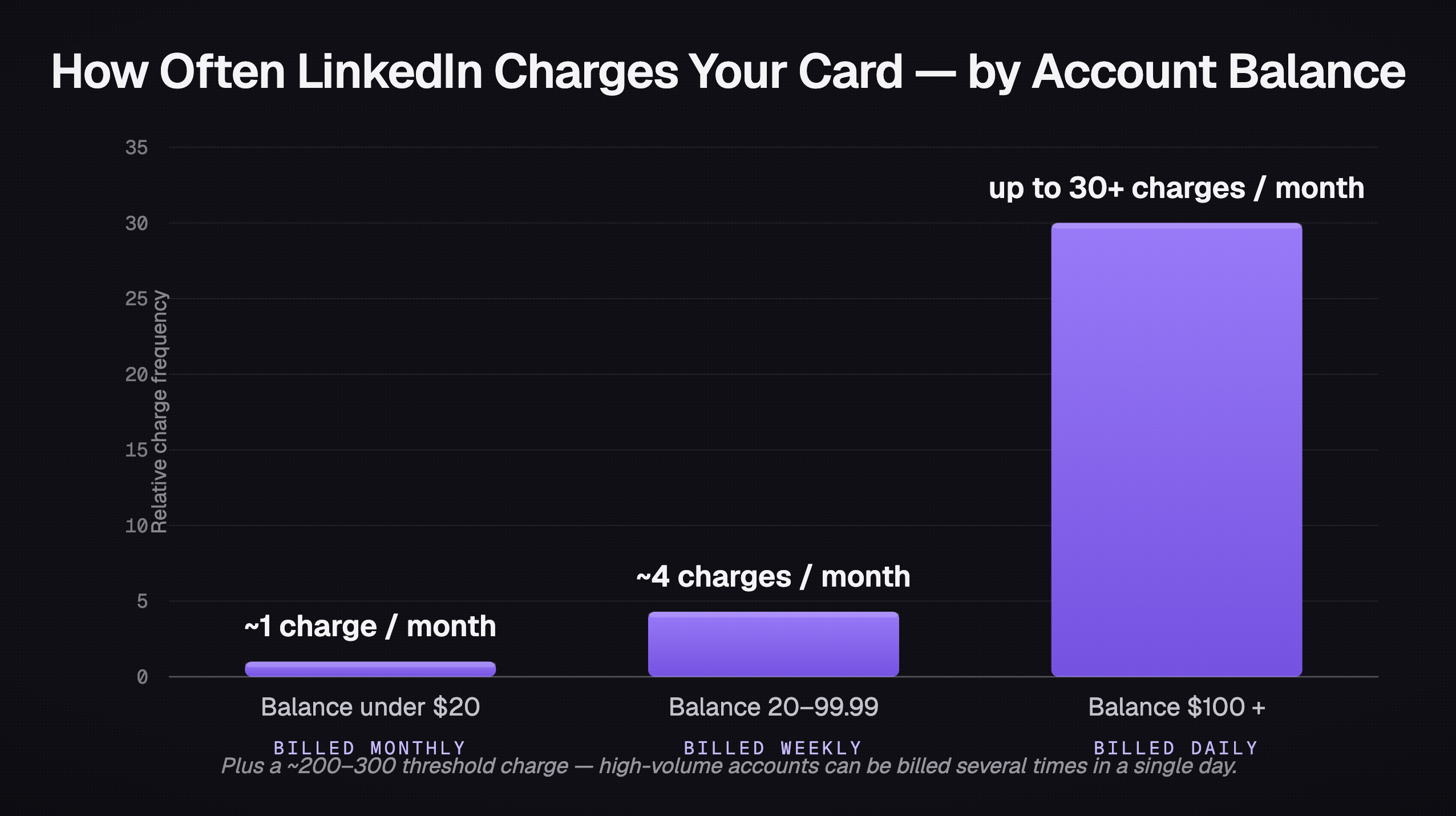
Figure 2: LinkedIn billing frequency scales with your account balance.
On top of that, LinkedIn applies a threshold charge of roughly $200 to $300. Every time spend crosses that line, the card is billed again. A high-volume account can trigger a string of charges in one day (LinkedIn Marketing Solutions Help). Two more limits worth planning around:
-
Daily budgets can run up to 50% over on a busy day, though spend averages out across the campaign.
-
Currency is locked once set. A currency change means opening a brand-new ad account.
For finance teams, this matters. A card built for one clean monthly statement is the wrong tool for an account that gets hit ten times a week.
Why do LinkedIn Ads payments fail?
LinkedIn Ads payments fail for a handful of predictable reasons, and every one of them can pause a live campaign. The most common causes:
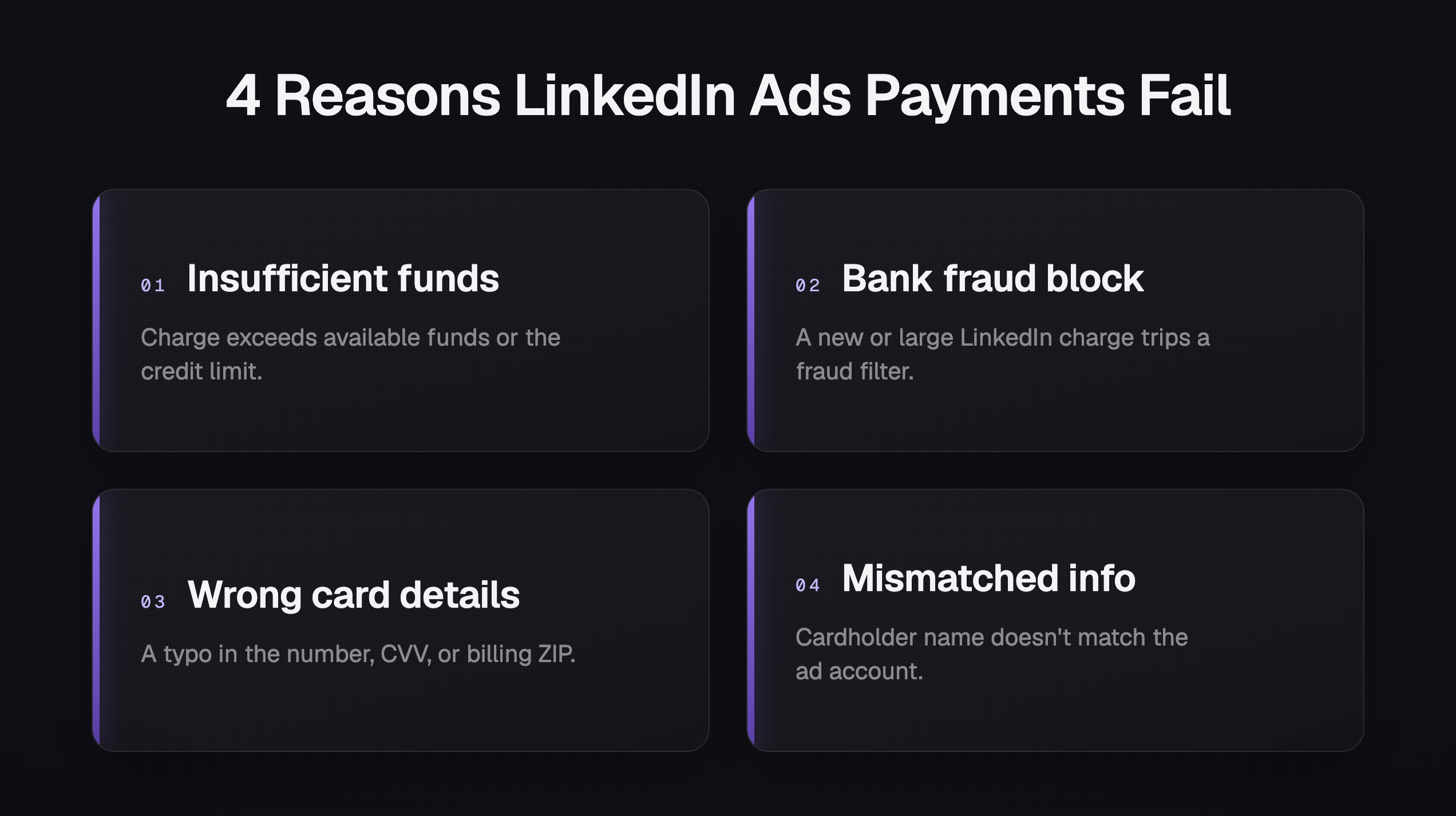
Figure 3: The four failure points that put agency ad accounts on hold.
-
Insufficient funds or hitting the card's credit limit. The charge simply bounces.
-
Bank fraud blocks. A new or unusually large LinkedIn charge often trips a bank's fraud filter.
-
Wrong card details. A typo in the card number, CVV, or billing ZIP.
-
Mismatched information. When the cardholder name does not match the ad account, LinkedIn may flag it for review.
Fraud filters are the sneaky one. Agencies scaling spend fast look exactly like fraud to a traditional bank. The charge funding a client's biggest campaign is often the one most likely to be declined.
What happens when a LinkedIn ad account goes on hold?
When a charge fails, the ad account goes on hold and campaigns stop until the balance is paid. LinkedIn will not simply lift the hold, the root cause has to be fixed first. The recovery path is short but costly in downtime:
-
Sign in to Campaign Manager and open the Billing Center.
-
Fix the payment method, update the expired card, correct the typo, or add a new one.
-
If the bank blocked the charge, call them to approve future LinkedIn charges.
The fix is easy; the downtime is not. A paused campaign loses pacing and the algorithm's momentum. Meta is known to slow delivery on decline-heavy accounts, and a LinkedIn hold behaves the same way in practice. See LinkedIn's own guidance on resolving a failed charge.
Why virtual cards fix LinkedIn billing for agencies
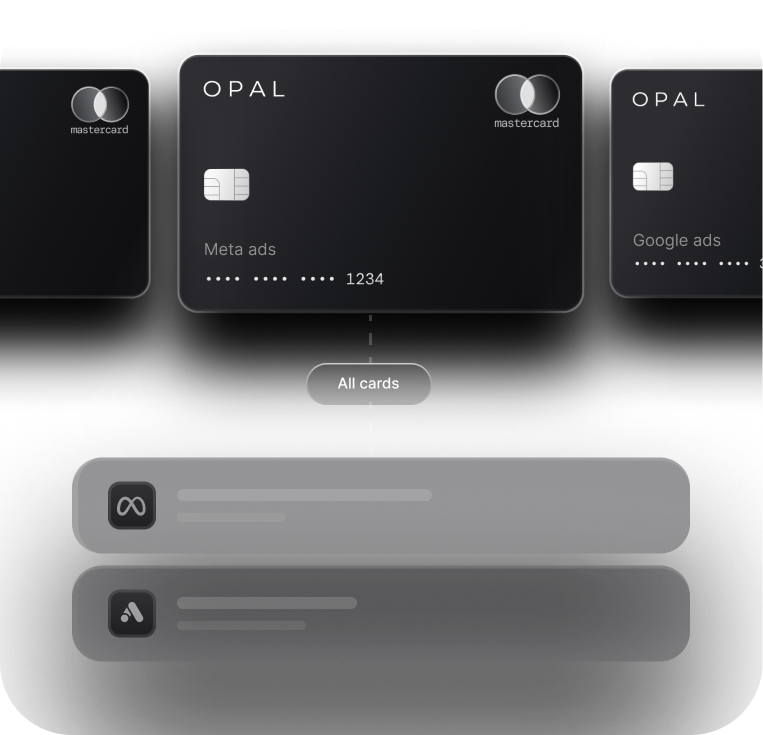
Virtual cards fix agency LinkedIn billing by giving every client and ad account its own card number, spend limit, and clean transaction trail. One decline no longer takes down the whole book of business.
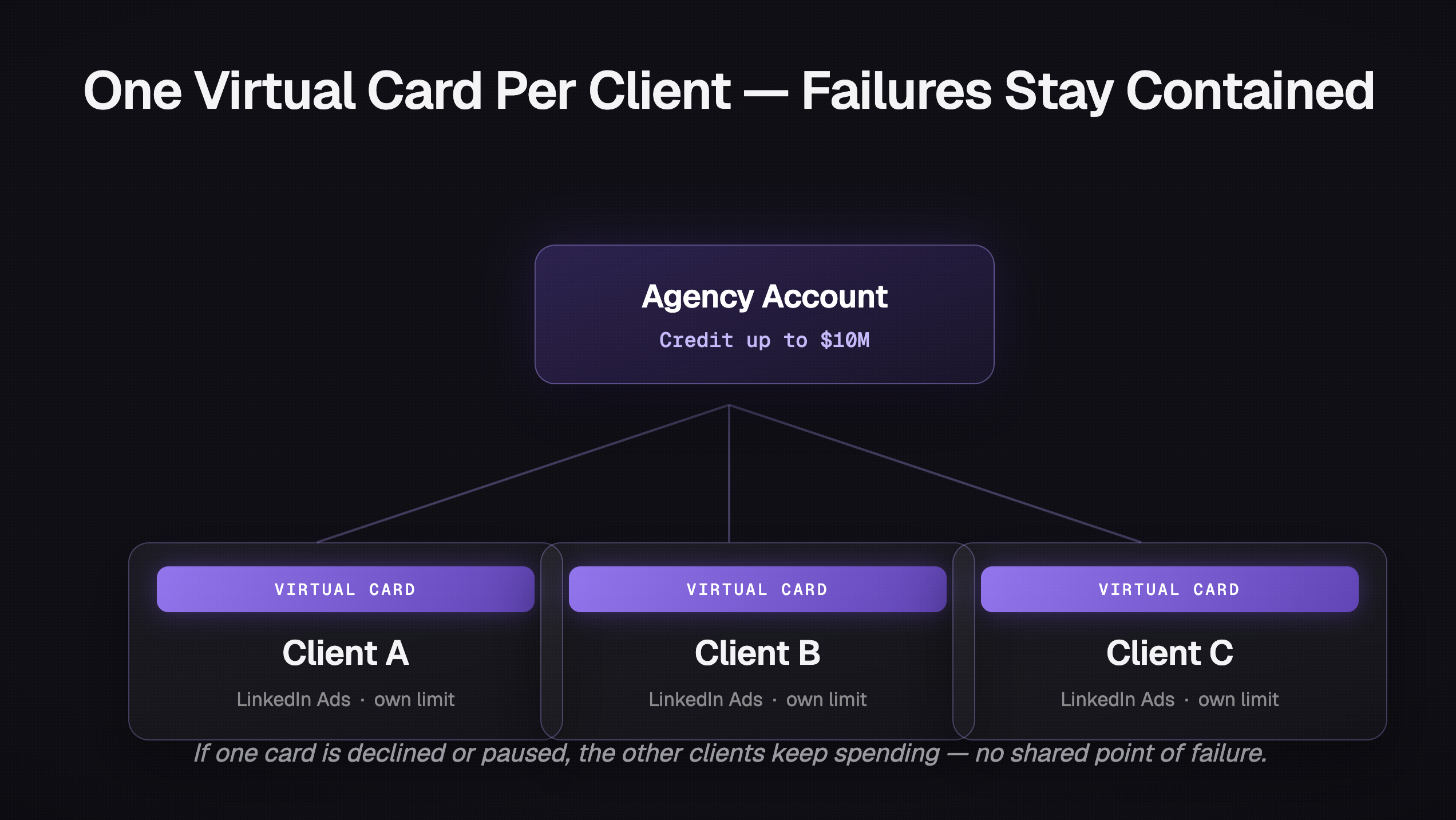
A virtual card setup solves the four problems that shared cards create:
-
Clean separation. One card per client per platform means every LinkedIn charge is pre-tagged to the right account.
-
Contained failures. If one card is paused or declined, the other clients keep running.
-
Real reconciliation. No more untangling five clients' spend from a single statement.
-
Built-in control. Spend limits live at the card level, so no campaign blows past budget.
A shared card across every client is the setup most fast-growing agencies fall into, and the riskiest. A single freeze or fraud flag stops every client at once. For the full playbook, see Opal's guide to managing ad spend across 50+ clients.
The cash flow gap most agencies overlook
The real cost of LinkedIn billing is not the fee. It is the float. Agencies run client spend now and collect on net-30 or net-45 terms later, carrying the gap on their own card.
That gap widens fast on LinkedIn, where CPCs run $5 to $12 and a single B2B client can burn six figures a month. A traditional business card with a $25,000 limit becomes a liability the moment a client scales. A card sized to managed spend, not personal credit, turns billing from a bottleneck into infrastructure.
How Opal handles LinkedIn Ads billing
Opal is the only charge card built specifically for ad spend, and it works directly with LinkedIn Ads, Meta, Google, TikTok, Snap, and more. It is designed around the exact billing problems above. What agencies get:
-
Unlimited free virtual cards: one per client or campaign, issued in 24–48 hours.
-
Credit limits up to $10M: sized to managed spend rather than personal credit, no personal guarantee, no hard credit check.
-
Up to 1.5% cashback: on ad spend, with no category caps, detailed in Opal's agency ad spend cashback guide.
-
Spend limits at the client, campaign, or card level: enforced automatically.
Opal extends credit directly to your agency, scaled to your managed spend volume, so agencies stop fronting spend out of pocket. One agency, Outsmart Labs, recovered 15 hours a week in reconciliation after switching.
For high-threshold LinkedIn accounts moved onto invoice billing, Opal's Ad Pay feature auto-detects invoices and extends cash flow up to 55 days. Choosing the right card for ad platforms is worth the homework. Opal breaks down the criteria in its guide to the best card for ad platforms.
Frequently asked questions
How often does LinkedIn charge my card?
It depends on spend. Balances over $100 are charged daily, $20–$99.99 weekly, and under $20 monthly. High-volume accounts can be charged several times a day once they cross LinkedIn's ~$200–$300 threshold.
Why is my LinkedIn ad account on hold?
Usually a failed payment. Insufficient funds, a bank fraud block, a wrong card detail, or mismatched account info are the most common causes. Fix the payment method in the Billing Center to lift the hold.
Can agencies use virtual cards for LinkedIn Ads?
Yes. Virtual cards let agencies assign one card number per client or ad account, each with its own spend limit, so a single decline never takes down every campaign.
Does LinkedIn offer monthly invoicing?
Yes, but only to accounts that spend at least $3,000 per month for two consecutive months within the past year.
What card is best for high LinkedIn ad spend?
A card sized to managed spend, with uncapped cashback and unlimited virtual cards, like Opal, fits high-volume agency billing far better than a traditional business card.
TikTok Ads Billing for Agencies: Virtual Cards, Limits, and Why Payments Fail
How The Trade Desk Bills Agencies (and Why Your Card Setup Has to Match)

Google Ads Billing Threshold: How It Works and How to Raise It (2026)