
Virtual Cards for Business: What They Are and How They Work

Key Takeaways
-
What it is: A digitally generated card number with its own expiry date and CVV. It works online like a plastic card but lives only on a screen, with per-card limits, vendor locks, and an instant freeze.
-
How it works: Virtual cards run on the same Visa or Mastercard rails as any card. The value is the control layer on top: generate, set rules, authorize, reconcile.
-
Safer by design: They cannot be lost or stolen, and one compromised number never puts the whole account at risk.
-
The trend: Businesses made up roughly 71% of the global virtual card market in 2025, with transaction value projected to reach around $17.4 trillion by 2029.
-
For ad-heavy teams: The real payoff is cashback on ad spend. Opal offers up to 1.5% cashback on ad spend, unlimited free virtual cards, credit up to $10M, no annual fee, and no credit check.
-
Best setup: One virtual card per client, campaign, or platform (Meta, Google, TikTok, Snap, Amazon), issued in 24 to 48 hours.
Picture a marketing agency running $80,000 a month across Meta, Google, and TikTok. One fraud flag freezes the company card and every live campaign goes dark at the same moment. That single point of failure is exactly what virtual cards were built to remove.
Plastic is leaving the building. In its place: card numbers you can create in seconds, cap to the dollar, and switch off before your coffee gets cold.
What Is a Virtual Card for Business?
A virtual card for business is a digitally generated card number with its own expiry date and CVV. It works online just like a plastic card, but lives only on a screen. Some issuers call it a "ghost card" or "masked card."
There's nothing to mail, misplace, or pass around the office. Each card can carry its own limit, lock to a single vendor, and be shut off in seconds.
For agencies, brands, and freelancers pouring cash into ad platforms, that control is the whole point. Spin up one card per client, per campaign, or per ad account. Then trace every dollar back to its source.
What sets a virtual card apart from a standard business card: No plastic. It is a number, issued instantly and used online or inside a digital wallet.
-
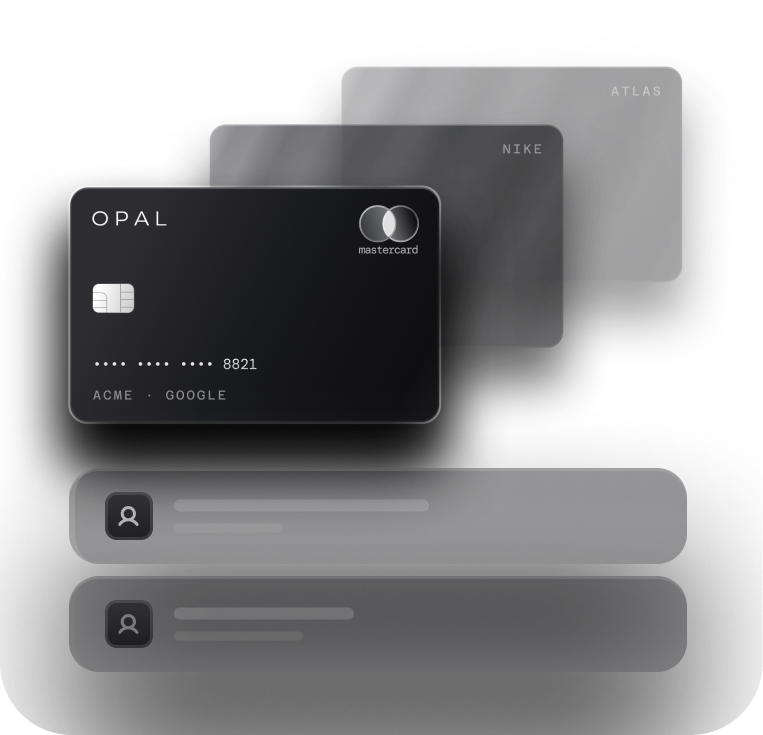
One card, one job. Assign a fresh card to each vendor, client, or subscription.
-
Built-in guardrails. Set spend limits, expiry dates, and merchant rules before a cent moves.
-
Instant kill switch. Freeze or delete a compromised card without touching the rest of your account.
How Do Virtual Cards Work? A 4-Step Breakdown
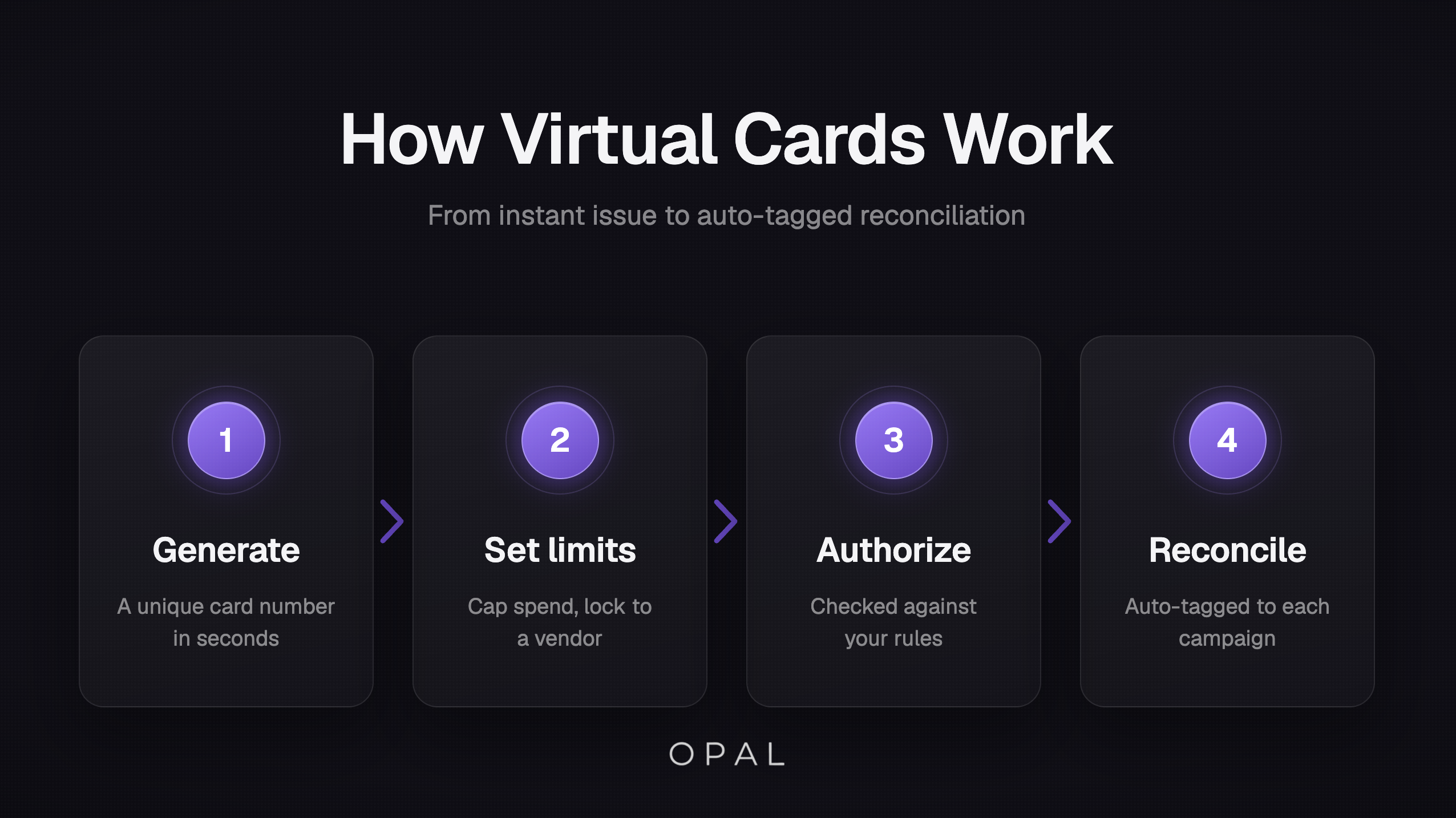
Under the hood, a virtual card runs on the same Visa or Mastercard rails as any other card. The difference is the layer of controls sitting on top of it.
-
Generate: Request a card and a unique 16-digit number appears in seconds. No waiting on the mail.
-
Set the rules: Add a spend cap, an expiry window, and approved merchants, such as "Meta Ads only."
-
Authorize: At checkout, the number is entered like any card. The issuer checks it against your rules, then approves or declines.
-
Reconcile: Every charge syncs to your dashboard, tagged to the right client or campaign. No month-end guesswork.
Most cards come in two flavors. Single-use cards die after one transaction, which makes them great for a one-off vendor or a free trial you don't want auto-renewing. Multi-use cards stay open for recurring costs like ad platforms and SaaS tools.
Virtual Card vs. Physical Business Card: What's the Difference?
Feature |
Virtual card |
Physical business card |
|---|---|---|
|
Issued |
Instantly, online |
Mailed in days |
|
Lost or stolen |
Can't be lost or stolen. It's digital. |
Yes |
|
Spend controls |
Per-card limits + vendor locks |
Limited |
|
Fraud response |
Freeze one card, keep the rest |
Replace the whole card |
|
Best for |
Online ad spend, SaaS, vendors |
In-person buys, travel |
Why Virtual Cards Are Taking Over in 2026
This is no longer a niche finance tool. It's where business payments are heading.
-
Businesses made up roughly 71% of the global virtual card market in 2025, according to Mordor Intelligence.
Virtual card spending reached about $5.4 trillion in 2025, and it keeps climbing.
-
Juniper Research projects virtual card transaction value will hit around $17.4 trillion by 2029.
Roughly 56% of finance leaders now treat virtual cards as a core payment tool, not an experiment.
Single-use cards led the market with about a 59% share in 2025, proof that "one card, one job" has become the norm.
The reason is simple: virtual cards can't be physically lost or stolen, and one compromised number never puts the whole account at risk.
Where Virtual Cards Earn Their Keep: Top Use Cases
A few places they shine, especially for marketing teams:
-
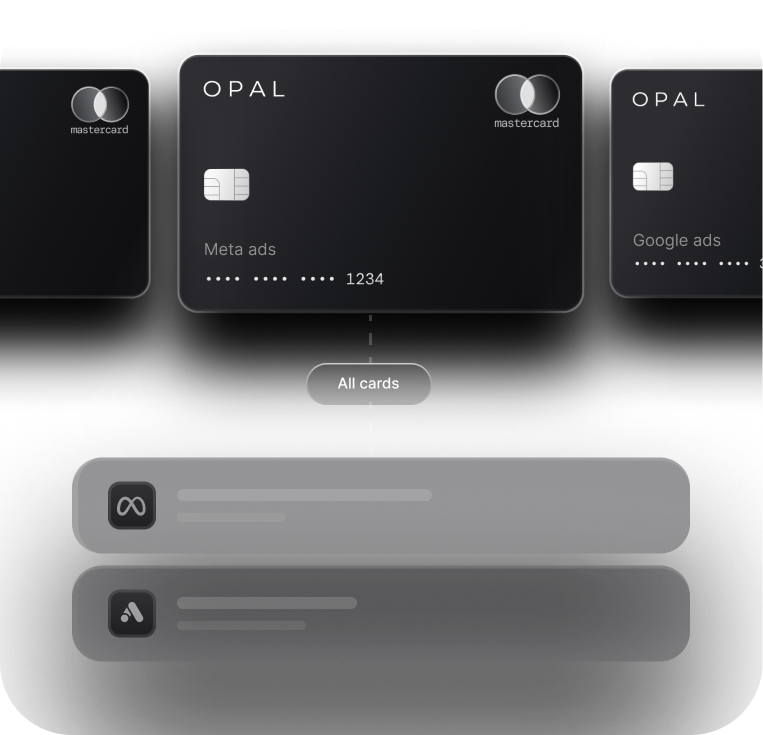
Ad spend. A dedicated card per ad account keeps Meta, Google, TikTok, and Amazon budgets clean and separate.
-
Client budgets. Agencies give every client their own card and limit, so no one overspends someone else's money.
-
SaaS subscriptions. One card per tool means no surprise renewals and no mystery line items.
-
Vendor payments. Pay freelancers, printers, or media partners without ever sharing your main account number.
-
Contractor spend. Hand over a capped card instead of chasing reimbursements.
The Ad-Spend Angle: Turn Media Budgets Into Cashback
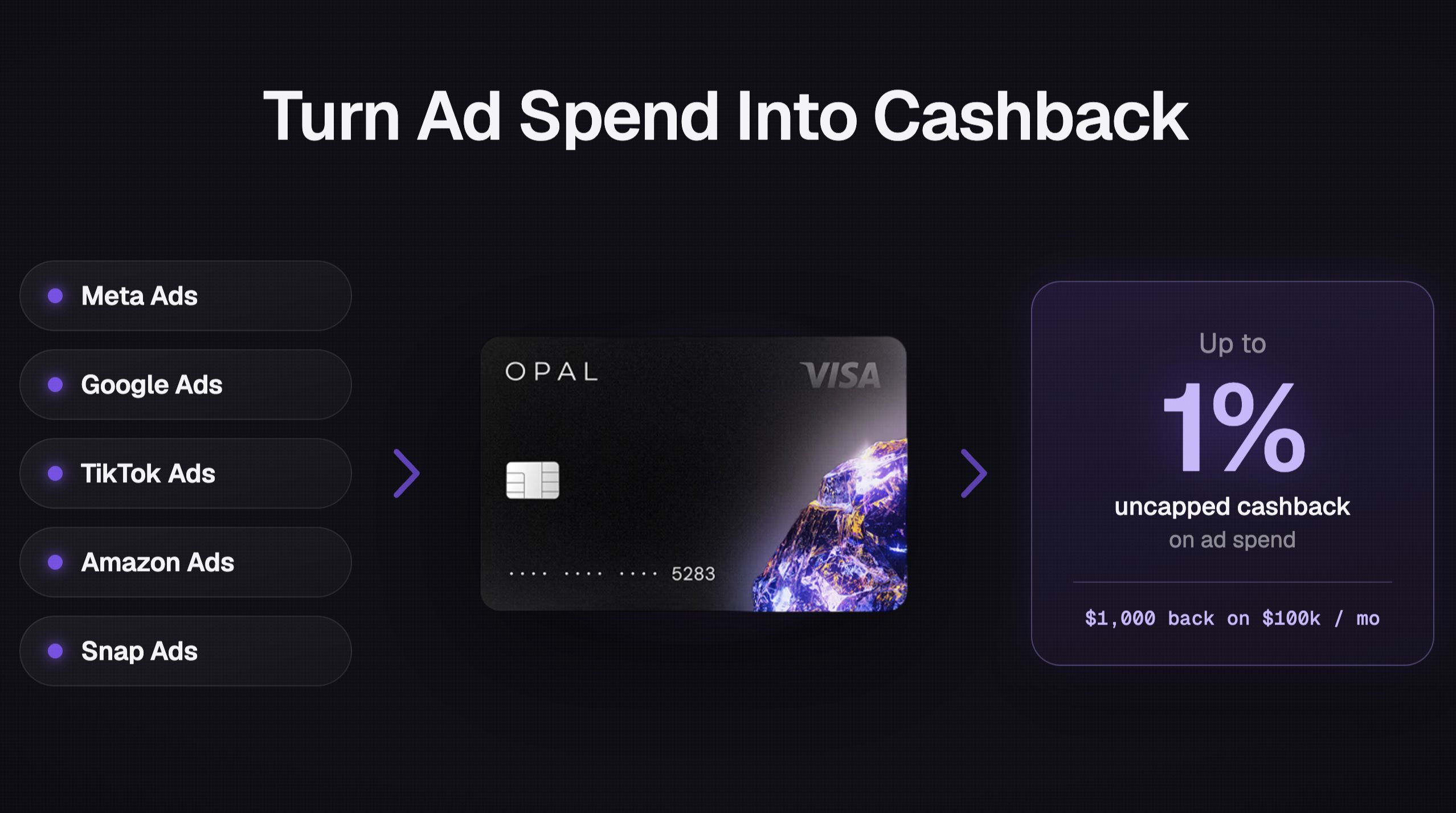
On a credit account, $100K a month in ad spend earns $1,000 back (1%). Pre-funded accounts earn $1,500 (1.5%).
Here is where the math gets interesting. Most business cards treat ad spend like any other purchase. A card built for it treats ad spend as the main event.
Typical mid-market rebates land between 0.8% and 1.5%, per Corpay. For a business whose largest cost is advertising, that gap adds up fast.
This is the niche Opal owns. It's an ad-spend charge card built for agencies and brands, offering up to 1.5% cashback on ad spend, with no annual fee, ever. Credit limits run up to $10M, roughly 20x higher than traditional cards, and there's no credit check or personal guarantee to clear.
What that looks like in practice:
Unlimited free virtual cards, one per client, campaign, or platform.
Up to 1.5% cashback on ad spend, from platforms like Meta and Google to TikTok, Snap, and Amazon.
Setup in 2 to 3 minutes; virtual cards issued within 24 to 48 hours.
Works with any U.S.-based bank. No switching required.
Run the numbers. On a $100,000 monthly ad budget, up to 1.5% back is as much as $1,500 every month, on spend you were making anyway. See how that stacks up in the Opal vs. Mercury comparison, or dig into real results in the Opal case studies. Want to route client invoices through the same system? That's what Ad-Pay is for.
How to Choose a Virtual Card Provider
Not all virtual cards are equal. Before you sign up, check for:
Cashback that rewards your biggest expense. For agencies, that's ad spend.
Credit limits high enough to fund campaigns without draining your own cash.
Unlimited free cards, so per-card fees don't eat your rewards.
Real spend controls: limits, vendor locks, and an instant freeze.
Clean reconciliation that syncs to your accounting stack.
Frequently Asked Questions
Are virtual cards safe for business?
Yes. Each card can be locked to one vendor and switched off instantly, so a leaked number does little damage. There is no physical card to lose or steal either.
Can I use a virtual card for Meta and Google Ads?
Absolutely. Virtual cards are ideal for ad platforms. A dedicated card per ad account keeps budgets separate and cashback easy to track.
What's the difference between a virtual card and a digital wallet?
A virtual card is the card number itself. A digital wallet, like Apple Pay, is an app that stores that card. They work together.
Do virtual cards cost money?
Many providers issue them free. Opal, for instance, offers unlimited virtual cards with no annual fee.
How fast can I get one?
Often within minutes to a couple of days. With Opal, onboarding takes 2 to 3 minutes and cards are typically issued within 24 to 48 hours.
5 Best Virtual Business Cards for Ad Spend in 2026
Snapchat Ads Virtual Card Guide for Agencies: What Works and What Gets Declined

The Client-Funded Card Model: How It Works, Who It’s For, and What the Risks Are