
Best Ad Spend Card for E-Commerce Brands

You've optimized your creative. You've tested your audiences. You've rebuilt your landing pages three times. Your ROAS is where you want it, your CPA is holding, and your Meta and Google spend is running at $150K a month.
But your card? It's doing nothing.
TL;DR
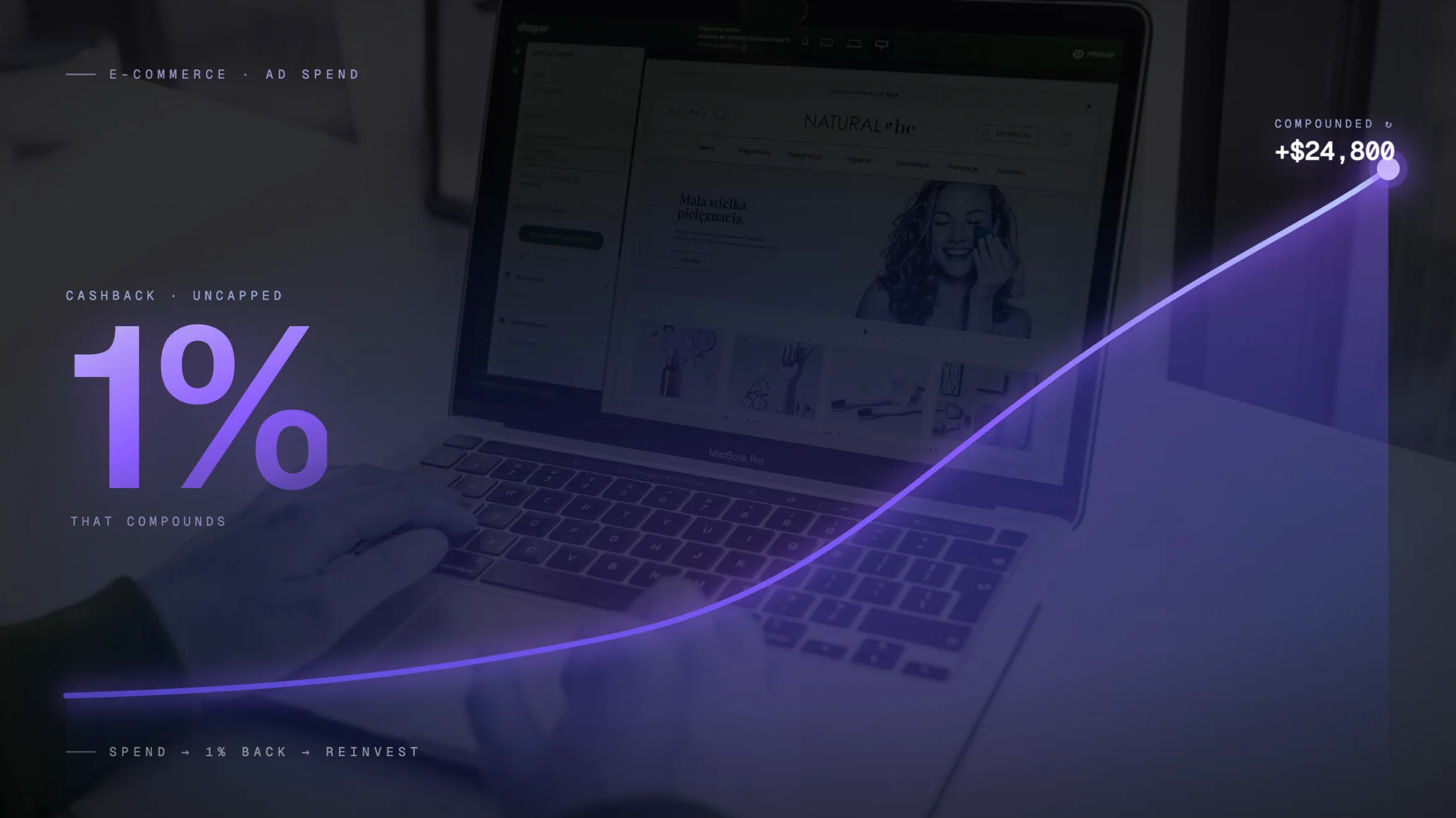
A brand spending $150K/month on ads with the wrong card can leave up to $27,000/year on the table.
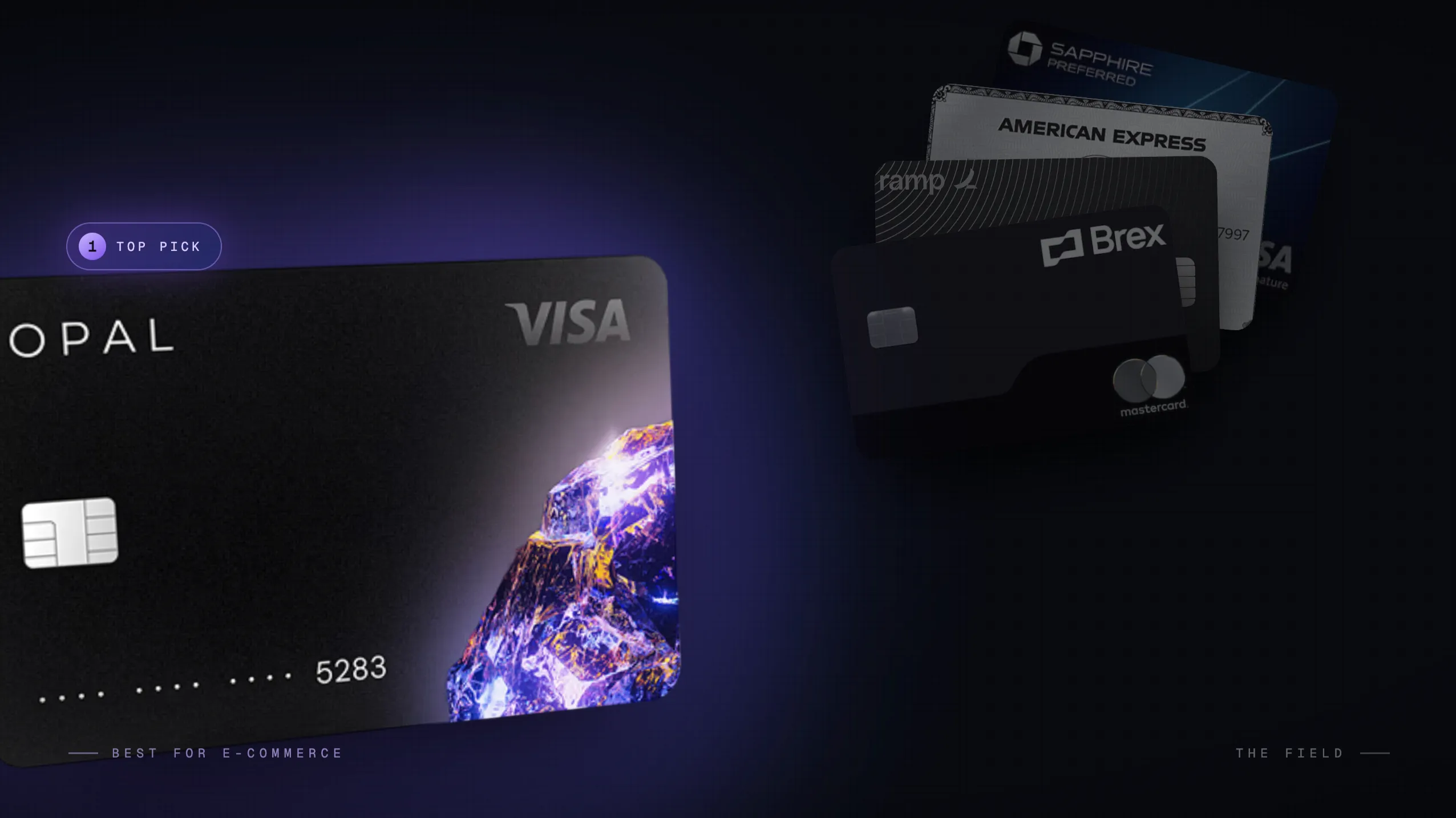
Generic cards (Ramp, Brex, corporate Amex) cap rewards, restrict categories, and weren't built for ad volume.
The right card clears six criteria: high limits, uncapped cashback, virtual cards per platform, real-time visibility, no personal guarantee, no annual fee.
Opal is purpose-built for this: up to 1.5% cashback on ad spend across all major platforms, up to $10M in instant credit, and a two-minute application.
That $150K isn't earning a dollar back. No cashback, no rewards, no return on the cost of running it through a generic business card that was built for office expenses, not advertising volume. Every month you spend at that level with the wrong card, you're leaving up to $2,250 on the table. That's up to $27,000 a year. A creative testing budget. A junior hire. Not a rounding error.
The card you run your ad spend on is either earning for you or it isn't.
What E-Commerce Brands Actually Need from an Ad Spend Card
Most business cards were designed for general corporate spend: travel, software, meals. Ad spend is a different animal. The volumes are higher, the platforms are more, and the consequences of getting it wrong mid-month are immediate: paused campaigns, lost impressions, and a ROAS chart that falls off a cliff.
Here's what e-commerce specifically needs from a card:
-
High limits that don't pause campaigns. A $25K credit limit sounds reasonable until you're scaling into Q4 and your Meta spend alone hits $40K in two weeks. You need a card with limits that match your actual budget, not a bank's idea of what a small business should spend.
-
Multi-platform support. Your spend isn't on one platform. It's across Meta, Google, TikTok, Pinterest, and maybe connected TV. Your card needs to work everywhere without triggering fraud flags or re-verification.
-
Real-time visibility by platform. Knowing you spent $180K last month is useless. Knowing you spent $90K on Meta, $60K on Google, and $30K on TikTok is actionable. Platform-level visibility is how you manage ROAS by channel, not just in aggregate.
-
Uncapped cashback on ad spend specifically. Generic cards cap rewards at $50K or $100K in annual spend. E-commerce budgets don't stay small. A cap means you stop earning exactly when you're spending the most.
If your current card can't check all four of those boxes, it's costing you.
Where Generic Business Cards Fall Short
Cards like Ramp, Brex, and corporate Amex products weren't built for advertising volume. They were built for general business spend, and that distinction matters when you're running six figures a month across multiple platforms.
There are three failure modes that show up repeatedly:
Your campaigns stop, not pause
Generic business cards set limits based on your business credit profile, not your actual ad budget. When you hit that limit on the 18th of the month, your campaigns don't gracefully pause. They stop. You lose the auction momentum you've built, your retargeting pools go cold, and you spend the next week rebuilding performance you already paid for.
You hit the cashback cap in January
Most rewards cards advertise competitive cashback rates, but bury the cap in the fine print. You might earn 1.5% on the first $50K in annual spend, then drop to 0.5% after that. If you're spending $150K a month, you hit that cap in January and earn nothing meaningful for the rest of the year.
You have no idea which platform is eating what
Generic cards show you a transaction feed. That's it. If you want to know how much you spent on TikTok vs. Google last month, you're pulling reports from four different ad platforms and reconciling manually. That's hours of work every month for information that should be automatic.
For a deeper look at how Opal stacks up against one of the most common alternatives, see the Opal vs. Ramp comparison for ad spend.
What E-Commerce Brands Usually Use Instead
Most e-commerce brands land on one of three options before they find something purpose-built. Here's the honest read on each.
Corporate expense cards (Ramp, Brex)
These are built for operational spend: software subscriptions, travel, office expenses. They handle ad spend, but they weren't designed for it. The rewards structure reflects that. Cashback rates on ad spend are often lower than general categories, and more importantly, the credit limits are set based on your overall business profile, not your ad budget. When you're scaling into a product launch or Q4, you're negotiating with a bank that thinks of you as a general business, not a media buyer running $200K in a single month.
The core issue: limits and rewards both optimize for the wrong spend category.
Traditional rewards cards (Amex, Chase)
These cards have strong general rewards programs, and some e-commerce brands use them specifically for the sign-up bonuses or travel points. The problem is the math at volume. Most traditional rewards cards either cap cashback at a spend threshold or offer a flat rate across all categories that doesn't beat what a purpose-built card offers on ad spend specifically. At $100K/month in ad spend, a 1% gap in effective cashback rate is $12,000/year. Travel points don't close that gap unless you're redeeming at a rate that most business owners don't have time to optimize.
The core issue: rewards are designed for consumer spending patterns, not advertising volume.
General business cashback cards
Some brands gravitate toward cards marketed as high-cashback business cards. The rates look competitive on paper, but the fine print usually includes category caps, spend thresholds where the rate drops, or annual fees that eat into the net return. A card that earns 2% on the first $50K in annual spend and 1% after that isn't a 2% card for a brand spending $50K a month.
The core issue: the advertised rate and the effective rate diverge at any serious spend volume.
The pattern across all three: they were built for businesses that happen to run ads. Opal was built for businesses where ads are the business.
What to Look for in a Card Built for Ad Spend
Before you evaluate any specific card, get clear on the criteria. The right ad spend card for an e-commerce brand should clear all of these:
Criteria |
Why It Matters |
|---|---|
|
High or flexible credit limits |
Limits that scale with your budget, not your credit file. Q4 spend shouldn't be capped by a limit set in Q1. |
|
Uncapped cashback on ad spend |
Caps defeat the purpose at high volume. You want cashback on every dollar, month after month, with no ceiling. |
|
Virtual cards per platform |
One virtual card per platform means clean spend data, no cross-contamination, and instant visibility by channel. |
|
Real-time transaction visibility |
You need to see spend as it happens, not 30 days later on a statement. |
|
No personal guarantee |
Your business spend shouldn't put your personal credit at risk. A card built for advertising volume shouldn't require one. |
|
No annual fee |
Cashback is the return. Paying an annual fee to earn it reduces the net benefit before you've spent a dollar. |
If a card can't deliver on all six, it's a partial solution. And partial solutions at high ad spend volumes still cost you real money.
For a broader comparison of how cards stack up on these criteria, see Best Credit Card for Online Advertising in 2026.
How Opal Fits E-Commerce
Opal was built for brands and teams running serious ad budgets, not general business expenses. It clears every criteria in the table above.
Up to 1.5% cashback on ad spend. No fine print. Every dollar you spend on Meta, Google, TikTok, Pinterest, or any other platform earns up to 1.5% back. At $200K/month, that's up to $3,000 back every month, from spend you're already running.
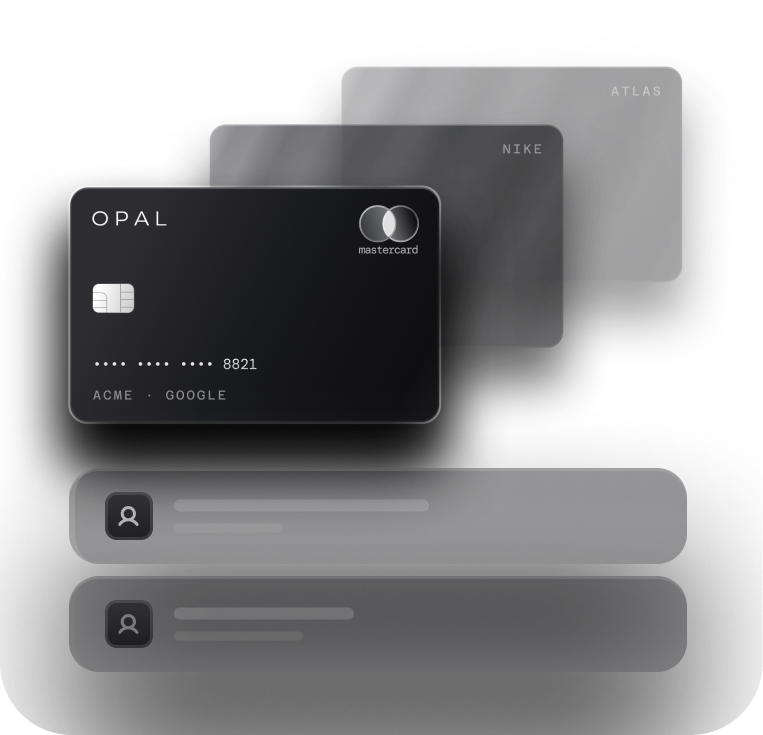
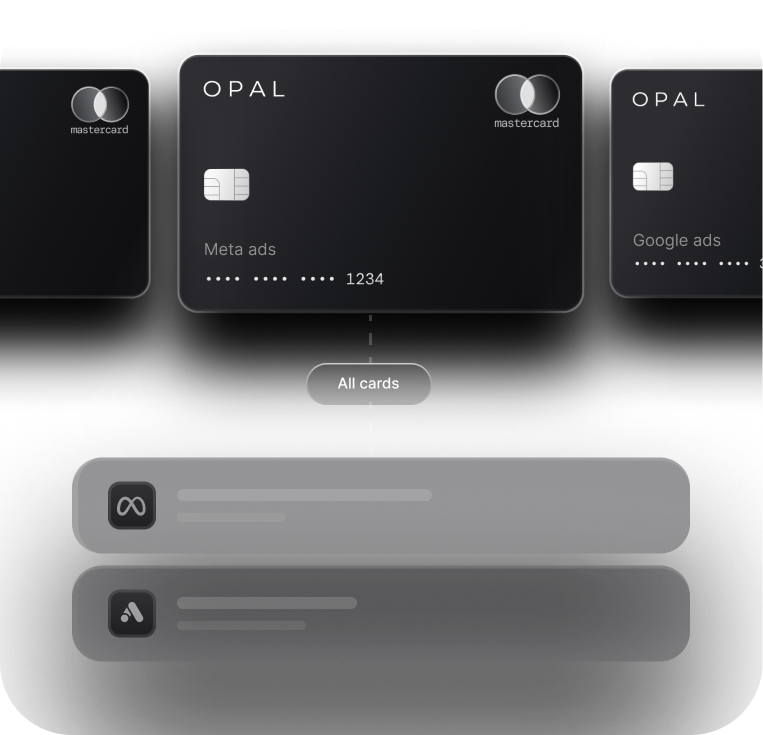
Virtual cards per platform. Spin up a dedicated virtual card for each ad platform in minutes. Your Meta spend is on one card, your Google spend is on another. When you're managing ROAS by channel, clean spend data isn't a nice-to-have. It's the baseline.
Instant Credit limits up to $10M. Limits are set based on your actual ad spend volume, not a generic business credit assessment. Your Q4 budget won't be capped by a limit that was set when you were spending half as much. Scaling into peak season shouldn't require a call to your bank.
No personal guarantee. No annual fee. No hard credit check. The application takes two to three minutes. You're not putting your personal credit on the line to run your business's ad budget.
Real-time spend visibility. Every transaction appears immediately, broken down by platform. If your CPA spikes mid-month, you can see exactly where the spend shifted without pulling reports from four different dashboards.
The Cashback Math for E-Commerce Brands
This is the part most brands skip because it feels small. It isn't.
Here's what Opal returns at different monthly spend levels, at 1% on credit accounts and 1.5% on pre-funded accounts:
Monthly Ad Spend |
Monthly cashback (1% credit / 1.5% pre-funded) |
Annual cashback (1% / 1.5%) |
|---|---|---|
$20,000 |
$200 / $300 |
$2,400 / $3,600 |
$50,000 |
$500 / $750 |
$6,000 / $9,000 |
$100,000 |
$1,000 / $1,500 |
$12,000 / $18,000 |
$150,000 |
$1,500 / $2,250 |
$18,000 / $27,000 |
$250,000 |
$2,500 / $3,750 |
$30,000 / $45,000 |
$500,000 |
$5,000 / $7,500 |
$60,000 / $90,000 |
$18,000/year at $100K/month. That's a month of creative production. A full A/B test cycle. A performance hire.
$90,000/year at $500K/month. That's not a perk. That's a budget line.
The brands leaving this on the table aren't doing it because they don't want the money. They're doing it because they've never thought of their card as an optimization lever. It is one.
For more on how e-commerce brands are treating cashback as a structural revenue line, see How E-Commerce Brands Are Turning Ad Spend Into a Revenue Line.
How to Get Started with Opal
The application takes two to three minutes. No hard credit check, no personal guarantee, no annual fee.
Here's what the process looks like:
-
Apply at opalspend.com. Application takes 1-2 minutes to input some basic personal information, and connect your accounts securely through Plaid. We will then have a limit turned around and your account active in 24-48 hours.
-
Set up virtual cards per platform. Once approved, spin up "unlimited" virtual cards per campaign, platform, or both. Takes seconds.
-
Run your spend. Earn cashback. Every dollar you put through Opal earns up to 1.5% back, with no platform restrictions.
There's no migration complexity. You're replacing a card number, not a system.
Frequently Asked Questions
Does the cashback apply to all ad platforms, including Meta, Google, and TikTok?
Yes. Opal's cashback of up to 1.5% applies to ad spend across all major platforms: Meta, Google, TikTok, Pinterest, Snapchat, LinkedIn, Amazon Ads, and more. There's no platform exclusion list. If you're running spend on it, you're earning on it.
Is there a cap on how much cashback I can earn?
Opal doesn't publish a cap. Whether you're spending $30K a month or $500K a month, you earn up to 1.5% cashback on eligible ad spend.
How does Opal handle high-volume months when spend spikes?
Opal sets limits based on your actual ad spend volume, not a static credit assessment. If your spend scales significantly in Q4 or during a product launch, your limit scales with it. You're not hitting a wall that was set when you were spending half as much.
Can I separate spend by platform or campaign with virtual cards?
Yes. Opal gives you unlimited free virtual cards. The standard setup is one virtual card per platform, so your Meta spend, Google spend, and TikTok spend are each on their own card. Some brands go further and create cards per campaign or per product line. The spend data is clean, the reconciliation is automatic, and you always know exactly where your budget went without pulling reports from four different dashboards.
If you're running five figures or more in monthly ad spend and your card isn't paying you back, that's a fixed cost you don't have to carry. See what Opal returns on your current spend volume.