

How to Finance Ad Spend Without Draining Working Capital

Key Takeaways
-
Ad spend drains cash first. You pay Meta, Google, and TikTok today, but clients pay on Net 30 to Net 90.
-
2026 changed the game. Meta and Google pushed high spenders off cards, erasing the float and $12,000 to $18,000 a year in rewards.
-
Paying out of pocket is the trap. Self-funding ad spend is how profitable agencies and brands turn cash-poor.
-
An ad-spend charge card fixes it. Opal offers up to $10M credit, up to 1.5% cashback on ad spend, and no personal guarantee. It is the only option that solves speed, rewards, and risk at once.
-
Keep the float. Opal Ad-Pay lets you pay ad invoices by card and hold cash in your account up to 55 days longer.
Caption: Bigger ad budgets hide a quiet cash-flow problem: someone has to fund the spend before the results arrive.
The campaign is finally working. ROAS is climbing. The only thing standing between you and scaling it up? The cash sitting between your bank account and the ad platform.
Ad budgets have never been bigger. Global ad spend is set to cross $1 trillion for the first time in 2026, and digital alone will pull in over $700 billion of that.
But bigger budgets hide a quiet problem. Someone has to fund the spend before the results, and the client payments ever arrive.
That is the working capital trap. Here is how to finance ad spend without falling into it.
What “Draining Working Capital” Really Means for Ad Spend
Working capital is the cash a business can actually use right now, after covering what it already owes. For agencies, media buyers, and freelancers, ad spend eats that cash first.
You pay Meta, Google, TikTok, and Amazon today. Your client pays you on Net 30, Net 60, sometimes Net 90.
-
Extended or late payments disrupt cash flow for 62% of small businesses.
-
Nearly 3 in 10 agencies name cash flow as their single biggest challenge.
A profitable agency can still run dry while it waits to get paid. get paid.
Picture a $60,000 monthly Meta budget floated on the agency’s own card while the client pays Net 60. That is $120,000 of the agency’s own money tied up at any moment, funding someone else’s growth.
The spend leaves fast. The money comes back slow. That gap is where growth stalls.
The Hidden Cost of Self-Funding Ad Spend
|
What you do |
What it costs you |
|---|---|
|
Float client budgets on your own card |
Cash locked up for 30 to 90 days |
|
Wait on Net 60 invoices |
No cash to fund the next campaign |
|
Hit your card’s credit limit |
Campaigns pause mid-flight |
|
Skip a rewards card |
Lose up to 1.5% back on every dollar spent |
Table 1: Paying out of pocket looks free. It rarely is.
The 2026 Curveball: Platforms Are Pushing Big Spenders Off Cards
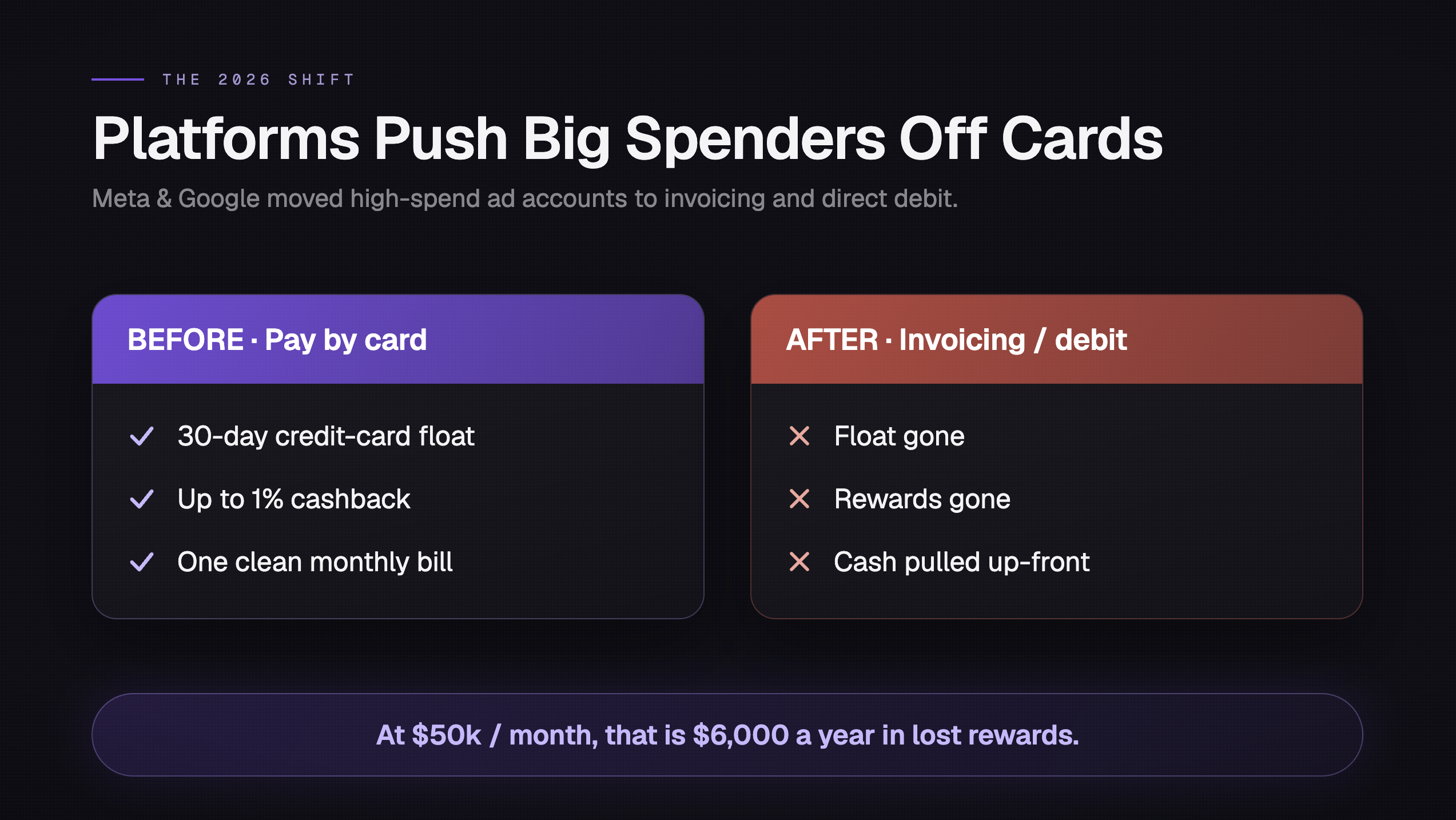
Caption: In 2026, Meta and Google pushed high-spend advertisers off credit cards, wiping out both the float and the rewards.
Then the ground shifted. In 2026, Meta forced high-spend ad accounts (roughly $50,000 a month and up) off credit cards and onto monthly invoicing or direct debit. Google had already done the same for large advertisers. The fallout was immediate:
Advertisers lost the card float. The grace period that financed their spend was gone.
They lost the rewards. At $50k a month, 2 to 3% cashback is $12,000 to $18,000 a year, gone.
Direct debit pulls cash straight from the bank, often the same day.
One media buyer’s post about the change passed 135,000 views in a single day. The takeaway was blunt: the old way of funding ad spend had broken.
How to Finance Ad Spend Without Draining Working Capital
There are four common ways to bridge the gap. They are not equal.
-
Business line of credit. Flexible, but usually needs a personal guarantee, a credit check, and weeks of paperwork.
-
Invoice factoring. Sells unpaid invoices for early cash. Fast, but fees eat 1 to 3% and clients get pulled in.
-
Platform net terms. Meta’s invoicing gives about 30 days, but no rewards and hard limits that pause ads.
-
An ad-spend charge card. Purpose-built for media buying: high limits, cashback, no personal risk.
For most agencies and brands, the last option does the most work with the least friction.
Ad Spend Financing Options, Compared
|
Financing option |
Speed |
Cashback |
Personal guarantee |
Best for |
|---|---|---|---|---|
|
Line of credit |
Slow |
No |
Usually yes |
Long-term working capital |
|
Invoice factoring |
Fast |
No |
Sometimes |
Agencies with big receivables |
|
Platform invoicing |
Medium |
No |
No |
Single-platform spenders |
|
Ad-spend charge card |
Minutes |
Up to 1.5% |
No |
Agencies, brands and freelancers scaling ads |
Table 2: An ad-spend charge card is the only row that fixes speed, rewards, and personal risk at once.
Why an Ad-Spend Credit Card Fixes the Working Capital Problem
A card built for advertising closes both sides of the gap at once.
Opal, the only ad-spend charge card, was designed for exactly this. Instead of tying up your own cash, you fund campaigns on credit and earn the spend back in rewards.
The numbers that matter for cash flow:
Up to $10M in instant credit, roughly 20x higher than a traditional business card.
Up to 1.5% cashback on ad spend with no annual fee.
No personal guarantee and no credit check to get started.
Setup in 2 to 3 minutes; virtual cards issued within 24 to 48 hours.
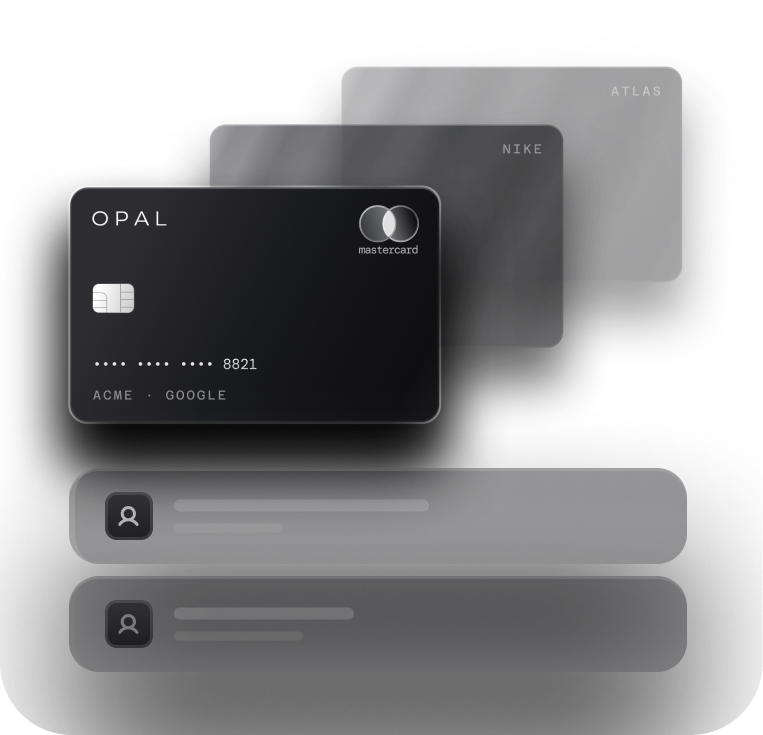
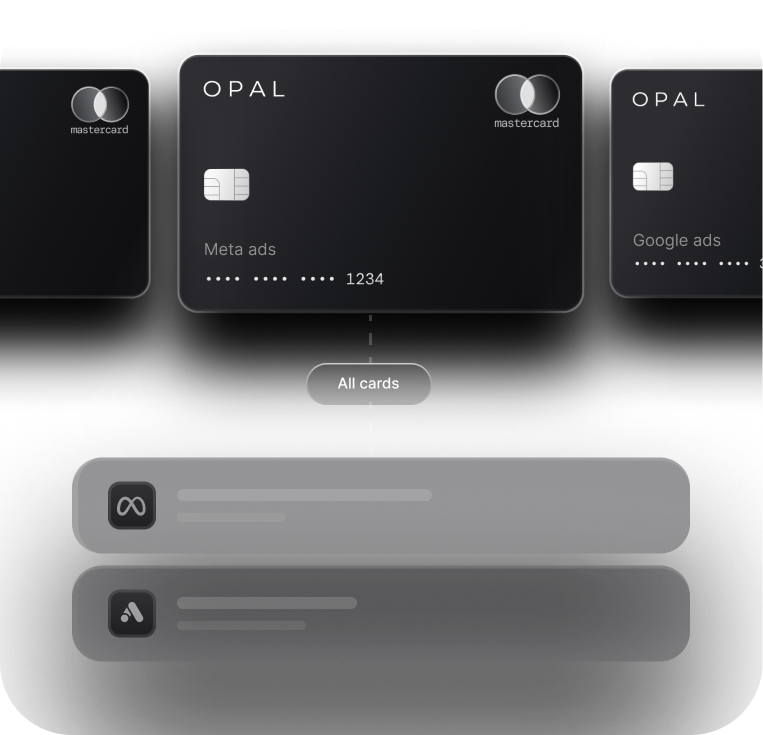
Spin up unlimited virtual cards, one per client or campaign, set spend limits, and keep every budget clean. See how real teams use it in the Opal case studies.
Getting the Card Float Back After the Meta Billing Change
Losing the float hurt the businesses that leaned on it most. This is where the model is shifting again. Opal Ad-Pay lets teams pay Meta and Google invoices by card, even though the platforms now prefer bank transfers. Two things happen: Opal Ad-Pay lets teams pay Meta and Google invoices with a card, even now that the platforms prefer bank transfers. Two things happen:
Cash flow stretches up to 55 days; you pay after the results land, not before the campaign runs.
You still earn rewards on spend that invoicing had stripped bare.
For teams spending $50k or more a month, that float is working capital you keep in your own account longer.
Cash-Flow Float by Payment Method
Direct debit █ 0 days
Meta invoicing ████ ~30 days
Opal Ad-Pay ███████ up to 55 days
Chart: The longer the float, the longer your cash stays working for you, not the platform.
A Simple Framework to Fund Ad Spend the Smart Way
Before another dollar of ad spend leaves your own cash, run this checklist:
-
Separate the money. Never float client budgets from operating cash.
-
Match the terms. Fund spend with a tool whose payback window beats your client’s Net terms.
-
Earn on every dollar. Ad spend that pays no cashback is money left on the table.
-
Protect the campaign. Keep limits high enough that ads never pause mid-flight.
-
Keep personal credit out of it. No personal guarantee means business risk stays with the business.
Want the deeper breakdown? See the guide to the best credit card for online advertising in 2026, or compare Opal to business banking options like Mercury.
The Bottom Line on Financing Ad Spend
Ad spend is the biggest, fastest-moving line item most agencies and brands touch. Funding it out of pocket is how healthy businesses turn cash-poor.
The fix is not spending less. It is financing smarter, with credit built for advertising, rewards on every dollar, and a float that outlasts the client’s invoice.
That is how you scale campaigns without draining the bank.
FAQ: Financing Ad Spend & Working Capital
How can agencies finance ad spend without using their own cash?
Use credit built for advertising, an ad-spend charge card or a pay-by-card invoice tool, so campaigns run on credit while client payments catch up. Working capital stays inside the business.
What is the best way to fund ad spend without draining working capital?
Fund it with a tool whose payback window is longer than the client’s payment terms, and that pays cashback. An ad-spend card with high limits and up to 55 days of float does both.
Can you still pay Meta and Google ad invoices with a credit card in 2026?
Yes. Even after Meta and Google pushed high spenders to invoicing, tools like Opal Ad-Pay let you pay those invoices by card, keeping both the float and the rewards.
How much cashback can you earn on ad spend?
With an ad-spend card like Opal, up to 1.5% on ad spend. At scale that is real money: $100k a month can return up to $18,000 to the business each year.
Opal vs. Dash.fi: Which Ad Spend Card Is Right for Your Agency or Brand?

The Real Cost of a Declined Ad Payment (And How to Prevent It)

Best Credit Card for Facebook Ads and Meta Ads in 2026