

Upgrade your ad spend from Dash.fi to Opal
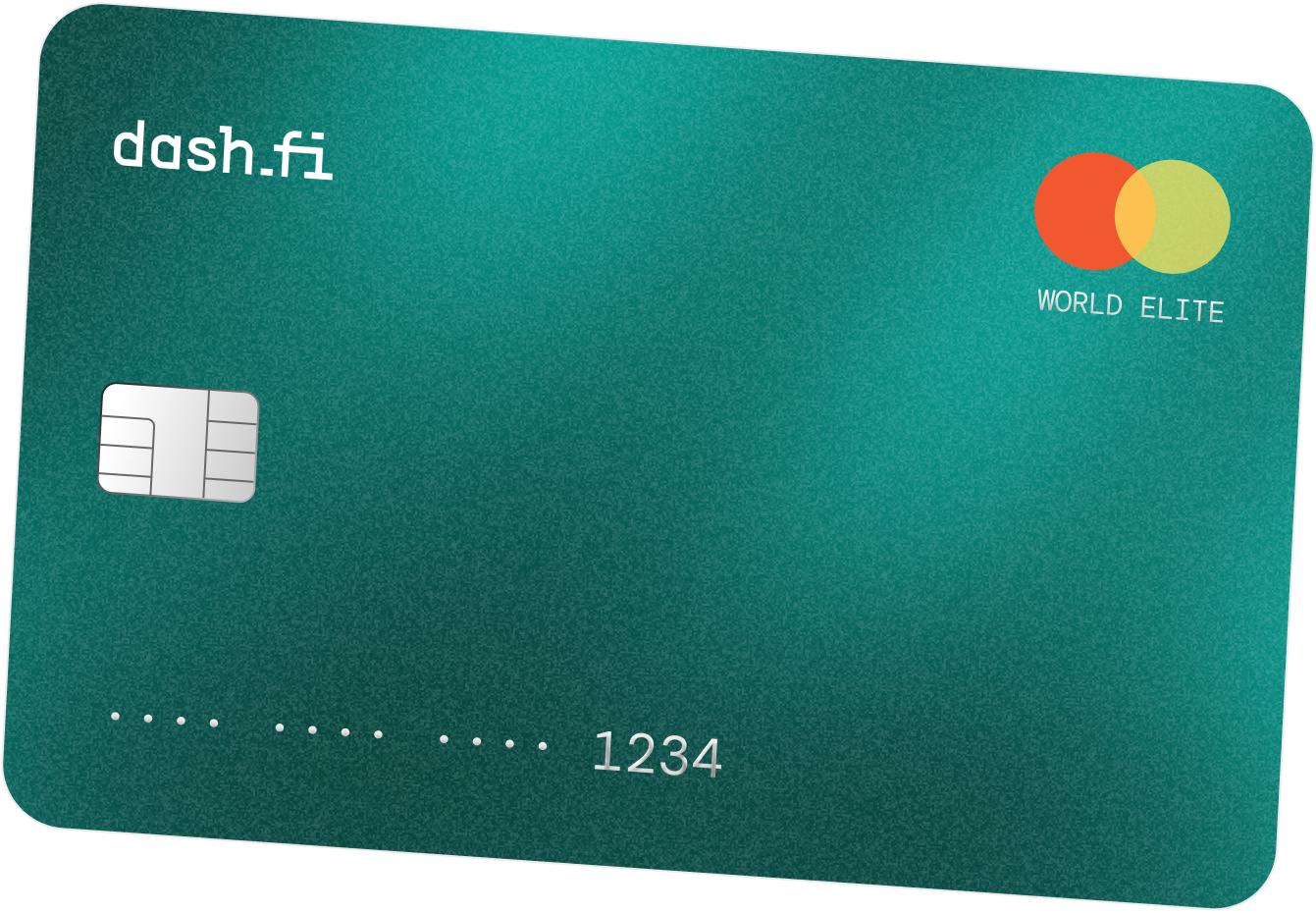
Opal is built for anyone spending at scale on ads: agencies, performance marketers, media buyers, and ecommerce and DTC brands. Dash.fi is a corporate card and finance platform covering ads, shipping and AI spend, with rewards paid into a founder's personal wallet. Here's how the two compare once advertising is the line you need to fund, control and reconcile.



.svg)

.avif)
.avif)
.avif)

Is Opal or Dash.fi better for high-volume ad spend?
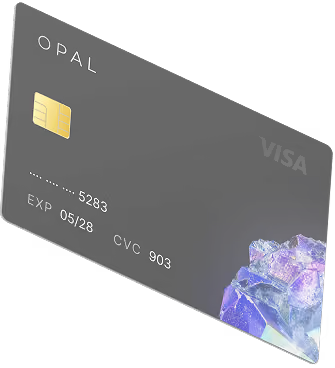
Opal is the more specialized choice when advertising is your largest line. It pays up to 2% cashback on eligible ad spend with no annual cap, across Google, Meta, TikTok, Snapchat, LinkedIn, Amazon and The Trade Desk, at any charge size. Credit limits run up to $10M, sized on the media you manage, with no personal guarantee, no credit check and monthly pay-in-full terms. Virtual cards are unlimited and free, organized by brand, platform and campaign with their own limits and merchant locks, and every transaction reaches QuickBooks or Workday already tagged.
Dash.fi is a broader finance platform covering shipping and AI spend alongside advertising, with audit agents that chase billing errors. Dash.fi's published rewards terms set the ongoing advertising rate at 1.5% on Facebook and Google and exclude single purchases above $10,000, and the rewards are paid into a personal wallet rather than to the company.
Run the company on whatever you like. Put the advertising on Opal.
.avif)
Last verified September 21, 2026, against Dash.fi's published product, help center and legal pages, including the Dash.fi Rewards Terms and Conditions effective July 29, 2026 and Dash.fi's Meta and Google cashback pages. Dash.fi product features, card terms, credit structures, rewards programs and eligibility may change, and Dash.fi's help documentation notes that each account's actual rewards rates are set in that account's own rewards terms. Confirm current terms with Dash.fi before making a financial decision. Dash.fi and related product names are marks of their respective owners. Opal is not affiliated with or endorsed by Dash.fi. Opal credit availability, limits and cashback rates are subject to underwriting, product availability and applicable terms.
Commerce data sizes a merchant. Advertising volume sizes an advertiser.
Dash.fi sizes limits with performance-based underwriting that reads revenue, spend and payment history, with Shopify, Amazon and PayPal connected for real-time limits. Dash.fi says its approved limits can reach 10 to 20 times what a traditional card offers at signup. It is a real improvement on a static limit, and for a steady merchant the signals are the right ones.
Advertising outruns those signals in both directions. An agency's booked revenue is management fees, so a team responsible for $2M a month in client media might show $200K in fees and get sized against the smaller number. A scaling DTC brand has the opposite problem: the ad spend that drives next quarter's orders lands months before the commerce data catches up, so the limit reflects where the business was rather than where the budget is going.
Opal underwrites the media itself. Eligible businesses can access credit limits up to $10 million, determined using factors including managed ad spend, cash flow and underwriting, with limits up to 20 times higher than traditional cards. Neither product requires a personal guarantee, and Opal adds no credit check, with an application that takes two to three minutes online.
Repayment terms differ too. Dash.fi currently lists Net-1, Net-7 and Net-15 as live, with Net-30 and longer marked coming soon, and offers early paydowns to free up capacity. The Opal Card is paid in full monthly, so you settle once a month and don't pay down mid-cycle to keep campaigns running.
Your cashback shouldn't shrink after month two.
Dash.fi markets 3% back on ad spend. Dash.fi's Rewards Terms and Conditions, effective July 29, 2026, set out the schedule behind that number, and four details in it change the answer.
The 3% is the Sign-Up Bonus Cash Percentage, applied to the first two calendar months. After that, the Earned Cash Percentage is 1.5% on qualifying purchases at the standard interchange rate. Qualifying purchases are US dollar transactions on Facebook, Google or a merchant with "advertise" in the name, limited to digital advertising spend. Facebook and Google are the only platforms named, so TikTok, Snapchat, LinkedIn, Amazon and The Trade Desk qualify only if the merchant name happens to include that word. Any qualifying purchase above $10,000 counts as a Large Ticket Purchase and is excluded. And a $20,000 minimum in qualifying purchases applies before any cash rewards are earned.
The $10,000 exclusion matters most for anyone running real budgets. A brand putting $1M a month into Meta clears $10,000 in a single charge constantly, and so does an agency funding one client's campaign flight. For a large advertiser, that can be most of the monthly spend.
Where the reward lands matters too. Dash.fi states that cash back arrives in a personal wallet rather than a company account. That can suit a founder-run brand. For an agency, or any company with a finance team, the reward sits outside the business.
Opal pays up to 2% on eligible ad spend, uncapped, across every supported platform and at any charge size. At $250,000 a month that is up to $5,000 a month, or up to $60,000 a year. At $1M a month it is up to $20,000 a month, or up to $240,000 a year.
Your cards should map to brands, platforms and campaigns.
On card count the two products are level. Both issue unlimited virtual cards with per-card controls, and both let you freeze or archive a card without touching the rest. Dash.fi's card infrastructure is well built, and nobody would struggle to create a card per campaign on it.
The difference is what the cards are built around. Dash.fi's published documentation describes cards organized around one company's spend, with limits set by card, person or department.
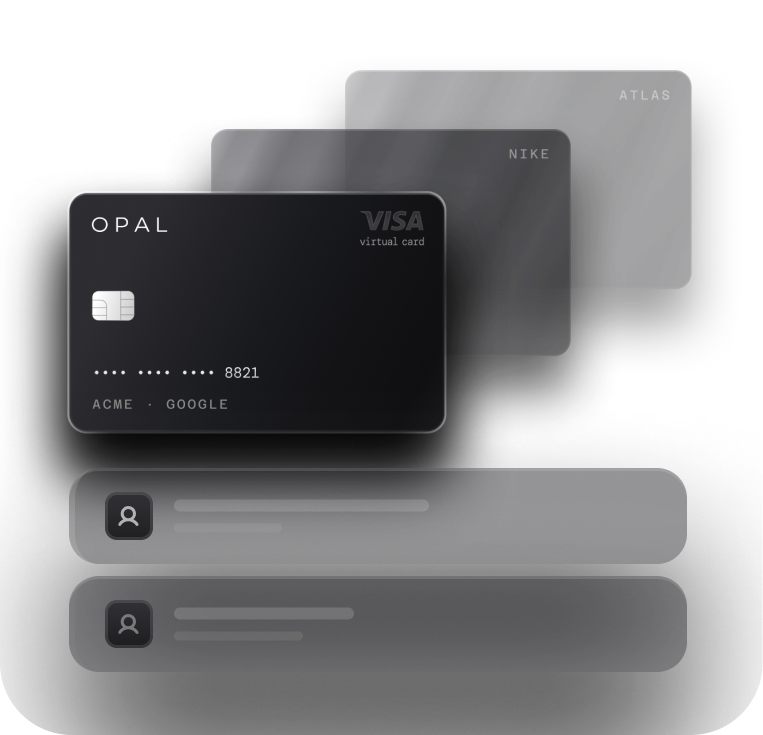
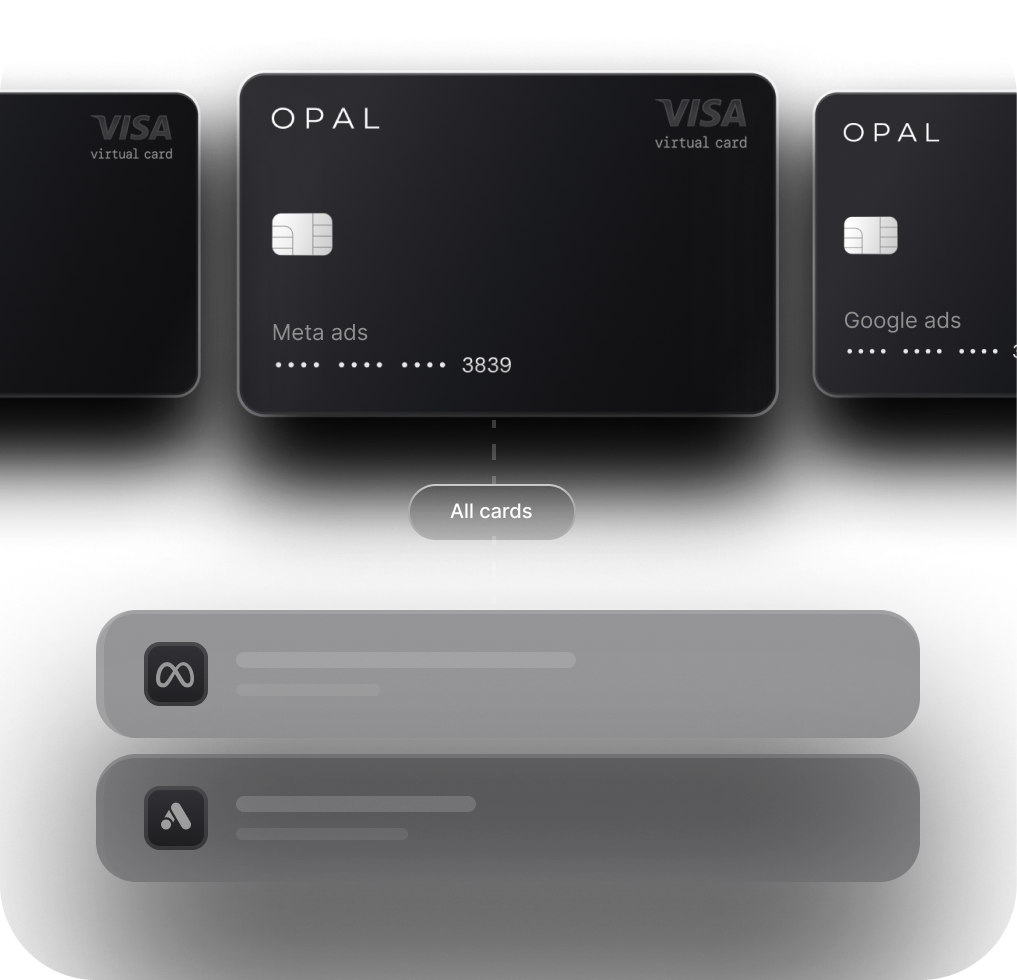
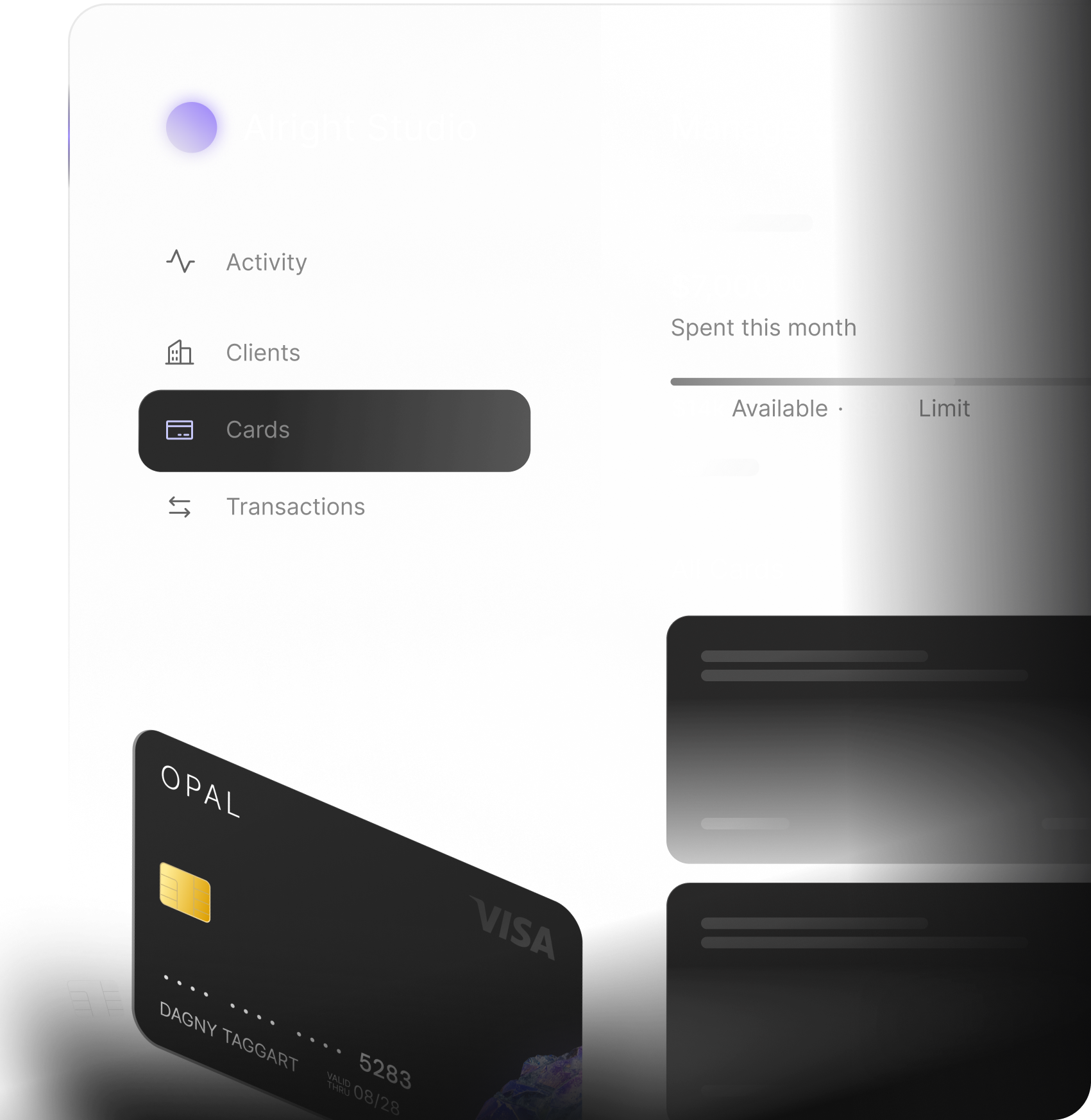
Opal issues cards by brand, by platform and by campaign, each with its own limit, its own permissions and a merchant lock that ties it to a single platform. Limits are enforced automatically, new cards are created instantly so a new campaign never waits, and every transaction is visible in real time.
That structure carries into the platforms. Opal cards update automatically on connected ad accounts, so a refreshed or replaced card doesn't trigger a round of manual payment-method updates or a re-verification pause mid-flight.
Transactions arrive in QuickBooks or Workday already tagged by brand, platform and campaign, which answers the month-end question before it gets asked. Agencies use that structure to separate client budgets, media buyers to separate platforms, and brands to separate campaigns and product lines.
Accounting sync, ad-spend reconciliation and invoice payments are three different problems.
Accounting sync moves transactions into the ledger, and both products do it. Ad-spend reconciliation is the harder one, because it has to answer which brand, platform and campaign a charge belongs to. Opal settles that at the card rather than in a spreadsheet afterwards, and syncs to QuickBooks or Workday with the tags already attached.
Invoice payments are a third problem again. Meta and Google have moved high-spend advertisers onto monthly invoicing paid by ACH or wire, which takes the biggest line in the business out of card rewards entirely.
Dash.fi pays 1% on qualified Meta and Google invoice payments made through Dash.fi. The monthly spend eligible for that 1% is tiered against the Dash Cash balance you hold, from $25,000 of monthly spend at a $100,000 balance, through $500,000 at $2M, up to $4M at $16M or more. Dash.fi states plainly that spend above your tier earns nothing. For a business sitting on idle cash, it pays well.
Opal Ad Pay takes the other route. It detects Meta and Google invoices automatically, shows upcoming amounts and due dates in one place, and settles them with Opal credit or a connected card, extending the cash-flow window by up to 55 days. Payments on Opal credit carry a 3% processing fee, and the 1% cashback on those payments brings the net cost to 2%. Payments on a connected card carry 3.5%. No balance is required to unlock it.
Where Dash.fi may still be the better fit
Dash.fi covers spend categories Opal doesn't. Here is where that matters.
Shipping and Freight Spend
Dash.fi markets rewards on shipping alongside advertising and runs an audit agent across carrier invoices. Opal cards are limited to supported advertising and media platforms, so a business carrying heavy freight bills has a line Opal does not cover.
Invoice and Billing Recovery
Dash.fi runs AI audit agents that scan ad platform, carrier and AI provider invoices for billing errors and overcharges, free to run with a success fee on what they recover. Opal has no equivalent product, and for a business with large, messy vendor billing that is real money.
AI and General Spend
Dash.fi markets rewards on AI and LLM provider usage and 2% on other purchases, with bill pay and approval workflows for general company spend. Opal covers the advertising, including 3% on ads placed on AI platforms through its Gravity partnership.
Who Opal is for
Opal is the right fit if you are:


Outsmart Labs faced these same challenges. After switching, they recovered 15 hours per week in reconciliation time and added a recurring cashback revenue stream on client spend they were already running.
15+ h per week
15+
Put the ad spend on Opal
Dash.fi covers freight, AI spend and general purchasing. Opal covers the advertising: up to 2% cashback on eligible ad spend with no annual cap, credit limits up to $10M with no personal guarantee or credit check, unlimited free virtual cards with per-card limits and merchant locks, real-time visibility, Ad Pay for Meta and Google invoices, and reconciliation that syncs to QuickBooks or Workday. Apply online in 2 to 3 minutes, with a person available 24/7.
Frequently asked questions
For advertising, yes. Opal pays up to 2% on eligible ad spend across every supported platform, with no cap and no charge-size exclusion, sizes credit on the media you run, and organizes cards and reconciliation by brand, platform and campaign. Dash.fi covers more categories overall, and the advertising rate in Dash.fi's published terms settles at 1.5% on Facebook and Google after the first two months.
Focus. Dash.fi is a finance platform spanning ads, shipping, AI spend and general purchasing, underwritten on commerce performance and rewarding a founder's wallet. Opal is built around advertising, underwritten on the media you manage, with the reward, the limit, the card structure and the reconciliation all shaped by that one job.
Dash.fi's Rewards Terms and Conditions, effective July 29, 2026, set the Sign-Up Bonus Cash Percentage at up to 3% for the first two calendar months and the ongoing Earned Cash Percentage at 1.5% on qualifying purchases at the standard interchange rate. Qualifying purchases are limited to Facebook, Google and merchants with "advertise" in the name, single purchases above $10,000 are excluded, and Dash.fi says rewards are paid into a personal wallet. Dash.fi's help documentation notes that actual rates are defined in each account's own rewards terms, so an individual account may differ.
Opal, once the ad spend is the biggest line. A brand at scale runs single Meta and Google charges well above $10,000, which is the threshold Dash.fi's terms exclude from rewards, and spreads budget across TikTok, Snapchat, Amazon and The Trade Desk, which Dash.fi's qualifying-purchase definition does not name. Opal pays up to 2% across all of them at any charge size, sizes credit on the media rather than on trailing order volume, and pays the rewards to the business.
Dash.fi's published rewards terms define qualifying purchases as US dollar transactions on Facebook, Google, or a merchant with "advertise" in the name, limited to digital advertising spend. Other platforms earn only if the merchant name includes that word. Opal's cashback covers eligible ad spend across Google, Meta, TikTok, Snapchat, LinkedIn, Amazon, The Trade Desk and more.
They solve it differently. Dash.fi pays 1% on qualified Meta and Google invoice payments, with eligible monthly spend tiered against the balance you hold with Dash.fi and spend above your tier earning nothing. Opal Ad Pay settles supported Meta and Google invoices on Opal credit or a connected card, extending the cash-flow window by up to 55 days, with a 3% fee on Opal credit (2% net of the 1% cashback) or 3.5% on a card, and no balance requirement. If you hold large idle balances, Dash.fi's route pays. If that cash is working, Opal's does.
Yes, and for some teams it is the right setup. Dash.fi covers freight, AI provider bills and general company purchasing, and Dash.fi's audit agents work on invoices Opal does not touch. Opal covers the advertising: every platform, any charge size, with cards and reconciliation organized around brands, platforms and campaigns. Nothing about running one prevents running the other.