

Ad Spend Management: The Complete Guide for Agencies and Brands (2026)

Key Takeaways
Ad spend management means funding, controlling, tracking, and earning cashback on paid media. For most teams, the weak point is the payment layer.
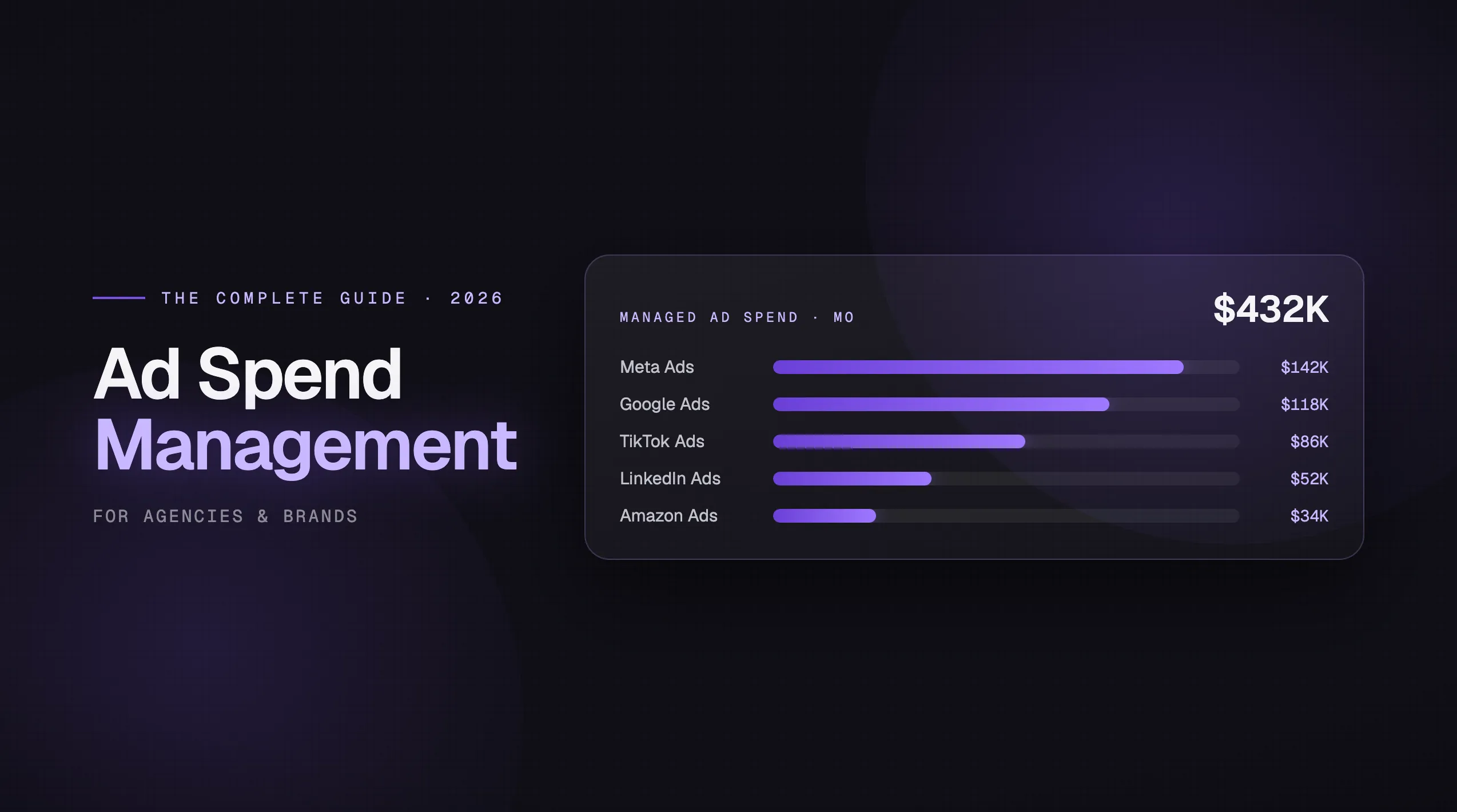
The 2026 market is huge: global ad spend tops $1 trillion, with digital near $835 billion. Bigger budgets make every payment failure more expensive.
Traditional business cards break at scale, with low limits, mid-campaign declines, capped rewards, and messy reconciliation.
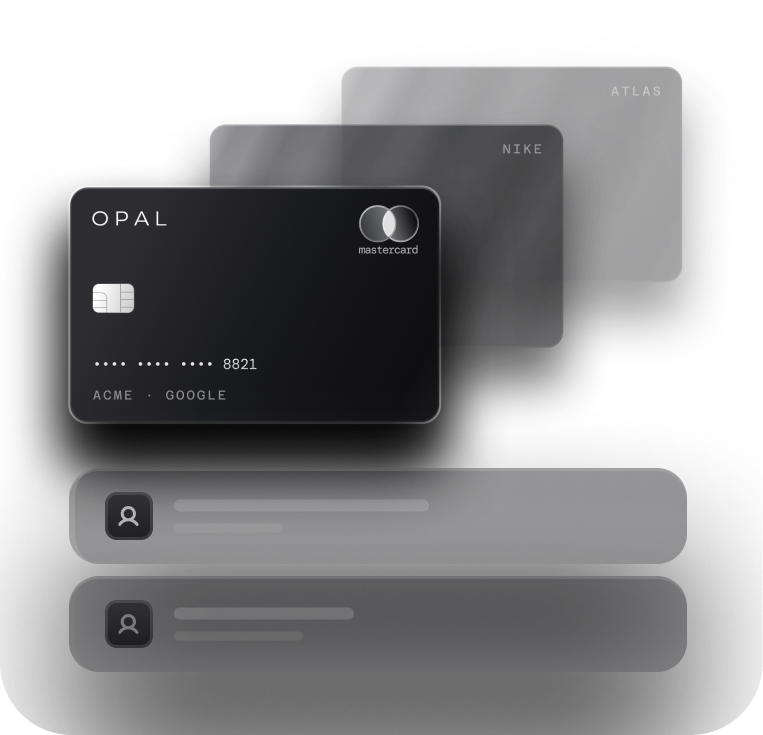
A real ad spend card offers high limits, uncapped cashback, virtual cards per client or campaign, and no personal guarantee.
Cashback is pure margin. At up to 1.5%, $500K/month in managed spend can return as much as $90,000 a year.
Opal is purpose-built for this: up to $10M credit, up to 1.5% cashback, unlimited free virtual cards, $0 fees, and a 2 to 3 minute setup.
Global ad budgets just crossed a historic line. In 2026, worldwide ad spend is set to top $1 trillion for the first time, and digital alone is reaching roughly $835 billion. That is a huge river of money moving every single day.
Yet many agencies and brands quietly lose margin at one weak spot: the payment layer. The wrong card. Capped rewards. A charge declined mid-campaign. Smarter ad spend management fixes all three.
Quick answer: Ad spend management is how agencies and brands fund, control, track, and reconcile the money they pour into paid media. The fastest 2026 upgrade is moving to a card built for ad spend, like Opal, which offers up to $10M in credit, up to 1.5% cashback on eligible ad spend, and unlimited free virtual cards, with no annual fee and no personal guarantee.
What Is Ad Spend Management?
Ad spend management is the system agencies and brands use to plan, fund, control, and reconcile every dollar spent on advertising. It is not one tool. It is a workflow.
Four jobs sit at its core:
-
Funding: paying Meta, Google, TikTok, and others without draining cash.
-
Control: setting clear spend limits per client, campaign, or channel.
-
Tracking: knowing who spent what, in real time, with no guesswork.
-
Rewards: earning cashback on spend you were already making.
Do it well and it protects margin. Do it poorly and it quietly burns it.
Why Ad Spend Management Breaks at Scale
Most business cards were designed for flights and office supplies. Not high-volume media buying. So they crack under pressure.
The usual failure points:
Low credit limits force teams to split spend across several cards.
Charges get declined during a campaign ramp, the worst possible moment.
Rewards hit a cap, then collapse to almost nothing.
One shared card blends every client's spend into a month-end mess.
For a fast-growing agency, a single Friday-afternoon decline can pause dozens of campaigns before anyone even notices. That is why teams running many accounts move to dedicated cards per client. Scale makes small cracks expensive.
The 2026 Ad Spend Landscape: Facts & Figures
The market backdrop explains the urgency. The money is bigger, and algorithms now steer where it lands.
|
Metric |
2026 figure |
|---|---|
Global ad spend (all channels) |
Surpasses $1 trillion (~$1.06T) |
Global digital ad spend |
~$835 billion (68.7% of all ad spend) |
US ad spend growth |
~9.5% year over year |
Algorithm-driven spend by 2028 |
~75% of all ad spend |
Google searches with AI Overviews |
~47% |
Sources: dentsu Global Ad Spend Forecasts, eMarketer, Statista.
Two things stand out. Budgets keep climbing. And most spend is becoming algorithm-driven, which raises the stakes on every payment that clears, or fails.
What to Look For in an Ad Spend Card
Not every card can handle media buying. A real ad spend card should tick five boxes:
A high, flexible credit limit. Campaigns can jump from $5K to $500K in a week.
Uncapped cashback on ad spend, so rewards stay valuable at scale.
Clean billing with Meta, Google, TikTok, LinkedIn, and Snap.
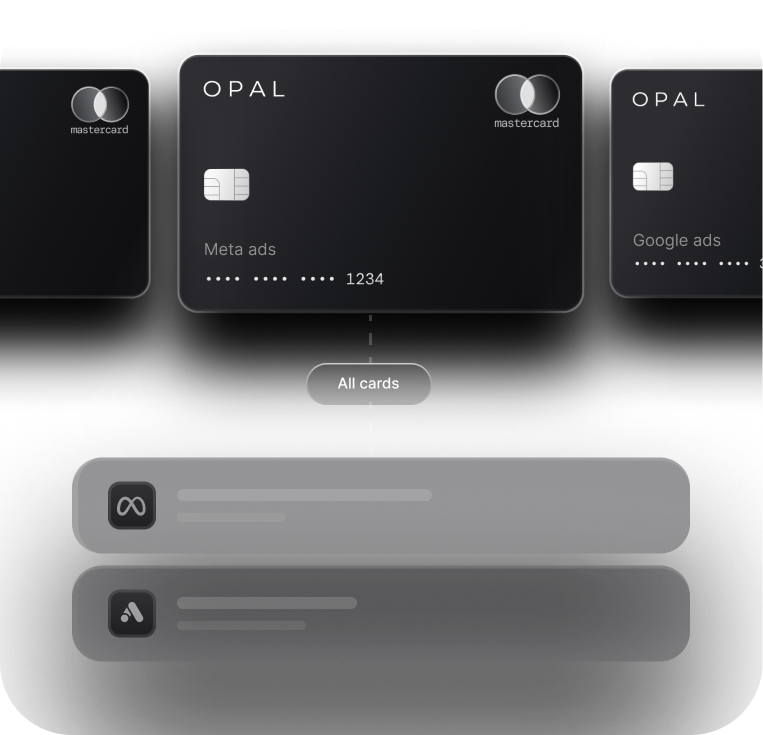
Per-client and per-campaign virtual cards.
No personal guarantee and no hard credit check.
Opal was built around all five from day one. For a full breakdown, see the best credit card for online advertising.
How Do Agencies Earn Cashback on Ad Spend?
The idea is simple. Run client budgets through a card that pays uncapped cashback, and those rewards turn into pure margin. At up to 1.5%, the math compounds fast.
|
Monthly managed ad spend |
Annual cashback (1% credit / 1.5% pre-funded) |
|---|---|
$100,000 |
$12,000 / $18,000 |
$200,000 |
$24,000 / $36,000 |
$500,000 |
$60,000 / $90,000 |
$1,000,000 |
$120,000 / $180,000 |
This is spend agencies already manage for clients. And cashback does not roll over. One Opal user, an operations lead at agency Outsmart Labs, said the cashback alone became a real revenue stream. See the full agency ad spend cashback breakdown.
Opal vs Traditional Cards: A Quick Comparison
Side by side, the difference is stark.
|
Feature |
Opal |
Typical business card |
|---|---|---|
Annual fee |
$0 |
$325 to $895 |
Ad spend cashback |
Up to 1.5%, uncapped |
Often capped near $150K |
Credit limit |
Up to $10M |
Limited |
Virtual cards |
Unlimited, free |
Few or paid |
Personal guarantee |
None |
Usually required |
Setup time |
2 to 3 minutes |
Days to weeks |
For high-volume advertisers, the built-for-purpose card wins. Set it against a fee-heavy option like the Amex Business Gold Card, and the margin gap is easy to see.
How to Set Up Ad Spend Management (Step by Step)
A clean setup takes minutes, not weeks:
-
Choose Opal, a card built for ad spend, not general expenses.
Issue one virtual card per client or per platform.
Set spend limits at the card level so overspend stops automatically.
-
Auto-sync transactions to an accounting tool like QuickBooks for hands-off reconciliation.
Track cashback monthly and report it as margin, not a rounding error.
There is also a newer pressure point. Meta and Google have pushed many high-spenders off cards and onto invoices. Teams spending $50K+ a month can pay those ad invoices on credit and extend cash flow by up to 55 days with Opal Ad Pay.
Frequently Asked Questions
What is ad spend management?
It is the system used to fund, control, track, and reconcile money spent on paid media, so campaigns never pause and budgets never slip. For agencies managing multiple clients, it also covers how spend is allocated per account, how cashback is captured, and how transactions are synced to accounting tools like QuickBooks.
What is the best card for ad spend in 2026?
For agencies and brands, Opal stands out, as the best card for ad spend in 2026. It is a charge card built only for ad spend, with up to $10M in credit, up to 1.5% cashback on eligible ad spend, and unlimited free virtual cards with no annual fee.
Can you earn cashback on Google and Meta ads?
Yes. With an uncapped ad spend card like Opal, every dollar run through Meta, Google, TikTok, LinkedIn, Snapchat, and other platforms earns up to 1.5% cashback. That means a team running $500K a month can earn up to $90,000 a year in pure margin on spend they were already making.
Do ad spend cards require a personal guarantee?
Not all of them. Opal requires no personal guarantee and no hard credit check. Credit limits are sized based on managed spend volume, not the agency owner's personal financial position, which makes it accessible to fast-growing agencies that may not have years of credit history.
How fast can an agency start?
Opal's application takes 2 to 3 minutes with no hard credit check, and virtual cards are usually issued within 24 to 48 hours. There is no lengthy underwriting process, so most agencies can have cards running on their ad platforms the same day they apply.
Spend Management for Modern Businesses: A Practical Guide

How to Separate Client Ad Budgets at Your Agency (Before It Costs You a Client)

How to Consolidate Client Ad Billing on One Card and Still Earn Rewards