
Ad Spend Tracking
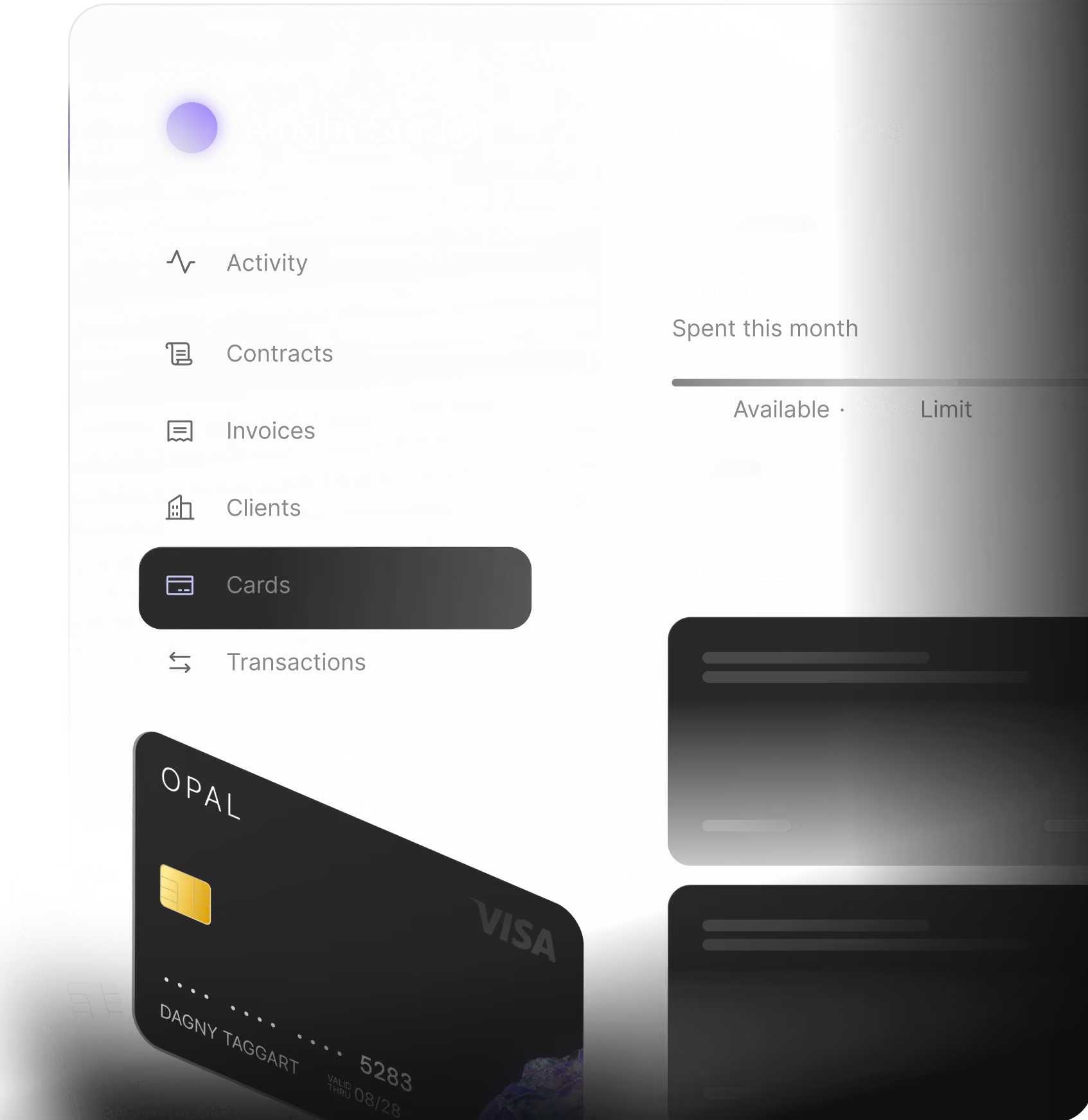
Ad spend tracking is the ongoing monitoring of how much is being spent on advertising, broken down by platform, campaign, client, or brand, while campaigns are running. It combines what ad platforms report with what has actually been charged to cards or bank accounts, so teams can see pacing against budget, spot overspend early, and act before a month closes. It sits between setting a budget and reconciling spend after the fact.
Last updated: September 2026
Why ad spend tracking matters
Most advertising overspend is noticed after it happens. Tracking is about noticing it while there is still time to change the outcome.
Each platform reports spend in its own dashboard, in its own time zone and currency, with its own billing schedule. Pulling those numbers together once a month tells you what happened. Pulling them together daily tells you what is happening. For agencies running many client accounts, it also shows which client budget a charge belongs to before anyone has to ask.
Tracking overlaps with two related ideas. Spend visibility is having live access to the numbers at all. Ad spend reconciliation is matching those numbers to the books after the period closes. Tracking is the in-flight step between them.
How businesses track ad spend
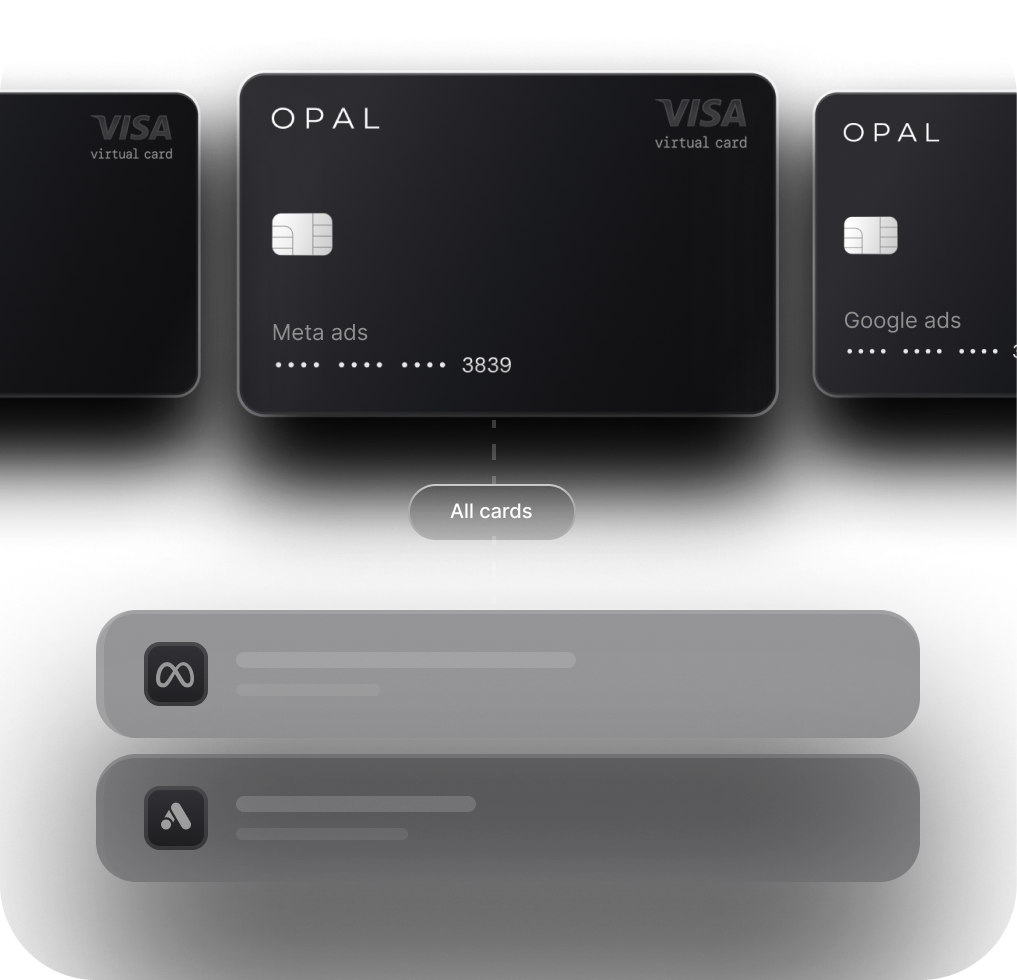
- Dedicated cards: one card per client or platform, so payments are already separated.
- Pacing checks: comparing spend to date with the campaign budget for the period.
- Cross-platform views: combining Meta, Google, TikTok, and other platforms in one report.
- Alerts: notifications when spend passes a threshold or a card nears its limit.
Business examples
An agency reviewing spend against budget for 30 clients every morning before stand-up. A brand catching a misconfigured campaign that spent a week’s budget in a day. A finance lead confirming that card charges and platform-reported spend match each week instead of discovering differences at close.


More Glossary Terms

Frequently asked questions
Tracking watches spend as it happens so teams can adjust campaigns and budgets. Reconciliation happens after the period, matching platform-reported spend and card charges to the accounting records.
Platforms often charge on billing thresholds or on a schedule, so charges can lag or bundle several days of delivery. Taxes, currency conversion, and credits can also make the charged amount differ from what the dashboard shows.
The simplest method is to pay each client’s ad accounts with a dedicated card, so every charge is already attributed. Reports can then group spend by client without splitting a shared statement.
See what Opal can do for you
Learn how our spend platform can increase the strategic impact of your finance team and future-proof your company