


Spend Visibility
Spend visibility is the ability to see business spending as it happens, broken down by the dimensions that matter to the business, rather than reconstructing it after the billing cycle closes. For an advertiser those dimensions are client, campaign, platform, and card. Real visibility means a transaction is attributable the moment it posts, without a lookup, a spreadsheet, or a message to the person who made the charge.
Last updated: August 2026
Why spend visibility matters
Reporting that arrives at month end can explain what happened. It cannot change it.
The gap shows up most clearly when something goes wrong. A card declines on a Friday, campaigns slow over the weekend, and nobody notices until the numbers look strange on Monday. Or a client's spend runs 20% over budget across three platforms and the overage only becomes visible when the invoices are assembled. Both are cheap to fix on the day and expensive to fix in arrears.
Visibility is also a client-facing asset. An agency that can answer a budget question in the moment holds a different kind of relationship than one that promises to check and come back.
How businesses build spend visibility
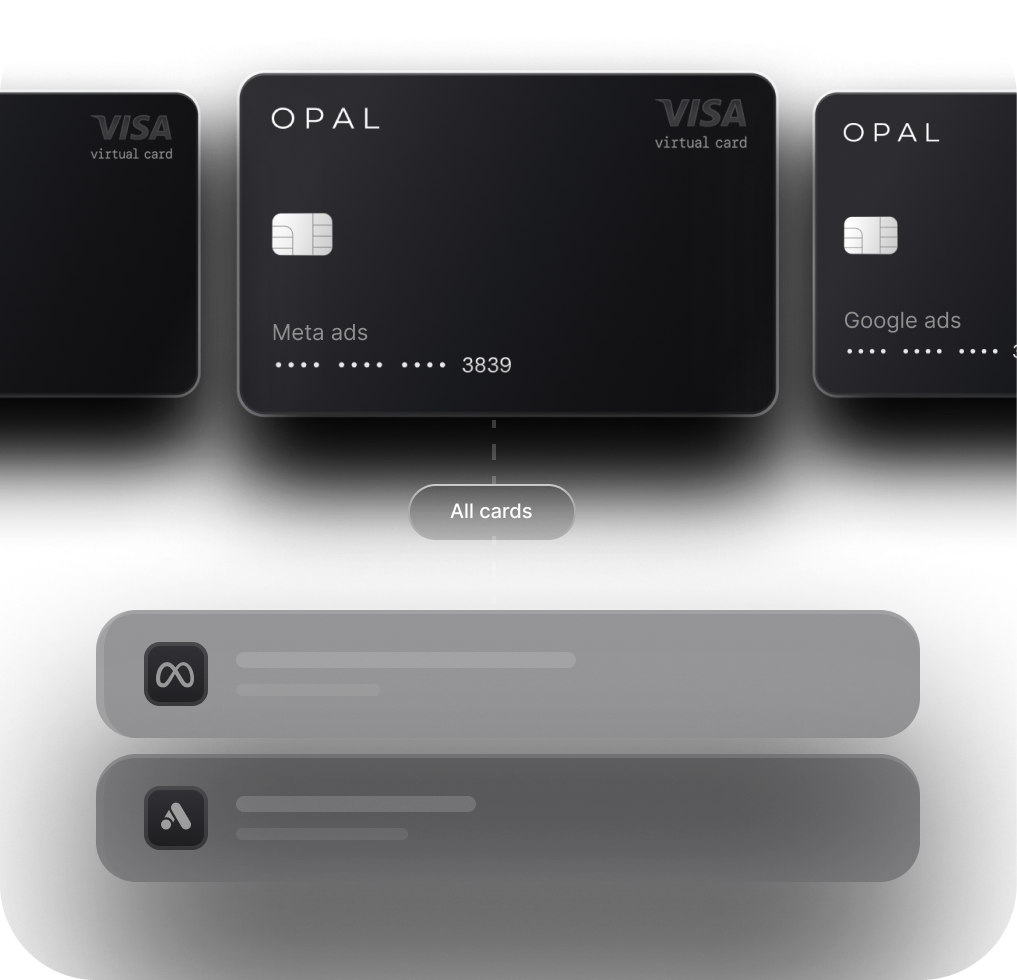
- Dedicated cards so attribution is structural rather than manual.
- Real-time dashboards covering every client and platform in one view.
- Alerts on limits approached, declines, and unusual charges.
- Accounting sync so the ledger and the dashboard agree.
Business examples
A finance lead checking live spend against budget for 20 clients before a Monday call. An agency owner viewing cashback earned across every client account. A media buyer confirming a threshold charge cleared before scaling a campaign.



Frequently asked questions
Because the spend belongs to several different parties. A single company reading its own statement needs one view. An agency needs the same statement split cleanly by client, and it needs that split to be defensible when a client questions it.
Partly. Accounting sync gives a clean ledger, but it is populated after transactions post and it categorises by account rather than by client or campaign. It answers the bookkeeping question, not the operational one.
They make attribution automatic. When one card maps to one client and one platform, the transaction arrives already labelled, so no one has to work out which client a charge belongs to.
See what Opal can do for you
Learn how our spend platform can increase the strategic impact of your finance team and future-proof your company