
Virtual Card for Ad Spend
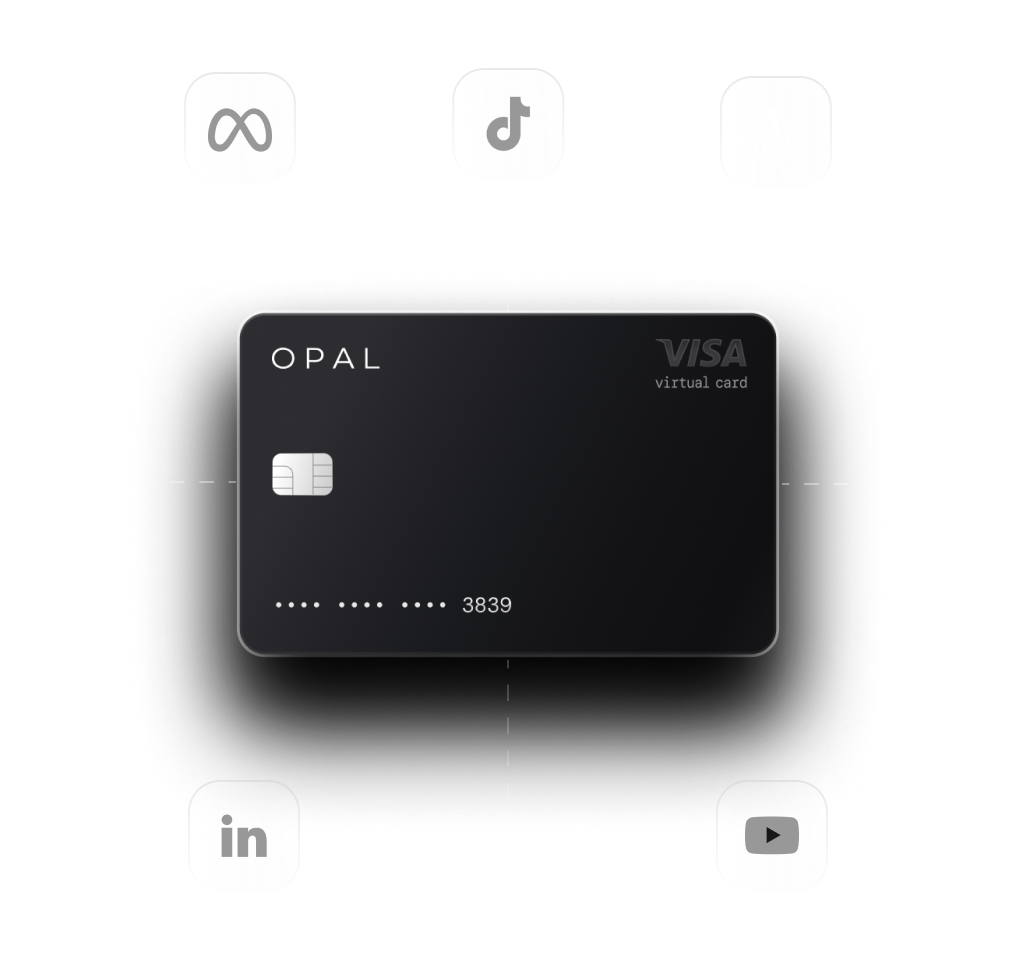
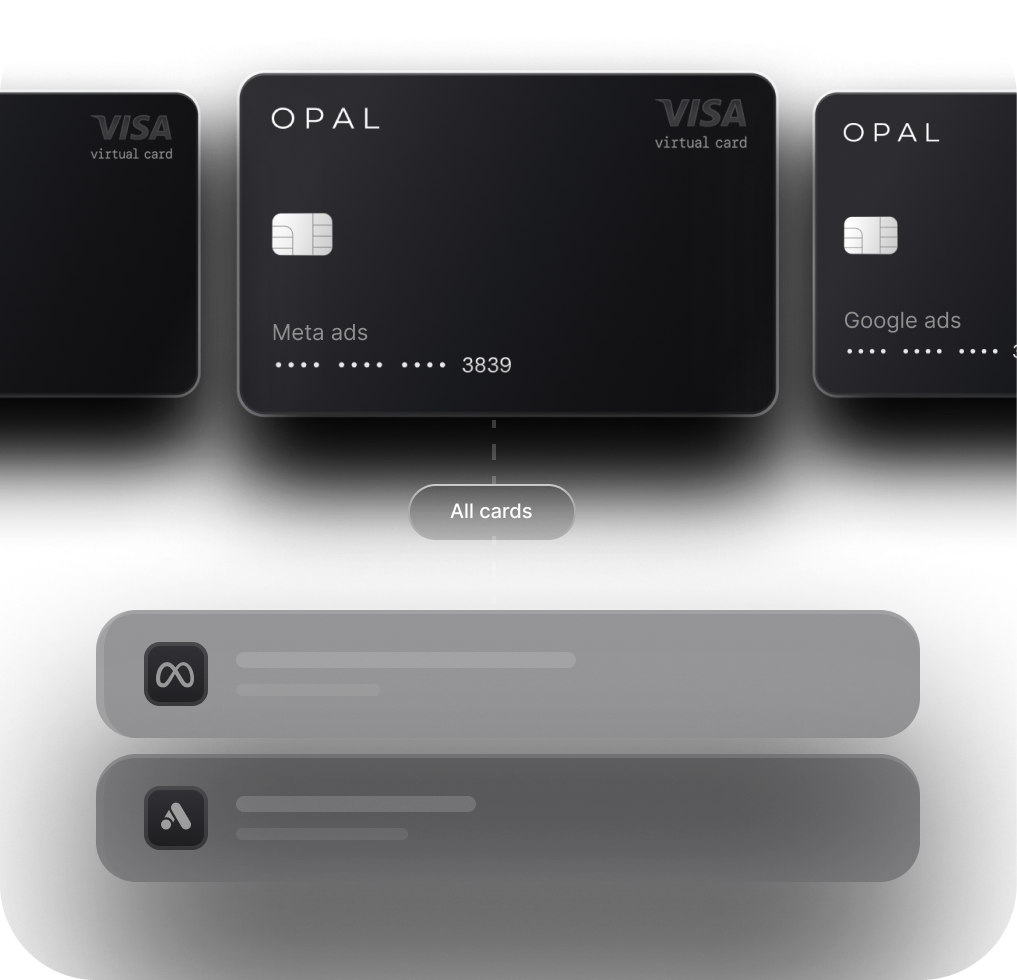
A virtual card for ad spend is a virtual card number used only to pay advertising platforms such as Meta, Google, TikTok, LinkedIn, or Amazon. Businesses usually create one for each client, platform, or campaign and add it as the payment method on the matching ad account. Each card can carry its own spending limit and merchant lock, so ad charges stay separate from other company spending and from each other.
Last updated: September 2026
Why virtual cards for ad spend matter
Ad platforms charge differently from most vendors. They bill on thresholds, often several times a month, and pause campaigns quickly when a payment fails.
Putting that spend on a shared company card causes three problems. Charges from many accounts mix on one statement. A limit reached by one campaign can decline charges for another. And a card replaced after fraud has to be updated on every ad account at once. A dedicated virtual card per client or platform keeps each account’s charges, limits, and failures separate.
These cards are a specific use of virtual cards, usually combined with merchant locks so a card issued for one platform cannot be used anywhere else. For platform detail, see Opal for Meta Ads and Opal for media buyers.
How teams set up virtual cards for ad spend
- One card per client: every client’s spend is separated from the first charge.
- One card per platform: Meta, Google, and TikTok each get their own number.
- Limits above forecast: a ceiling that stops runaway spend without blocking normal billing.
- Merchant locks: each card only works with the platform it was issued for.
- Named cards: labels that match the ad account, so reconciliation needs no guesswork.
Business examples
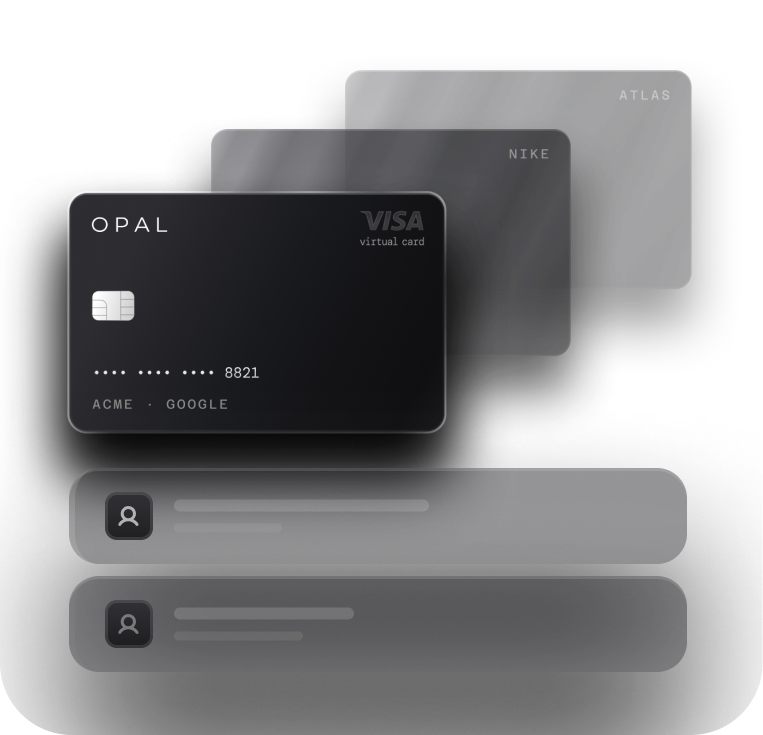
An agency with 25 clients running 60 virtual cards, one for each client and platform pairing. A brand keeping its TikTok test budget on a capped card so an experiment cannot eat into Google spend. A media buyer replacing one compromised card without touching any other client’s ad account.



Frequently asked questions
Yes. Meta, Google, and most major ad platforms accept virtual card numbers as a payment method, and they are charged the same way as a physical card. Platform rules on accepted card types can vary by country and account.
Ad platforms bill frequently and in amounts that can spike when campaigns scale. On a shared card, one account’s charges can use up the limit for everyone else, and fraud checks can flag unusual patterns, both of which lead to declines and paused campaigns.
Most agencies that manage client media find it cleaner. A card per client, or per client and platform, keeps charges attributed, limits a declined payment to one account, and makes client billing and reconciliation simpler.
See what Opal can do for you
Learn how our spend platform can increase the strategic impact of your finance team and future-proof your company