
Virtual Card Issuance
Virtual card issuance is the process of creating a new virtual card number, usually in seconds from a dashboard or through an API, and assigning it to a person, vendor, platform, or budget. At the point of issue the account holder typically sets the card’s spending limit, expiration date, merchant restrictions, and who can use it. The card is backed by the business’s card account and can be paused or closed without affecting any other card.
Last updated: September 2026
Why virtual card issuance matters
The value of virtual cards depends on how easily new ones can be created. If issuing a card takes a support ticket, teams go back to sharing one number.
Fast issuance changes how spend is structured. A new client, campaign, vendor, or employee can get its own card the day it starts, with rules applied from the first transaction. Because each card is set up for one purpose, controls can be tight without getting in anyone’s way, and closing the card when the work ends is part of the same process.
Issuance is also where card controls are decided. The limit, the allowed merchants, and the expiration date chosen at creation are what protect the account later.
How businesses issue virtual cards
- On demand: creating a card from a dashboard when a new vendor, client, or campaign starts.
- By template: using preset rules, such as a platform lock and monthly limit, for common card types.
- By API: generating cards automatically from other systems, such as an onboarding or procurement workflow.
- With permissions: letting team members request or create cards within limits set by finance.
Business examples
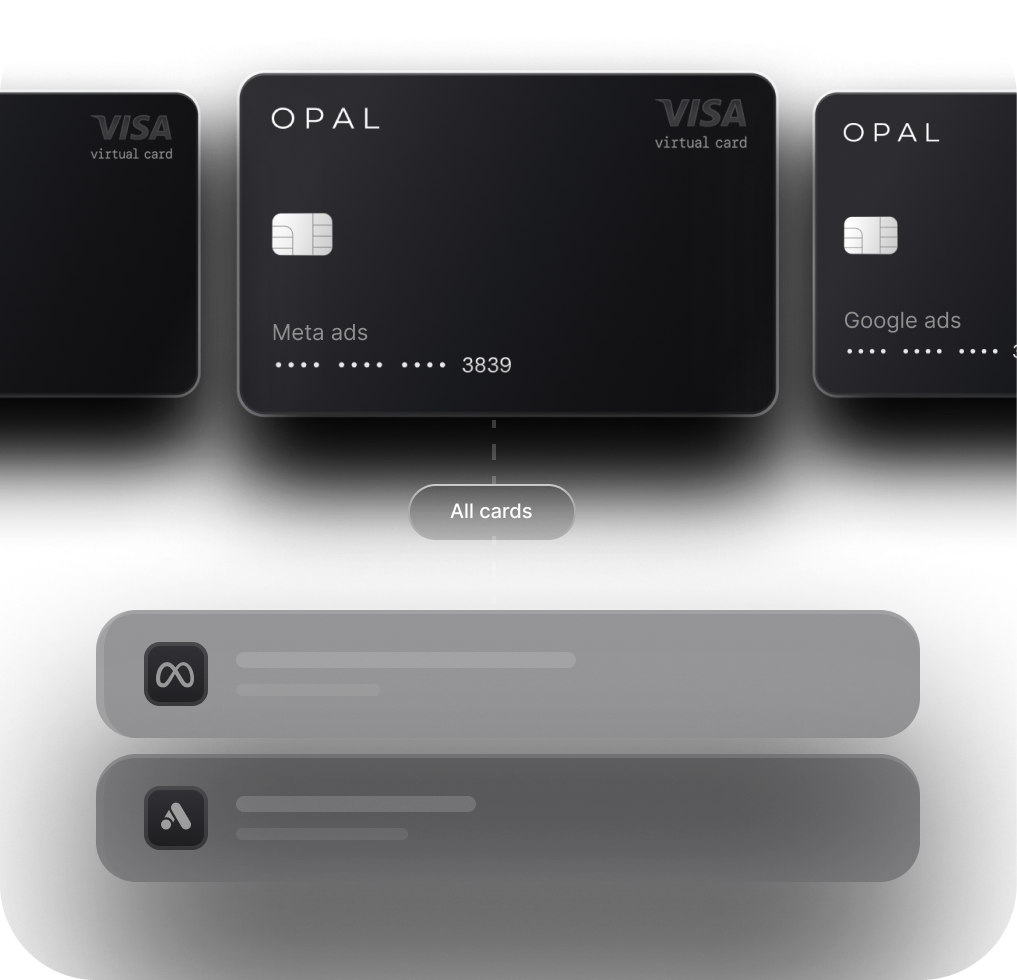
An agency issuing a Meta card and a Google card for each new client during onboarding. A procurement team generating a single-use virtual card for every one-off supplier payment. A media buyer creating a capped test card for a new platform without waiting for finance approval.



Frequently asked questions
On most modern business card platforms, a virtual card can be created and used within seconds of issue. The account itself must already be approved; issuing additional cards under it is the fast part.
Typically a spending limit, an expiration date, the cardholder or owner, and optional merchant or category restrictions. Many platforms also let the issuer add a label, such as a client or campaign name, for reporting.
It depends on the provider. Some cap the number of active cards or charge per card, while others offer unlimited virtual cards at no extra cost. All cards still draw from the account’s overall credit limit.
See what Opal can do for you
Learn how our spend platform can increase the strategic impact of your finance team and future-proof your company