
Virtual Cards
A virtual card is a digitally generated payment card that businesses use to make secure online purchases without relying on a physical card. Virtual cards can be created instantly, assigned to employees or vendors, and customized with spending limits, merchant restrictions, expiration dates, and other controls to improve security and simplify business spending.
Last updated: August 2026
Why virtual cards matter
Virtual cards give businesses more control over how company money is spent.
Unlike traditional business cards, virtual cards can be issued instantly and configured for a specific employee, vendor, subscription, advertising platform, or client account. This reduces fraud, simplifies expense management, and makes it easier to track every transaction.
The gain shows up on the statement. Because each card maps to one purpose, an unexpected charge is obvious rather than buried in a shared line, and a number that leaks is limited to the one thing it was issued for.
For agencies and high-growth businesses, virtual cards also make it possible to separate spending across clients, campaigns, and departments without opening additional bank accounts.
Common Uses for Virtual Cards
Businesses use virtual cards in many different ways, including:
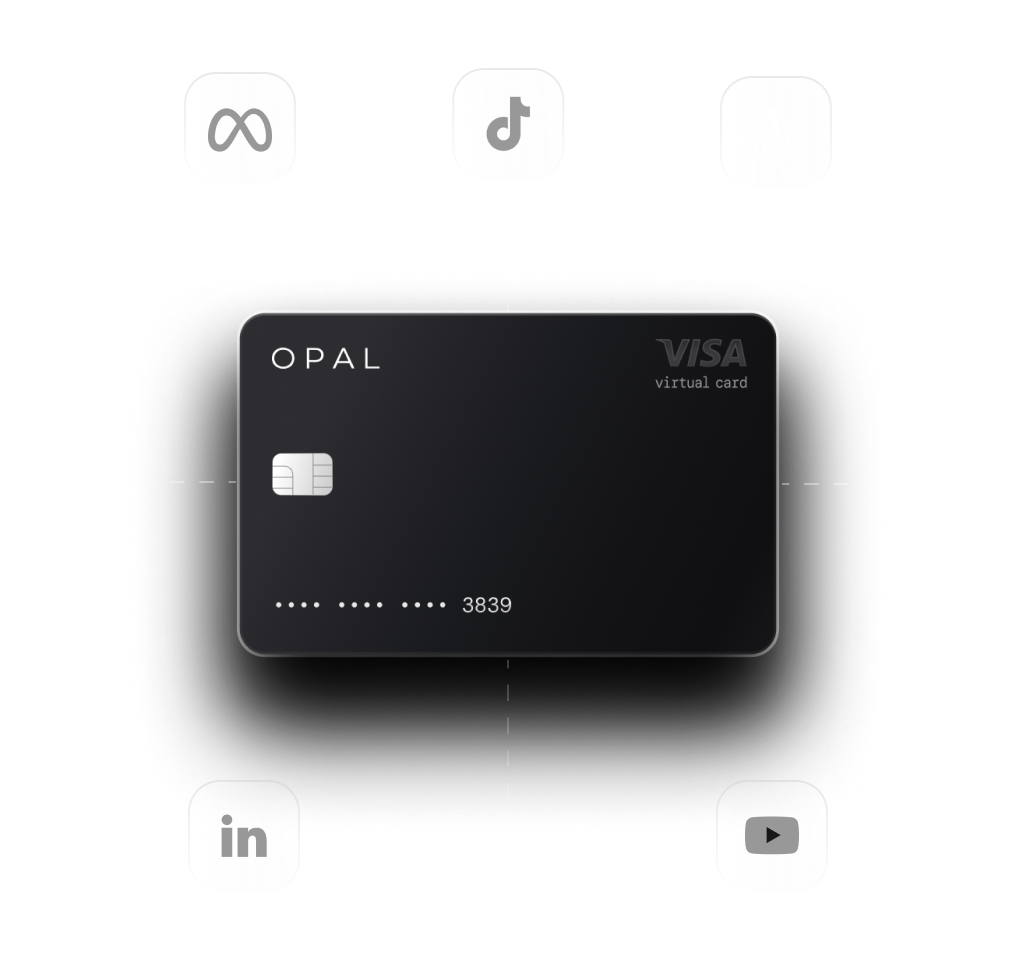
- Paying for Google Ads, Meta Ads, TikTok Ads, and LinkedIn Ads
- Managing client advertising budgets
- Paying SaaS subscriptions
- Issuing cards to employees
- Vendor-specific purchasing
- One-time online purchases
- Department budgets
- Travel and marketing expenses
Business example
How Marketing Agencies Use Virtual Cards
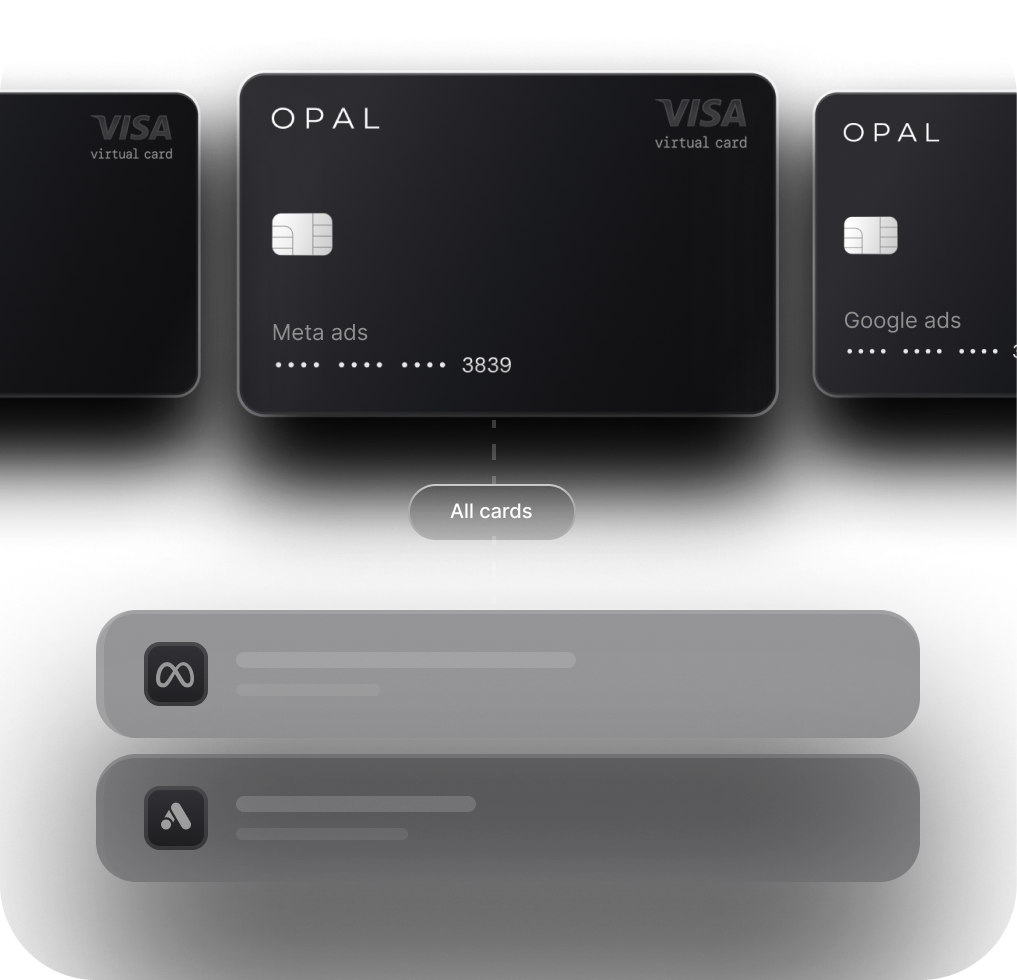
A performance marketing agency managing dozens of client advertising accounts can issue a unique virtual card for every client. Each card can include its own spending limit, employee permissions, and merchant restrictions, making it easier to track budgets, reduce payment issues, and separate client expenses.



Frequently asked questions
A virtual card exists only as a number and is used for online or remote payments. A physical card can also be used in person. Virtual cards can be issued instantly, in any quantity, and closed the moment they are no longer needed.
Yes, for two reasons. Each card can carry its own merchant restrictions, spending limit and expiry date, so a compromised number has a small blast radius. And because each card maps to one purpose, an unexpected charge is obvious rather than buried in a shared statement.
Yes. Most businesses issue a dedicated card per employee with its own limit and permissions, which removes the need for expense reimbursement and makes every transaction attributable without asking anyone.
See what Opal can do for you
Learn how our spend platform can increase the strategic impact of your finance team and future-proof your company