
Agency Billing
Agency billing is the way a marketing or media agency charges its clients, covering both the agency’s own fees and, often, the advertising media it buys for them. Fees may be billed as a retainer, a percentage of media spend, hourly or project rates, or performance-based pricing. Media is either paid directly by the client on its own ad accounts or paid by the agency and invoiced to the client, sometimes in advance and sometimes after the spend has run.
Last updated: September 2026
Why agency billing matters
An agency’s billing setup decides two things at once: how it earns money, and whose money funds the ads.
When clients pay platforms directly on their own cards, the agency carries no media risk but has less control over payment failures and less visibility into spend. When the agency pays platforms and bills the client afterwards, it controls delivery but fronts the cash, sometimes for 30 to 60 days. That second model is where agency cash gaps and credit ceiling risk usually start.
Billing also shapes reporting. If media is invoiced to clients, every platform charge has to be attributed to the right client before the invoice can go out, which ties billing closely to ad spend reconciliation.
Common agency billing models
- Retainer: a fixed monthly fee for a defined scope of work.
- Percentage of spend: a fee calculated as a share of the client’s monthly media.
- Media pass-through: the agency pays platforms and invoices the media cost to the client, with or without a markup.
- Advance billing: clients pay the media budget before the month starts.
- Performance-based: fees tied to results such as leads, sales, or return on ad spend.
Business examples
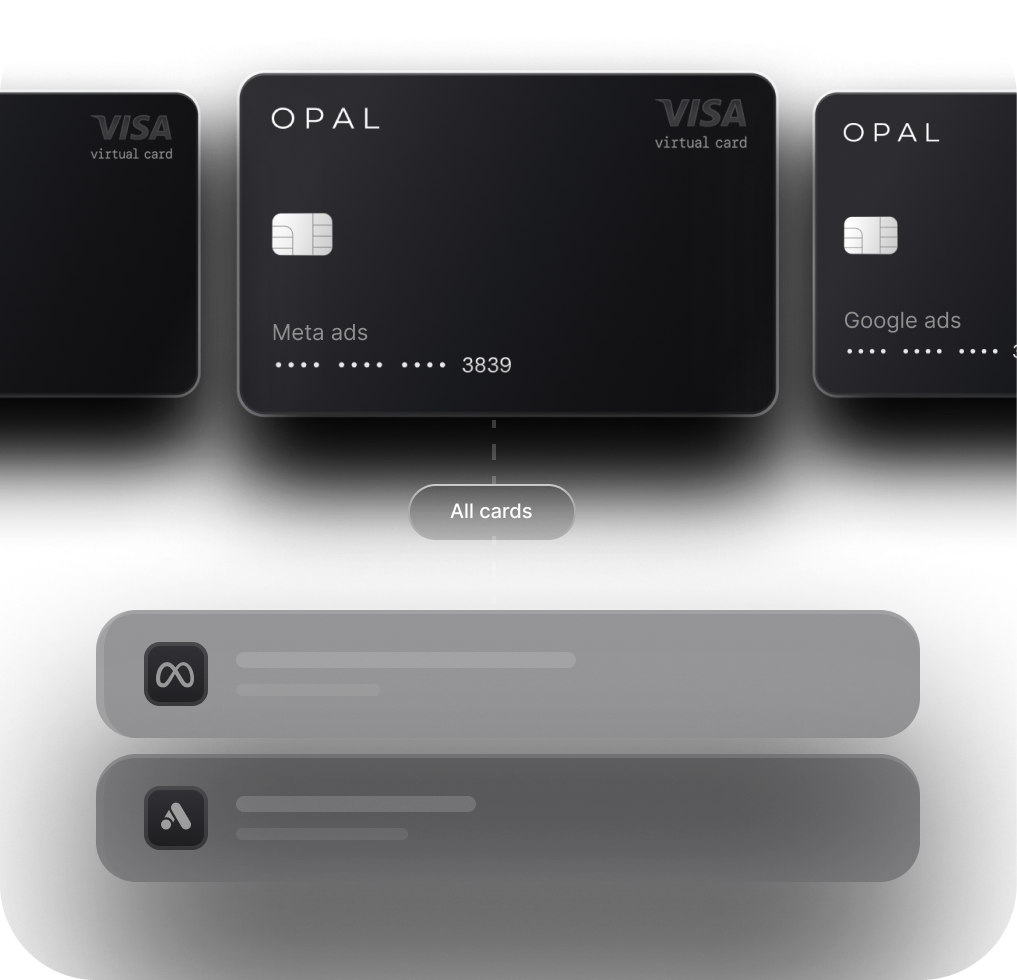
An agency charging a 12% management fee and invoicing $180,000 of pass-through media a month on net 30 terms. A team moving its largest clients to advance billing after one late payment left it covering two months of spend. An agency setting up a client-funded card for each account so media no longer runs through its own cash.
For a deeper comparison, see media buying agency billing models.



Frequently asked questions
Pass-through billing means the agency pays the ad platforms and then invoices the client for the media cost, sometimes with a markup or handling fee. It gives the agency control over payments but requires it to fund the spend until the client pays.
Advance billing reduces the cash an agency has to front and the risk of late client payments. It requires accurate budgets and a process for crediting or rebilling any difference between planned and actual spend.
The main options are having clients pay platforms directly, billing media in advance, or using payment structures such as client-funded cards and credit sized to managed spend, so client media does not run through the agency’s own operating cash.
See what Opal can do for you
Learn how our spend platform can increase the strategic impact of your finance team and future-proof your company