

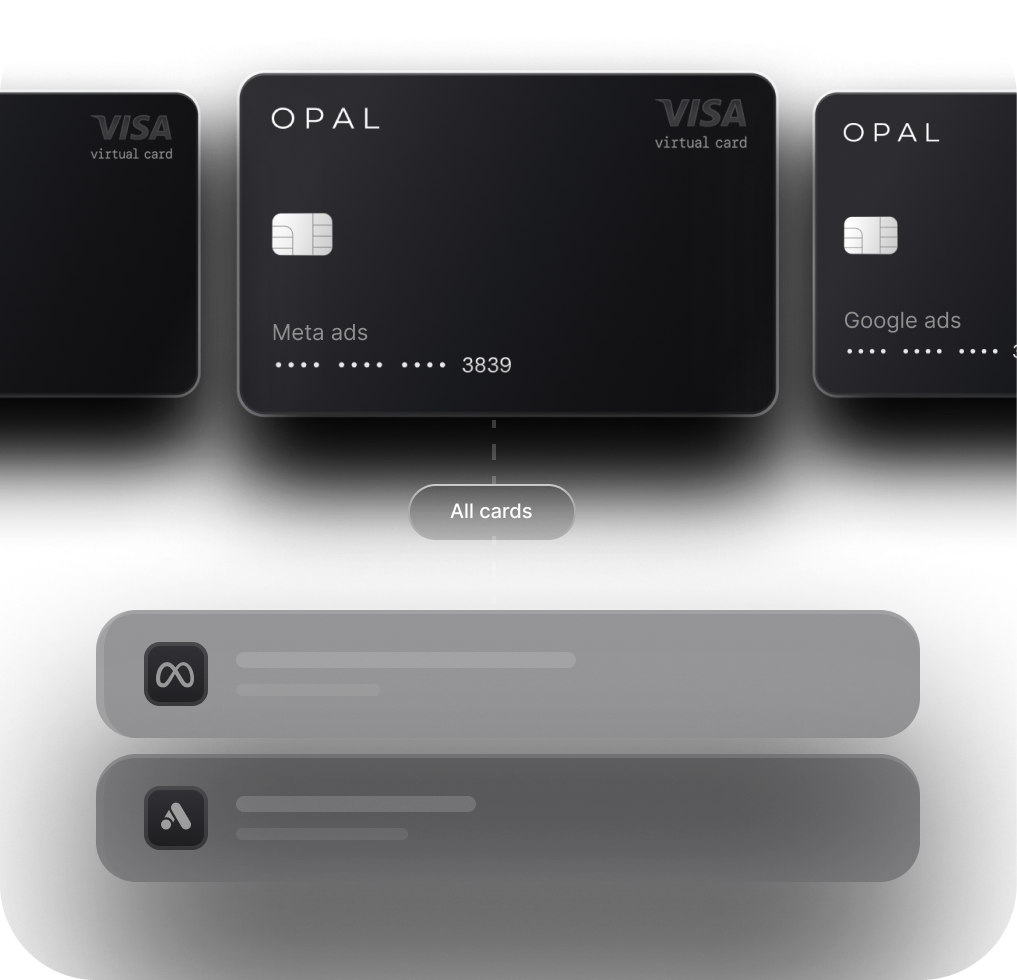

Client-Funded Card
A client-funded card is a payment card used for advertising where the spend is funded from a designated client budget rather than from the agency’s own working capital. Each client has its own card, or set of cards, tied to that client’s budget. The agency places the spend and keeps the reporting, but the money running through the card is the client’s, which removes the need for the agency to front campaign cash and wait for reimbursement.
Last updated: August 2026
Why client-funded cards matter
The client-funded model addresses the constraint that decides how fast an agency can grow.
An agency on a conventional card carries the float. Campaigns run, the card bill arrives, and the client pays on their own terms. The gap between those two dates is working capital the agency has to hold, and it scales linearly with new business. Winning a client becomes a cash flow event before it is a revenue event.
Funding from client budgets removes the float. It also removes the co-mingling problem, because there is no single pool of agency money that several clients' spend is drawn from and later split apart.
Common Uses for Client-Funded Cards
- One card per client, funded from that client's budget.
- Pre-loaded budgets so funds are in place before campaigns run.
- Clean separation with no shared statement to divide at month end.
- No personal exposure, since the agency is not borrowing against itself to place client spend.
Business examples
An agency onboarding a client with a $60,000 monthly budget and issuing a dedicated card against it. A media buyer running three clients with three separate funded cards. An agency that stopped requiring a $150,000 cash buffer after moving client spend off its own balance sheet.



Frequently asked questions
A normal business card extends credit to the business and the business repays it from its own funds. A client-funded card is tied to a designated client budget, so the money funding the spend is the client’s from the outset.
It changes the risk profile that underwriting is assessing, which is why card programs built on this model can offer limits without a personal guarantee.
Yes, subject to the card program’s terms and the agency’s client agreements. Agencies generally set out the treatment of rewards in the client contract rather than leaving it undocumented.
See what Opal can do for you
Learn how our spend platform can increase the strategic impact of your finance team and future-proof your company