
Unlimited Virtual Cards
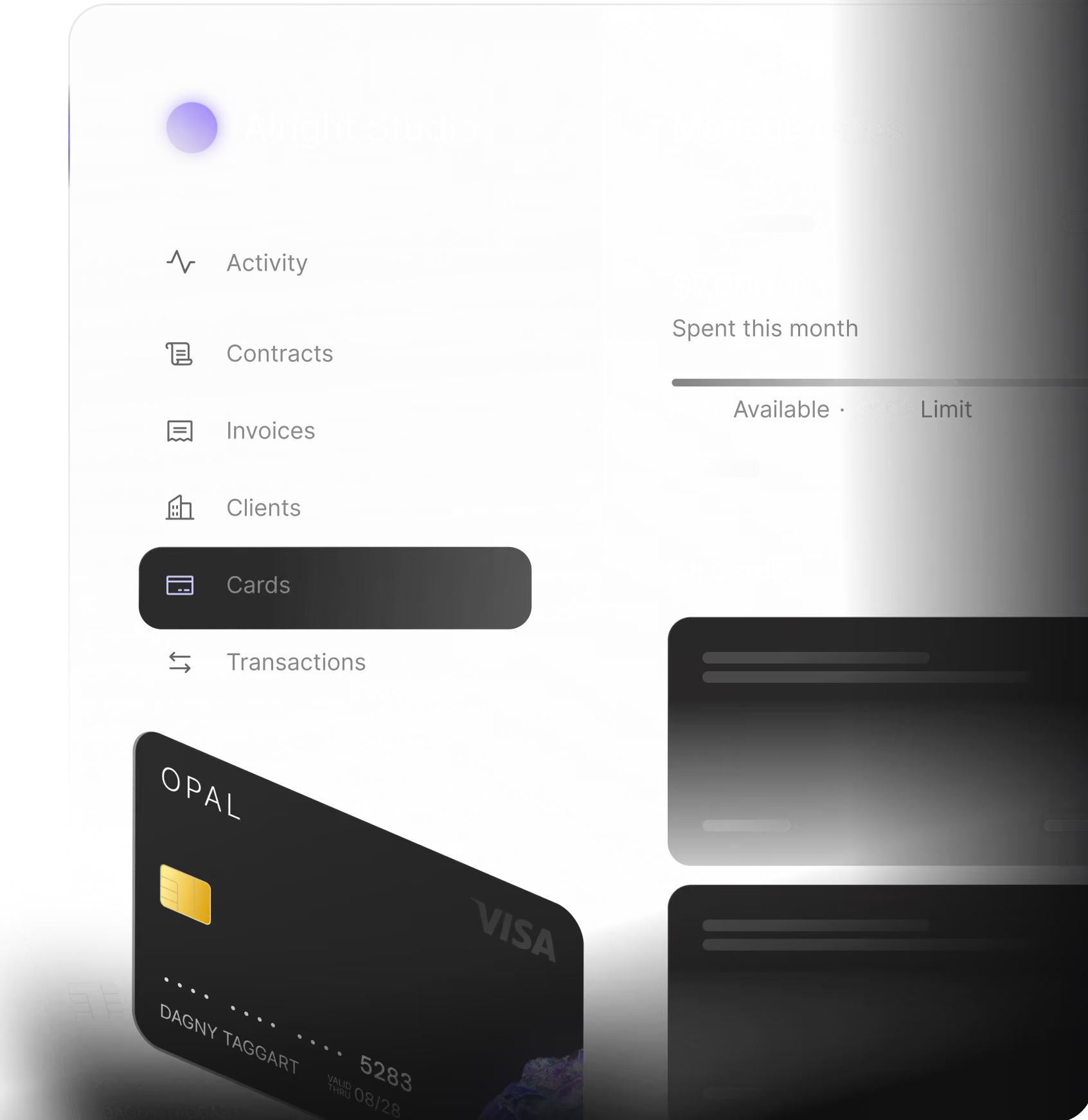
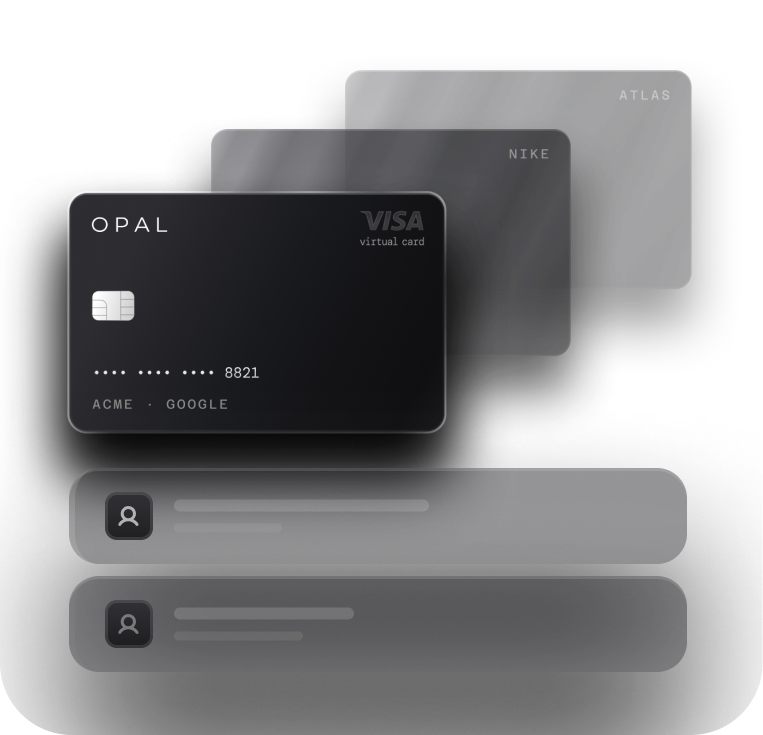
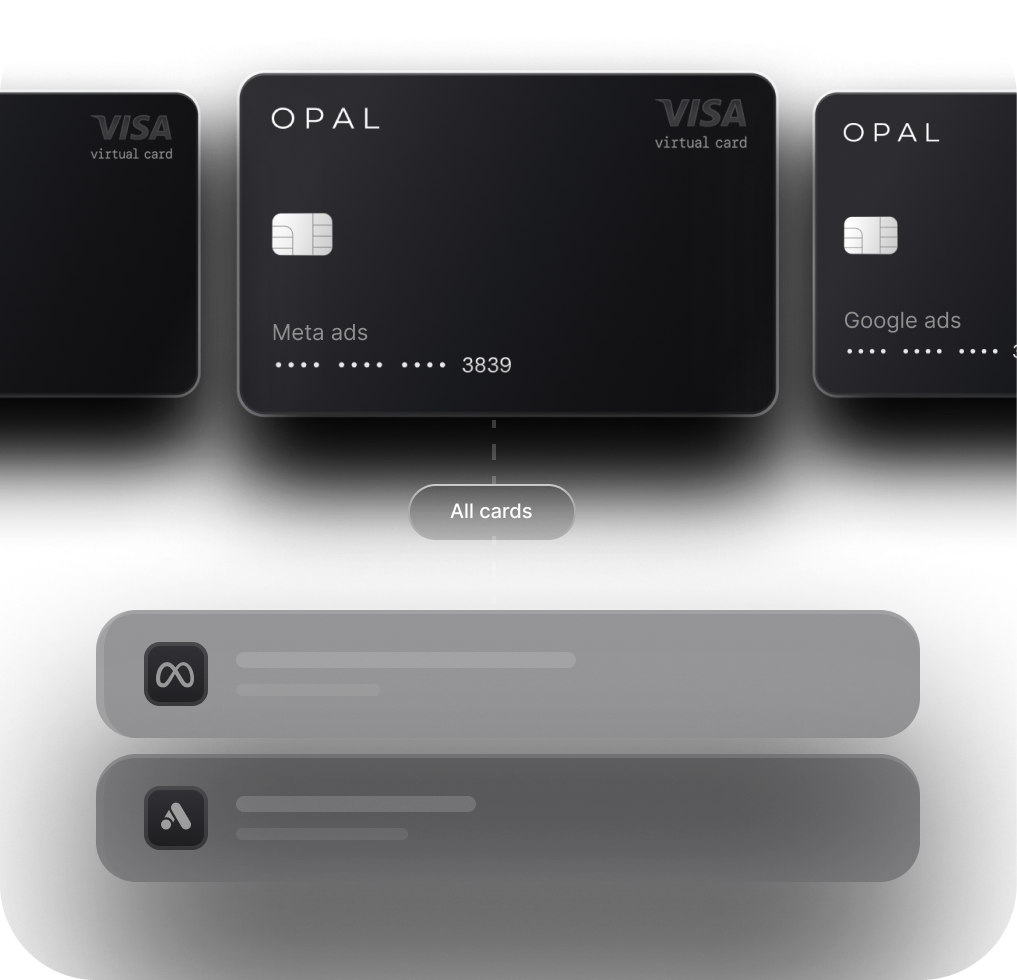
Unlimited virtual cards are a card program in which a business can issue as many virtual card numbers as it needs, with no per-card fee and no cap on how many can be open at once. Each card carries its own number, spending limit, and merchant rules, but all of them draw on the same account and the same credit line. The distinction matters because most traditional business cards charge for additional cards or limit how many an account can hold.
Last updated: August 2026
Why unlimited virtual cards matter
Card count is a workflow constraint before it is a cost. An agency running 12 clients across five ad platforms needs 60 card numbers to keep every client and platform cleanly separated. On a card program that charges per card or caps the number of cards, that separation gets rationed, and spend from different clients ends up on the same statement.
Once spend is co-mingled, it has to be untangled by hand at month end. The reconciliation cost of a shared card is paid every single month, while the saving on card fees is counted once.
Common Uses for Unlimited Virtual Cards
- Per client: one card per client account so every charge is attributable without a lookup.
- Per platform: one card per ad platform so a Meta issue never touches a Google campaign.
- Per campaign: short-lived cards for a specific flight, closed when the campaign ends.
- Per employee: a media buyer gets their own card with a limit sized to what they actually control.
- Per vendor: a dedicated card for a subscription or supplier, so a price change is visible immediately.
Business examples
A 30-client agency issuing one card per client per platform. A brand issuing a separate card for each regional ad account. A media buyer issuing a single-use card for a one-off influencer payment and closing it the same day.



Frequently asked questions
On a program described as unlimited, no. Cards can be created instantly for a client, platform, employee, vendor, or campaign, and closed once they are no longer needed. Most traditional business cards work differently, either charging an annual fee per additional card or capping the number of cards on an account.
Not on a program built this way, where there is neither an annual fee nor a per-card fee. On premium business cards the picture is different: an additional Business Platinum Card from American Express carries a $400 annual fee on accounts opened on or after 18 September 2025.
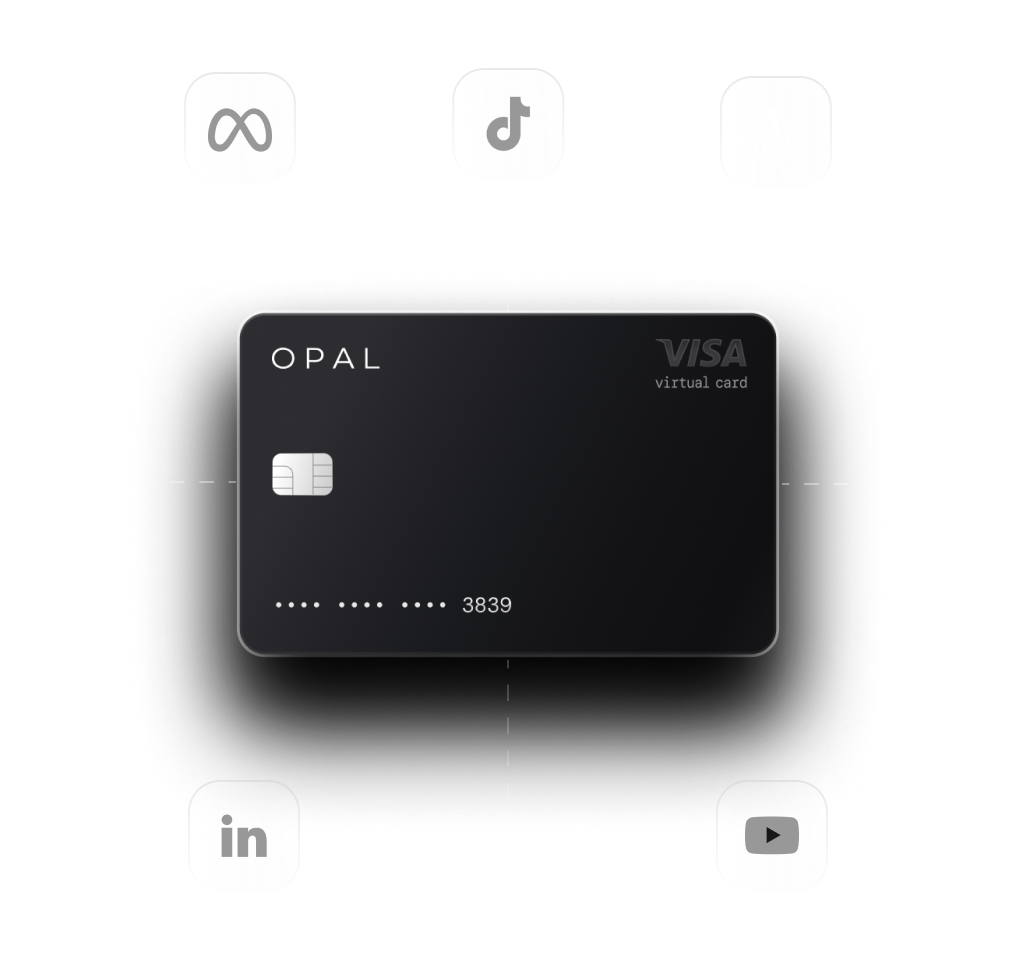
Yes. Virtual cards are commonly used to fund Google Ads, Meta Ads, TikTok Ads, LinkedIn Ads, Snapchat, Amazon Ads, and The Trade Desk. Some card programs restrict spending to a supported list of advertising and media platforms, so check that list before moving an account across.
See what Opal can do for you
Learn how our spend platform can increase the strategic impact of your finance team and future-proof your company