

Spend Management for Modern Businesses: A Practical Guide
Key Takeaways
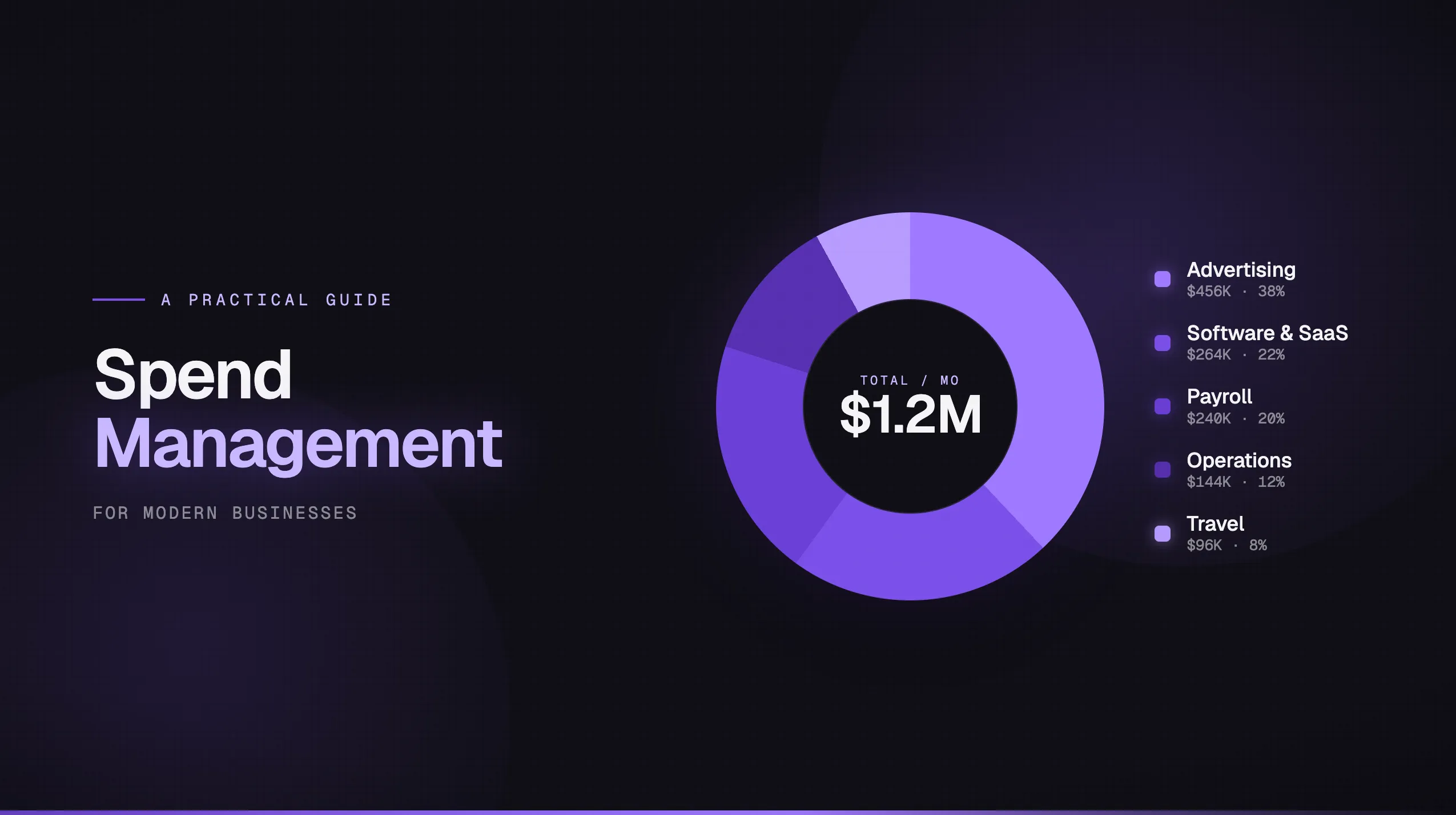
Spend management is how a business controls, tracks, and optimizes outgoing money. For ad-heavy companies, ad spend is now the largest, fastest-moving line item.
Global digital ad spend is set to reach about $835 billion in 2026, so mismanaged advertising is where modern businesses leak the most money.
The modern playbook: one virtual card per client or campaign, hard spend limits, automated reconciliation, and cashback on every ad dollar.
At an uncapped 1% rate, $500K a month in ad spend returns roughly $60,000 a year, margin on spend you were making anyway.
The right ad spend card offers uncapped cashback, credit limits up to $10M, unlimited free virtual cards, and no personal guarantee.
In 2026, global advertising spend crossed $1 trillion for the first time. Digital alone makes up roughly $835 billion of that. Yet for most modern businesses, the single largest controllable expense, advertising, still runs on cards built for hotels and office lunches.
That mismatch is where money leaks. Strong spend management is how a business plugs the leak, and, increasingly, how it earns money back on spend it was making anyway.
What Is Spend Management, Exactly?
Spend management is the end-to-end system a business uses to control how money goes out the door. It covers approvals, cards, budgets, tracking, reconciliation, and rewards.
Old-school expense management was about receipts and reimbursements. Modern business spend management is real-time. You see each dollar as it moves. You set limits before overspend happens. And you earn something back on spend you were already committed to.
Why Ad Spend Is the New Frontier of Business Spend Management
Here is the shift many finance teams missed. For agencies, e-commerce brands, and freelancers, advertising is no longer a minor line. It is often the largest one, and the fastest-moving.
The market backdrop is hard to ignore:
-
Global digital ad spend is set to reach about $835 billion in 2026, roughly 69% of all advertising worldwide.
Worldwide social ad spend now tops $5 billion every single week.
Programmatic buying handles more than 80% of digital display, and retail media is the fastest-growing channel.
When one line item is that big and moves that fast, a generic corporate card cannot keep pace. That is why purpose-built ad spend management has become its own category. (For the full market picture, see the dentsu global ad spend forecast and eMarketer's 2026 outlook.)
Where Traditional Spend Management Breaks Down
Most businesses run ad spend on the wrong rails. The cracks show at scale:
-
Credit caps. A $25,000 card limit can be exhausted in the first week of a $100K campaign.
-
Reward caps. Bonus cashback that stops at $50K a month disappears exactly when spend gets serious.
-
Reconciliation chaos. Five clients on one statement means hours of manual sorting each month.
-
Cash-flow float. Net-30 and net-45 client terms force agencies to front spend for weeks.
-
Personal risk. Traditional business cards often demand a personal guarantee.
The Modern Ad Spend Management Playbook
The fix is structural, not just a shinier app. Five moves define modern spend management for ad-heavy businesses:
-
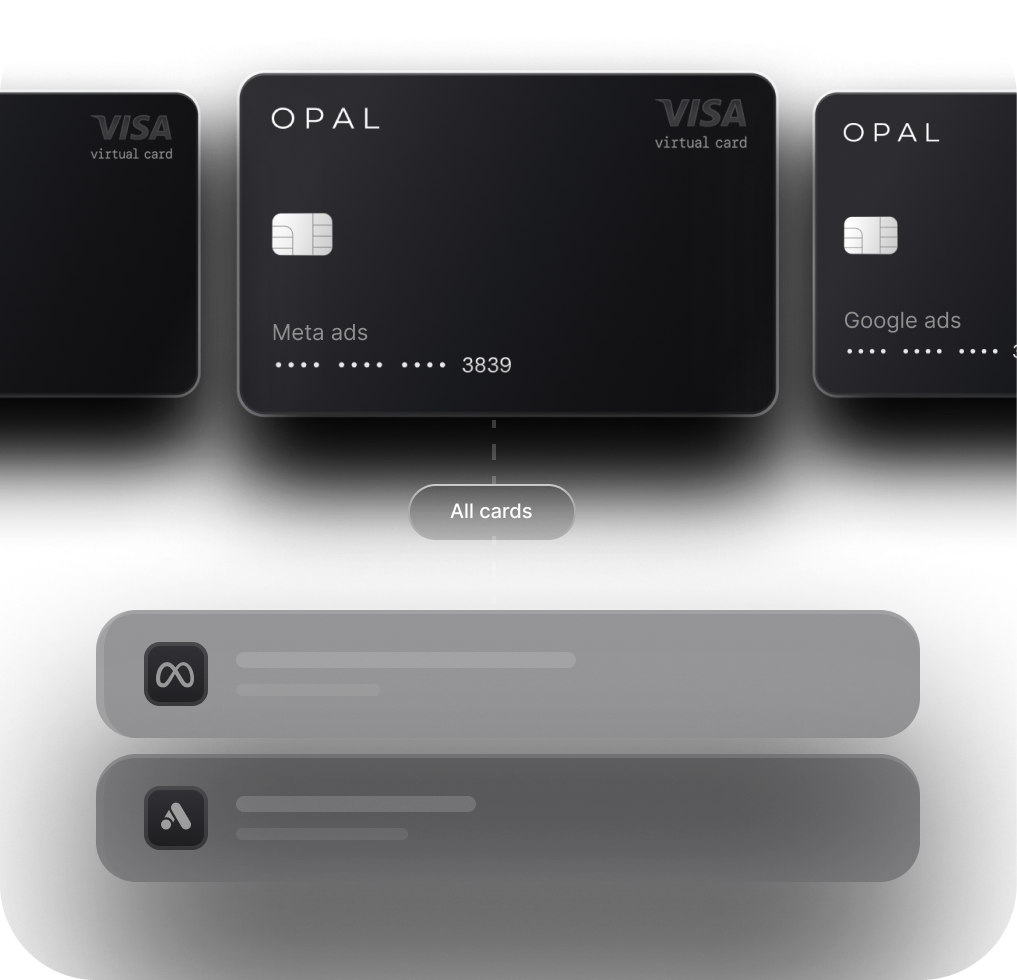
Issue one virtual card per client, campaign, or vendor. If one card is declined, the rest keep running.
-
Set hard spend limits at the card level. Budgets enforce themselves, so overspend stops before it starts.
-
Automate reconciliation. Every charge maps to a client. No spreadsheet archaeology.
-
Separate ad spend from operating spend. Your biggest cost deserves its own rails and its own reporting.
-
Earn cashback on every ad dollar. If the money is leaving anyway, it should pay you back.
Agencies juggling dozens of accounts can go deeper in this guide to managing ad spend across 50+ clients.
Cashback on Ad Spend: The Margin Hiding in Your Budget
Here is the part most teams overlook. Ad spend is money you have already committed. A flat, uncapped cashback on ad spend rate turns that spend into recurring margin. The math is refreshingly simple: monthly ad spend x 1% = monthly cashback.
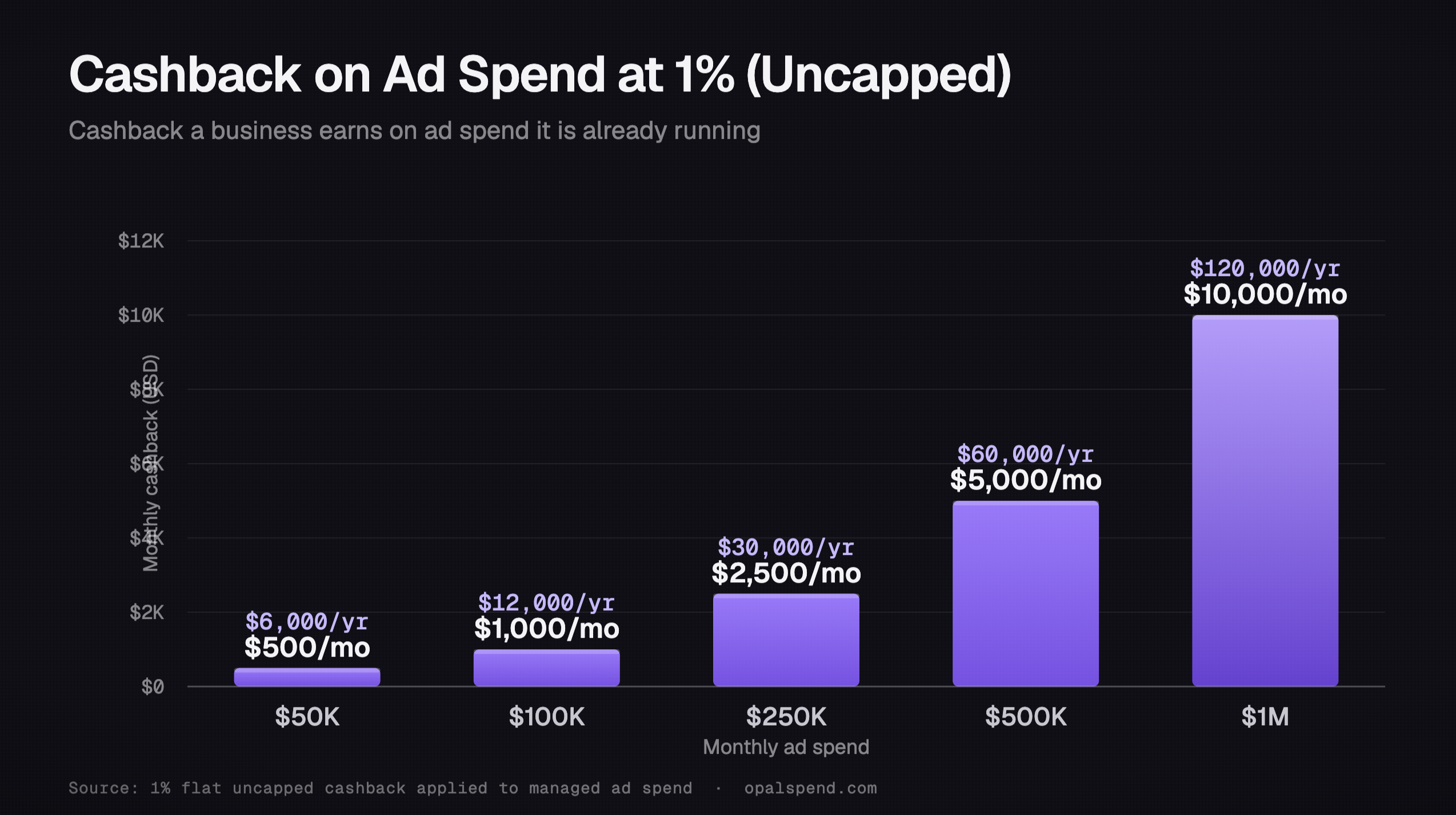
Figure 1. Cashback earned on ad spend at a 1% uncapped rate, by monthly spend level.
Monthly ad spend |
Cashback at 1% |
Annual cashback |
|---|---|---|
$50,000 |
$500 |
$6,000 |
$100,000 |
$1,000 |
$12,000 |
$250,000 |
$2,500 |
$30,000 |
$500,000 |
$5,000 |
$60,000 |
$1,000,000 |
$10,000 |
$120,000 |
These are not projections. They are a slice of spend that was already leaving the account. An agency running $500K a month earns $60,000 a year on media it was managing regardless. The full breakdown lives in Opal's agency ad spend cashback guide.
Old-School vs. Modern Ad Spend Cards
Not all cards handle advertising the same way. The gap widens the more a business spends:
Feature |
Traditional business card |
Purpose-built ad spend card |
|---|---|---|
Cashback on ad spend |
0.6% to 1.5%, often capped |
1% uncapped |
Credit limit |
Fixed, credit-score based |
Up to $10M, scales with spend |
Personal guarantee |
Usually required |
Not required |
Virtual cards |
Limited or paid add-on |
Unlimited and free |
Reconciliation |
Manual |
Automated by client/platform |
Annual fee |
Often $325 to $895 |
$0 |
For a ranked look at the field, see this breakdown of the best ad spend cards for media buyers.
How to Choose the Right Spend Management Setup
Before picking a card or platform, ask five questions:
Is the cashback uncapped and paid as cash, not points?
Does the credit limit scale with actual spend, not just a credit score?
Can I issue a dedicated virtual card for each client or campaign?
Is reconciliation automatic?
Are there annual fees or a personal guarantee?
A card built for ad spend, like the Opal ad-spend charge card, is designed to answer yes across the board, with limits up to $10M and no personal guarantee.
Real proof: the agency Outsmart Labs recovered 15 hours a week in reconciliation time after switching to a purpose-built ad spend card, while adding a cashback stream on spend it already ran.
A Quick Note on the "Algorithmic Era"
Ad platforms keep changing how they bill. Meta charges in unpredictable threshold increments. High-spend accounts get pushed to invoice billing. Tools like Opal's Ad Pay now auto-detect Meta and Google invoices and extend cash flow up to 55 days, so campaigns never pause over a payment delay.
Frequently Asked Questions
What is spend management?
Spend management is the process a business uses to control, track, and optimize outgoing money, from card approvals and budgets to reconciliation and rewards.
What is ad spend management?
It is spend management applied to advertising: issuing cards per client or campaign, setting hard limits, reconciling automatically, and earning cashback on media spend.
How much cashback can a business earn on ad spend?
At an uncapped 1% rate, a business spending $500K a month earns roughly $60,000 a year, and $1M a month earns about $120,000.
Do you need a personal guarantee for an ad spend card?
Not always. Purpose-built ad spend cards extend credit based on spend and cash flow, with no personal guarantee and no credit check required.
What is the best card for ad spend cashback?
For agencies and brands running $50K or more a month, an Opal card built specifically for ad spend, with uncapped cashback and unlimited free virtual cards, beats a general business card.