



Political Ad Spend Management for Agencies: How to Separate Committee Funds Across Campaigns


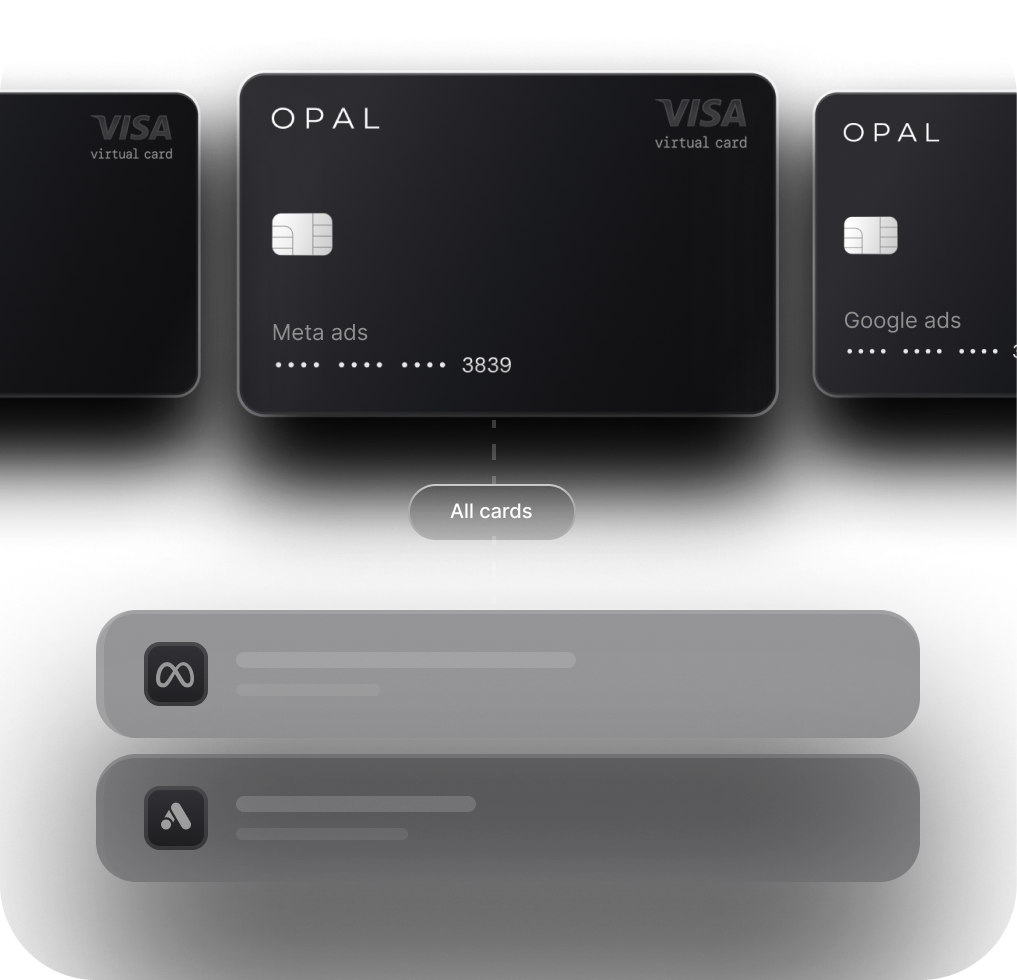
Political ad spend management for agencies means keeping every media dollar traceable to the committee that authorized it, from the card charge to the line that committee files. Agencies separate committee funds across campaigns by issuing a dedicated card per committee, splitting below that by platform and race, then closing each committee against its own reporting period rather than the agency's month-end.
The structure carries more weight in political work than in commercial media buying, because a committee's disbursements end up in a public filing. A candidate committee, a leadership political action committee (PAC), and an independent expenditure group can share your office and your buyers while remaining 3 separate filers. Your card statement is the first place that distinction either holds or collapses.
Key Takeaways
• Candidate committees, PACs, and independent expenditure groups each file separately, so your card boundary belongs at the committee rather than the client relationship.
• The Federal Election Commission (FEC) tells committees to itemize card payments to the issuer, then add memo entries naming each vendor that passes $200 in aggregate.
• Committees keep the records behind a filed report available for audit for not less than 3 years, so your exports have to outlast the engagement.
• Card separation organizes spend records without creating segregated custody, and the commingled funds rule in the Code of Federal Regulations (CFR) covers committee funds mixed with personal funds, not agency card structure.
• Cutting over at a reporting-period boundary stops one period from splitting across an old card and a new one.
What Does Political Ad Spend Management for Agencies Actually Require?
It requires that your payment records resolve to a committee before anyone asks them to. Commercial clients want an accurate invoice; committees want one whose numbers hold up once they appear in a public filing.
Why Committee Money Is Not Ordinary Client Money
A committee's disbursements become part of a public record that outlives the campaign. When you buy media for a candidate committee, a leadership PAC, and an independent expenditure group in one month, you are working for 3 filers that may share a consultant, an office, and nothing else.
A buyer who charges one race to another committee's card has done more than misfile a receipt. They have opened a gap between your invoice and the numbers a treasurer files.
Where Agency Records Enter the Public Record
Your transaction history is source data for a client's disclosure report, even though you file nothing yourself. Treasurers and compliance counsel work backwards from what you hand them, so your card structure sets how much reconstruction they face.
The test is short. If a treasurer asks what a committee spent on one platform during a specific reporting period, you should answer from a statement rather than a spreadsheet built that afternoon.
How Do You Separate Committee Funds Across Campaigns?
Draw the first boundary at the committee and never cross it. Race, platform, and buyer then become subdivisions inside one committee's card family instead of a mix across several.
Set the Card Boundary at the Committee, Not the Client
One consulting relationship often covers several committees, and a single invoice may cover all of them. Card structure has to ignore that convenience and follow the reporting entity, since that is what a filing is built around.
Run this checklist before connecting any platform:
List every committee you will place media for, including any that share a principal or treasurer with another.
Assign each committee a unique card and a naming convention.
Connect platforms one committee at a time, not one platform across all committees.
Confirm no card touches more than one reporting entity before spend runs.
Split Below the Committee by Platform and Race
Within a committee, the useful second split is the platform, since platforms are the payees a committee may have to name. A third split by race or ballot measure helps when one committee funds several contests, letting you allocate without touching platform invoices.
The three-tier structure looks like this:
-
Tier 1: Committee — one card per reporting entity, the boundary that maps to a filing
-
Tier 2: Platform — one card per platform within a committee (Meta, Google Ads, programmatic), since these are the named payees
-
Tier 3: Race or ballot measure — one card per contest when one committee funds several, so allocation lives in the statement rather than a spreadsheet
Our approach to structuring cards by client carries over with the committee substituted for the client. The split stops being an internal preference and starts being shaped by what a committee must show.
Name Cards So the Statement Reads Like a Ledger
Card names are the cheapest reconciliation tool available, and they cost nothing at issuance. A name carrying the committee identifier, the platform, and the race reads as a ledger entry with no tagging afterward.
Use a consistent naming format across every card:
Element |
Example |
Why It Matters |
|---|---|---|
Committee identifier |
|
Maps the card to a filer without opening a spreadsheet |
Platform |
|
Matches the payee name the committee may have to disclose |
Race or office |
|
Separates contests inside one committee's card family |
A card named SMITH2026-META-SENATE sorts with every other Smith committee card and reads as a ledger entry before any tagging. Keep the elements in the same order across every committee so exports sort predictably.
What Records Does Each Committee Need Back From You?
Each committee needs enough detail to name the vendors behind your invoice, not just your agency total. Published FEC credit card guidance sets the shape of that detail even when the card is yours rather than the committee's.
Match Your Card Data to the Filing Line It Feeds
Committees itemize card payments as operating expenditures, listing the card company with the date, amount, and a purpose pointing to the detail below, then adding memo entries for the underlying vendors. Each memo entry carries the vendor's name and address, the purpose, the date services were received, and the amount, once payments to that vendor pass $200 in aggregate. The same guidance treats an outstanding card balance as committee debt, disclosed with the amount owed at the start of the period, incurred, paid, and still outstanding at the end.
|
Payment Route |
Who the Committee Names as Payee |
What You Supply |
|---|---|---|
Committee's own card pays Meta, Google Ads, or a demand-side platform |
The card issuer, plus memo entries for each vendor over $200 in aggregate |
Platform totals for the committee's records |
Your card pays the platform, committee reimburses you |
Your agency, as vendor of record on the disbursement |
A per-committee statement and the vendor-level detail behind your invoice |
Your card covers several races for one committee |
Your agency, with the committee's allocation applied across contests |
Charge detail split by race and platform before invoicing |
How much subvendor detail a committee must disclose when an agency pays on its behalf was the subject of an FEC interpretive rulemaking proposed and never finalized, and compliance counsel take differing positions. Clients ask for the vendor breakdown either way, which makes producing it the safer default.
Hold Documentation for the Full Retention Window
Under 11 CFR 104.14(b), committees keep the bank records, vouchers, worksheets, receipts, bills, and accounts behind a filed report available for Commission audit for not less than 3 years after filing. Your engagement often ends before that window closes, which turns offboarding into a records handover rather than an administrative step.
Build these steps into every offboarding:
Export each committee's full transaction history, including card-level detail, platform invoices, and any allocation worksheets.
Deliver a copy to the committee's treasurer or compliance counsel before closing the engagement.
Keep your own copy indexed by committee and reporting period, not just by client name.
Document in the contract who retains which records and for how long, since a committee asked for backup 2 years later comes to you first.
How Do You Handle Campaign Ad Spend Reconciliation Each Month?
Close each committee separately, against the platform invoices for that committee alone. One agency-wide close followed by backwards allocation is what produces the discrepancies that surface later as billing disputes.
Close Each Committee on Its Own Cycle
Committee reporting periods rarely line up with your month-end, and some move to more frequent filing as an election approaches. Pull each committee's activity for the dates it reports on, rather than handing over a calendar month and leaving a treasurer to trim it.
This is where real-time spend visibility earns its place, because a mid-period request stops being a research project. The same discipline applies to any agency separating client ad budgets, with the reporting calendar replacing your own.
Reconcile Platform Invoices Against Card Charges
Match each platform invoice to charges on the card issued for that committee and platform pair, then resolve gaps before invoicing rather than after. Threshold billing on search and social means one approved budget often arrives as several charges across a period, so the charge count rarely matches the line count in a media plan.
Pushing matched data into your accounting system removes the re-keying step. We cover the mechanics of automating ad spend reconciliation for agencies running high transaction volumes.
What Does It Cost to Run Virtual Cards for Political Campaigns?
Virtual cards and the controls around them are included at no annual fee, so card count is a structural decision rather than a budget one. Invoice-based advertising payments run through Opal Ad Pay, a separate product with its own processing fee.
What Is Included With Every Account
Every Opal account includes unlimited free virtual cards, spending limits, merchant restrictions, expiration dates, approvals, and employee permissions, with real-time visibility across every card. The Opal Card is a pay-in-full charge card issued by First Internet Bank of Indiana, Member FDIC, under a license from Visa, and card use is limited to supported advertising and media platforms.
We extend credit to your agency rather than to a committee, sized on factors including managed advertising spend, cash flow, and underwriting, up to $10 million and with no personal guarantee or hard credit check. Eligible ad spend earns up to 2% uncapped cashback, subject to eligibility conditions.
Where Ad Pay Adds a Separate Fee
Ad Pay handles invoice-based advertising payments, which matters when a platform moves a large advertiser off card billing. Paying an invoice with Opal credit carries a 3% processing fee with 1% cashback, a 2% net effective cost where eligible, while another connected card carries 3.5%, and processing typically takes 3 to 5 business days.
Those rates belong to Ad Pay alone and do not change cashback on the core Opal Card. Price the two separately when you quote a committee, since invoice-paid media and card-paid media carry different economics.
Build Committee Separation Into Your Next Cycle
Pick a reporting-period boundary and cut over there, so no committee ends with half a period on an old card and half on a new one.
Cutover Checklist
Follow this sequence for each committee:
Identify the next reporting-period boundary and set it as the cutover date.
Issue committee-level cards and apply the naming convention before touching platforms.
Connect platforms one committee at a time, verifying the card assignment before activating spend.
Leave the old card active until all pending charges from the prior period clear.
Export the old card's full transaction history and file it against the closing period.
Confirm the new card is the only active card for that committee before the new period opens.
Start With Your Largest Committee
Run the change on your highest-spending committee first, where reconciliation savings are largest and the naming convention gets stress-tested before you apply it everywhere. Once that committee closes cleanly for a full period, repeat down your client list.
See how Opal for agencies handles dedicated cards, limits, and client-level reporting, or read our guide to political media buying operations for the controls that hold when spend accelerates. Apply for an Opal Card and have your committee structure in place before the next filing deadline. Opal organizes spend records by committee, platform, and period. It is not a substitute for campaign finance counsel, a compliance team, or the systems a committee files through. Obligations differ by jurisdiction and committee type.
Frequently Asked Questions
These are the questions political media buyers raise most often once they start rebuilding a commingled setup. The answers below assume federal committees, and state and local rules differ.
Do Agencies Have to Keep Political Committee Funds Separate by Law?
The commingled funds rule at 11 CFR 102.15 addresses committee funds mixed with personal funds of officers, members, associates, or any other individual. It does not govern how an agency arranges its cards. Separation at your end is driven by contract terms, client expectations, and the reporting detail committees need.
Who Does a Committee List as the Payee When an Agency Buys the Media?
When the committee reimburses your agency, your agency is the vendor of record on that disbursement. Whether it also discloses the platforms behind your invoice depends on positions its counsel takes, since the FEC proposed interpretive rules on ultimate payees and never finalized them. Supply vendor-level detail so the committee can decide.
How Many Virtual Cards Does a Political Media Buying Agency Need?
At minimum, one per committee, the boundary that maps to a reporting entity. Add a card per platform within each committee when you need platform-level answers without opening dashboards, and a third split by race when one committee funds several contests. Card count is not a cost consideration on Opal.
How Long Do Campaign Ad Spend Records Have to Be Kept?
Committees must keep records supporting a filed report available for Commission audit for not less than 3 years after filing, covering bank records, vouchers, worksheets, receipts, bills, and accounts. Because your engagement may end sooner, export each committee's transaction history at offboarding and agree in writing who retains which copies.
Can One Card Cover Several Races for the Same Committee?
It can, and many agencies start there. The tradeoff is that allocation across contests then happens in a spreadsheet rather than on the statement, adding a manual step every period. Issuing a card per race inside that committee moves the allocation into the transaction record itself.
Does Opal Replace a Committee's Compliance Software?
No. Opal is an ad spend charge card and financial platform that organizes spend by committee, campaign, platform, or buyer and produces clean transaction records. Filing, disclosure, and compliance review stay with the committee's treasurer, counsel, and reporting systems, which consume those records rather than being replaced by them.