

Expense Report
An expense report is a record an employee submits to an employer listing business costs paid during a period, with the date, amount, purpose, and a receipt for each one. The employer reviews it, repays money the employee spent personally, and records each cost in the right accounting category. It is the standard way of documenting spending for reimbursement, budgeting, and tax records.
Last updated: November 2026
What does an expense report include?
- Employee details: name, department, and the period covered.
- Each expense: date, merchant, amount, and category.
- Business purpose: why the cost was incurred and, where relevant, for which client or project.
- Receipts: proof of each payment.
- Totals: the amount claimed, less any advance already paid.
How does the expense report process work?
- The employee pays a business cost and keeps the receipt.
- The employee submits a report listing the costs for the period.
- A manager checks the report against the company's expense policy and approves it.
- Finance repays the employee and records the costs in the accounting system.
Expense report example
A salesperson visits a client for two days and submits a report with a $420 flight, $610 for the hotel, and $135 in meals. The report totals $1,165, each line has a receipt, and the purpose is recorded as the client meeting. Once approved, the $1,165 is repaid in the next payment run.
Do company cards replace expense reports?
Partly. When costs are paid on an employee expense card or a corporate card, the transaction data arrives automatically and there is nothing to reimburse. Employees still attach receipts and confirm the purpose, but the report builds itself from the card feed, especially where an accounting integration is in place.
Why ad spend does not belong on expense reports
Expense reports suit occasional costs paid by individuals. Advertising is a large, continuous cost paid to a handful of platforms. Putting it through an employee's card and an expense report delays the accounting, mixes clients together, and can leave one person carrying a five or six figure balance. Ad spend is better run on dedicated cards and matched through ad spend reconciliation.
How Opal handles it
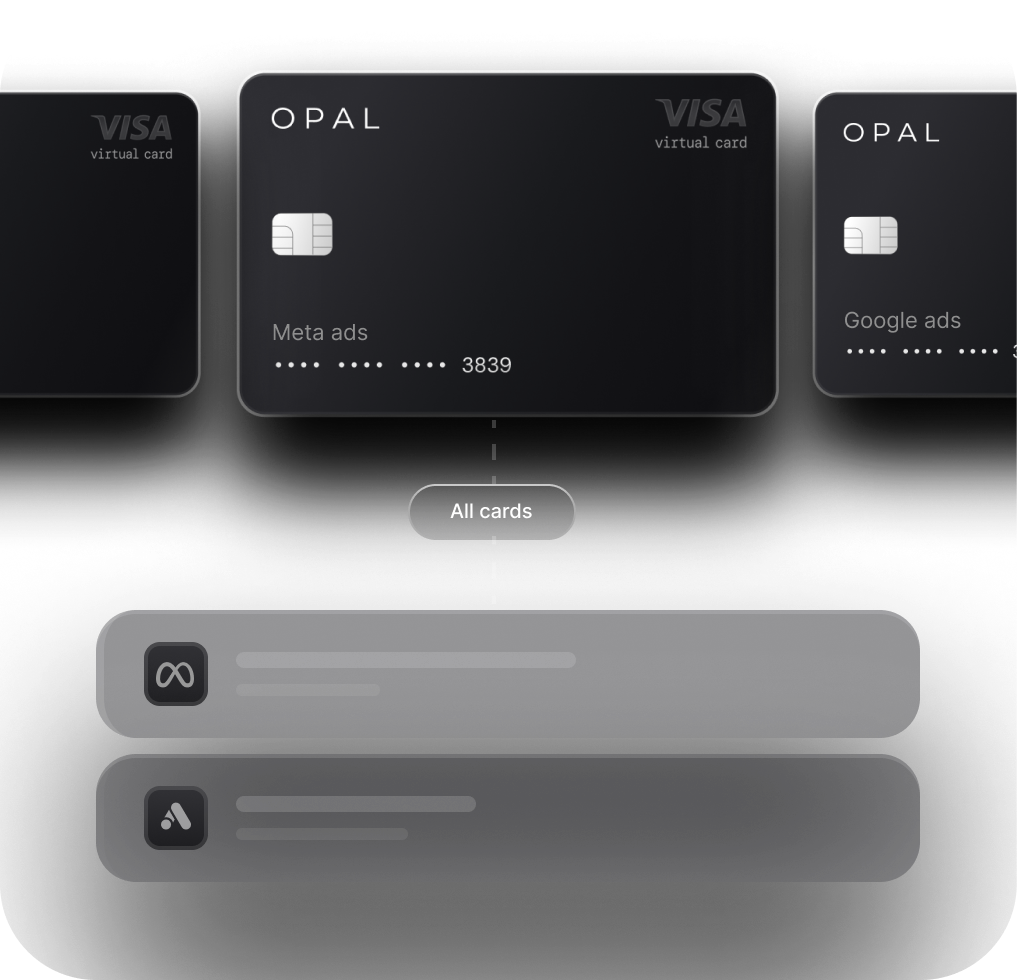
Opal is a charge card built for ad spend. Each client or ad platform can have its own virtual card and spending limit, and transactions sync to QuickBooks organized by client and platform, so ad costs reach the books without an expense report. See how Opal works for agencies.



Frequently asked questions
Company policy sets the deadline, and 30 to 60 days is common. In the United States, IRS rules for accountable plans treat accounting for an expense within 60 days as reasonable, which is why many employers use that limit.
In the United States, reimbursements for genuine business expenses are generally not taxable income to the employee when they are paid under an accountable plan, which requires a business purpose, timely records, and the return of any excess. Rules differ in other countries.
An expense report is internal: an employee asks the employer to repay business costs. An invoice is external: a supplier asks a customer to pay for goods or services.
See what Opal can do for you
Learn how our spend platform can increase the strategic impact of your finance team and future-proof your company