
P-Card (Purchasing Card)
A p-card, short for purchasing card or procurement card, is a company-issued charge card that lets employees buy goods and services directly, without a purchase order for each transaction. The company sets spending limits and merchant restrictions on each card and pays the balance centrally. P-cards are mainly used for low-value, high-volume purchases where the full procurement process would cost more than it saves.
Last updated: November 2026
How does a p-card work?
A company opens a p-card program with a bank or card provider and issues cards to employees or departments. Each card carries its own rules: a limit per transaction, a limit per month, and the types of merchant it can be used with. Employees buy what they need, the transactions flow into the finance system for coding and review, and the company pays the program balance, usually in full each cycle.
The point is to remove paperwork. Raising a purchase order and processing an invoice for a $60 order can cost more than the order itself.
P-card vs. credit card
- Liability: the company is liable for a p-card. A personal or small business credit card often rests on an individual's credit.
- Repayment: p-card balances are usually paid in full each cycle. A credit card lets the balance revolve with interest.
- Controls: p-cards are built around transaction limits and merchant category restrictions. Controls on a standard credit card are lighter.
- Purpose: a p-card replaces purchase orders for routine buying. A credit card is a general payment and borrowing tool.
P-card vs. corporate card
A corporate card is typically given to employees for travel and business expenses. A p-card is aimed at buying goods and services from suppliers. Many modern card platforms blur the line by applying card controls to a single card product, often a charge card.
Where p-cards fall short for ad spend
P-card programs are designed for many small purchases, so limits are often set low. Advertising works differently: a few platforms charge large amounts many times a month, and agencies need that spend kept separate for each client. A card built around purchase limits and supplier categories is a poor fit for that pattern.
How Opal compares
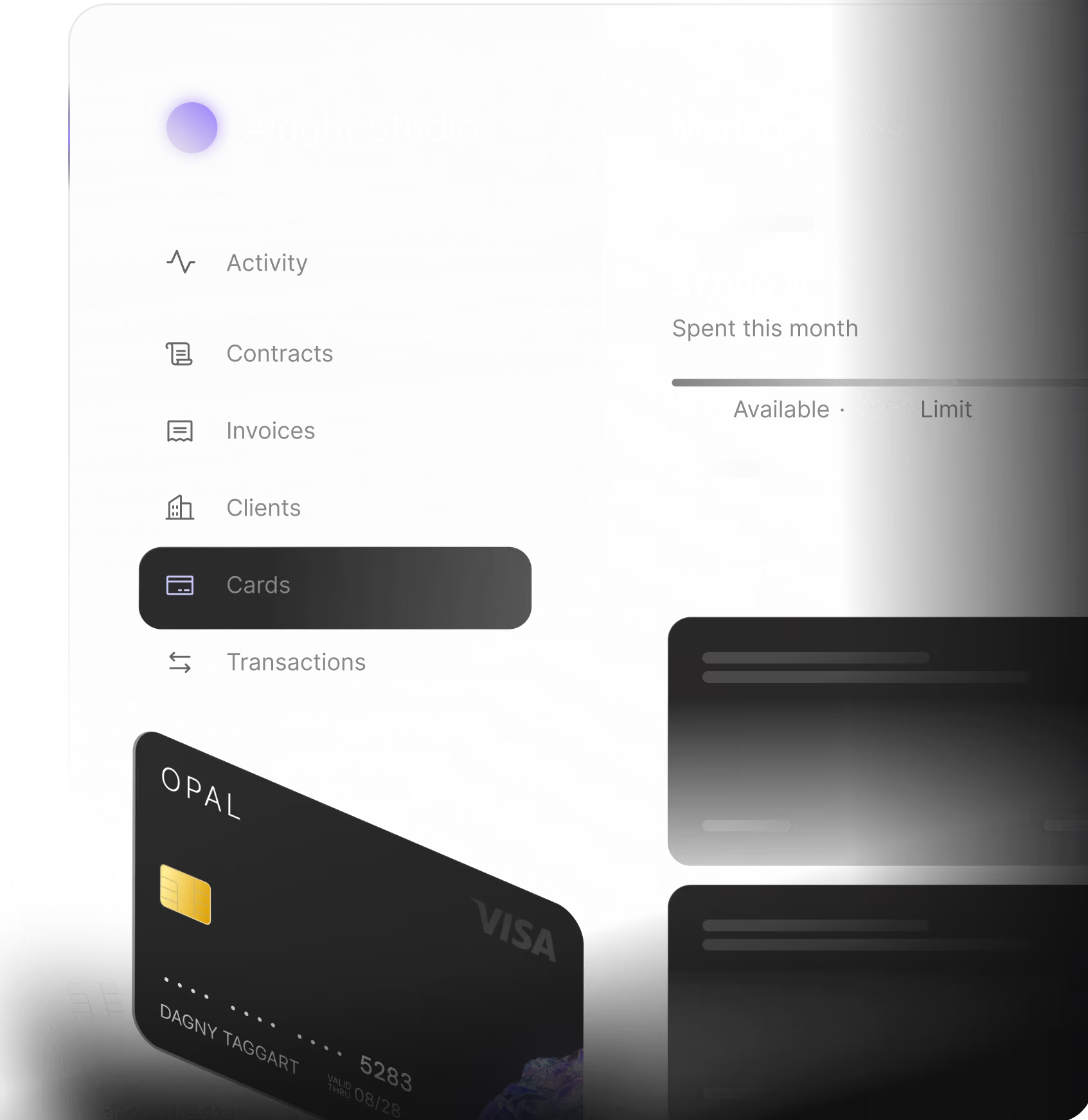
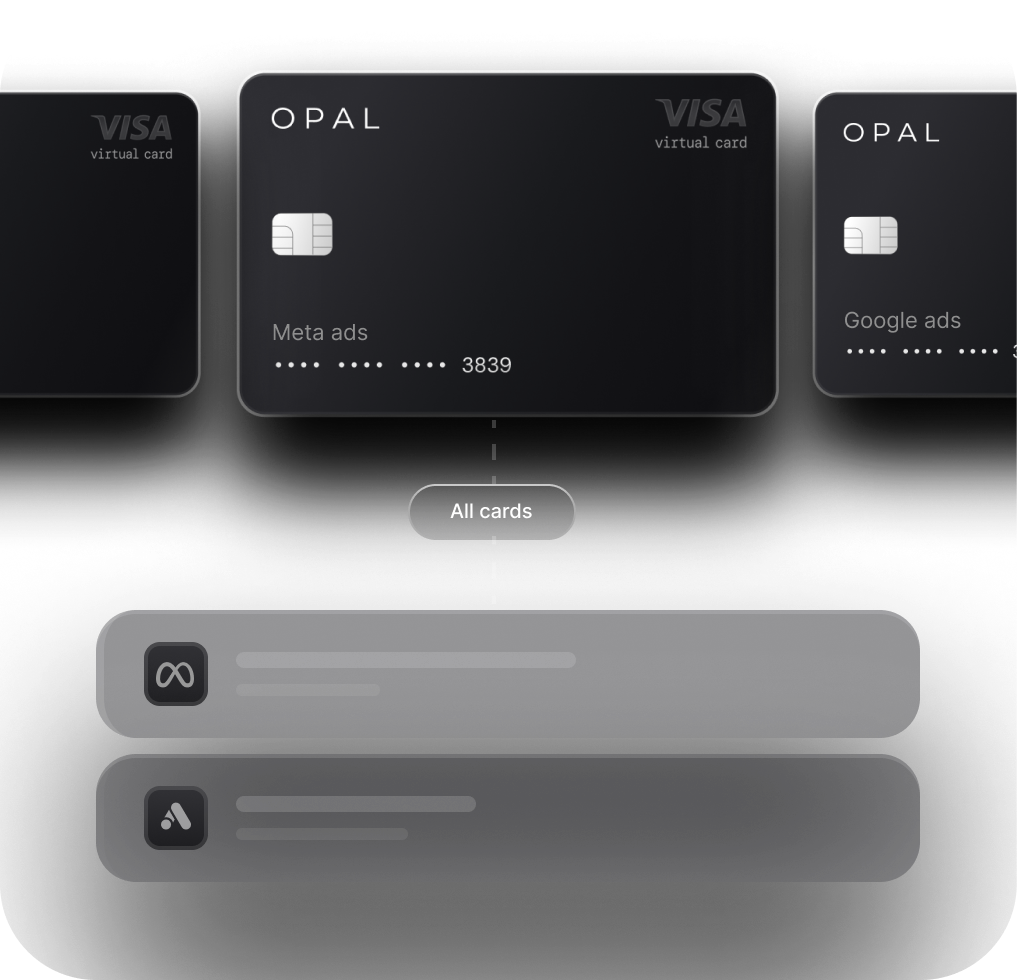
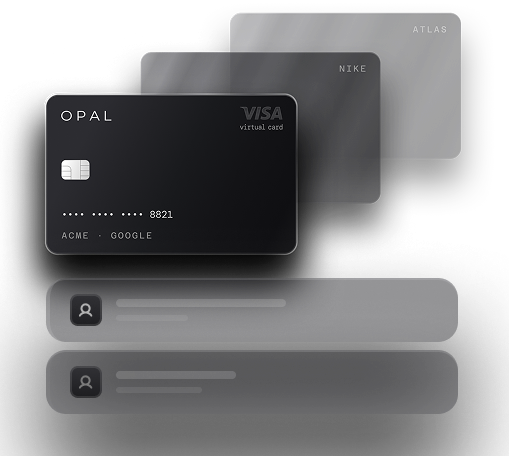
Opal is a charge card built for agencies, media buyers, and brands that run paid media. It includes unlimited free virtual cards, so each client or ad platform can have a dedicated card with its own spending limit.
Credit limits go up to $10 million and are sized on managed ad spend and cash flow, with no personal guarantee and no annual fee. See how Opal works for agencies.



Frequently asked questions
P-card stands for purchasing card. It is also called a procurement card or a purchase card. All three names describe a company-issued card that employees use to make approved business purchases directly.
A p-card runs on the same card networks as a credit card, but it usually works as a charge card: the company pays the balance in full each cycle and does not carry it forward with interest. The company, not the employee, is responsible for payment.
The company pays it. P-card charges are billed to the organization's central account, so employees do not pay out of pocket and do not file for reimbursement. Employees are still expected to keep receipts and follow the company's purchasing policy.
See what Opal can do for you
Learn how our spend platform can increase the strategic impact of your finance team and future-proof your company