
Agency Charge Card Limits: How Capacity Works at $500K to $1M a Month


Agency charge card limits are the maximum balance a card provider lets a marketing agency carry on a pay-in-full card before the next payment clears, set in underwriting from the agency's advertising volume, cash flow, and payment record.
The reliable way to work with one at $500,000 to $1 million in monthly ad spend is to map your available capacity across a full statement cycle, then split it across client cards with a reserve held back for launches.
The question matters most to U.S. agencies, media buyers, and performance teams paying Google Ads, Meta (Facebook and Instagram), TikTok Ads, LinkedIn Ads, Amazon Ads, and The Trade Desk by card.
Each platform bills on its own schedule: Google's postpay setting charges at a payment threshold and on the first day of each month, and Google offers monthly invoicing on a line of credit to eligible large advertisers.
A limit sized on an agency's own fee revenue rarely covers client media at this volume, so the limit's structure and timing decide whether campaigns keep delivering.
In this article, you'll learn how charge card limits are structured, what underwriters weigh, and how payment cycles move usable capacity through the month. You'll also see how to split one limit across clients, what pushes agencies past their ceiling, and what to ask a provider first.
Key Takeaways
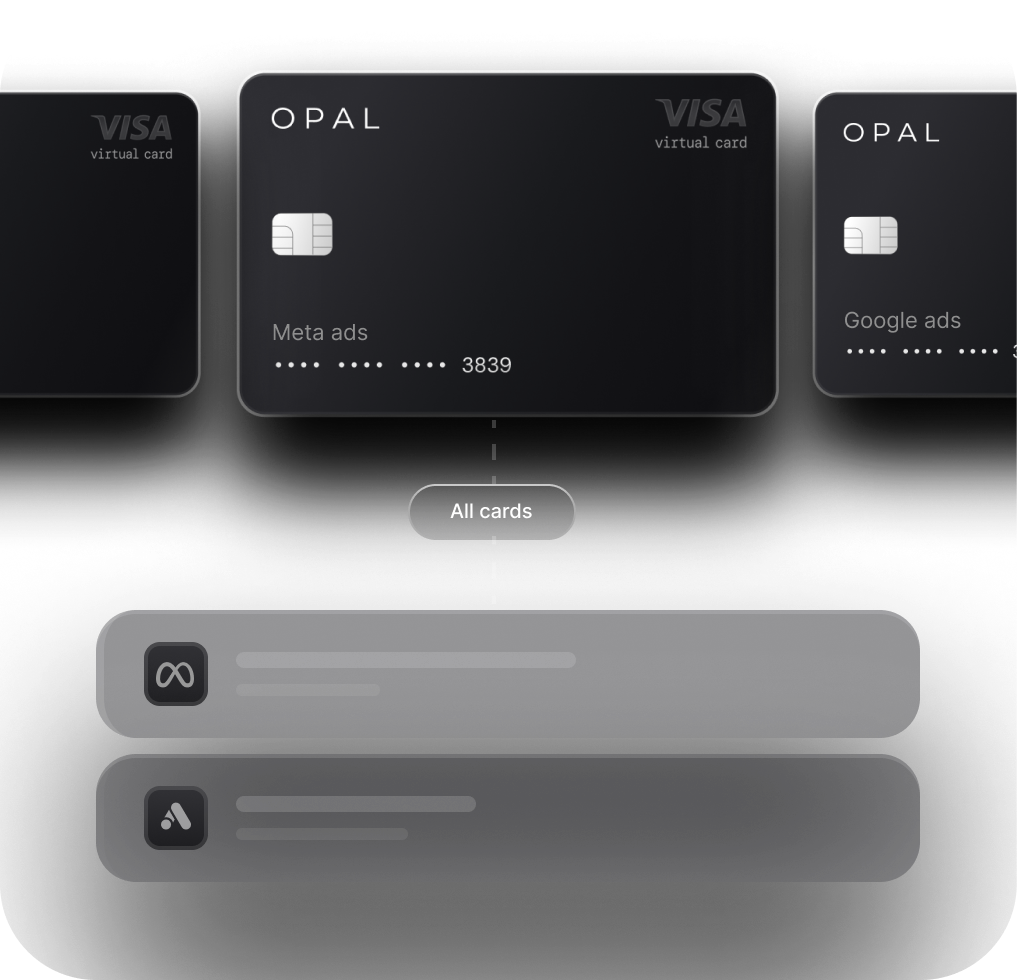
An agency charge card limit is a ceiling on the whole account, and each virtual card's limit is a share of it, so a client card can decline while the account still has room.
On a pay-in-full charge card, available capacity hits its low point in the days between statement close and the payment clearing, not at the end of the month.
In an example where payment clears 6 days after close, $1 million in monthly spend reaches $1.2 million outstanding before the balance resets.
Limits at this level rest on advertising volume and cash flow, because the full statement balance has to be collected on every due date.
Google Ads charges accounts on its postpay setting at the payment threshold and on the first day of the month, so posted charges, not campaign budgets, drive the card balance.
A failed payment on a pay-in-full account can lock every client card at once, which makes the due date the most important entry in your billing calendar.
How Do Agency Charge Card Limits Work?
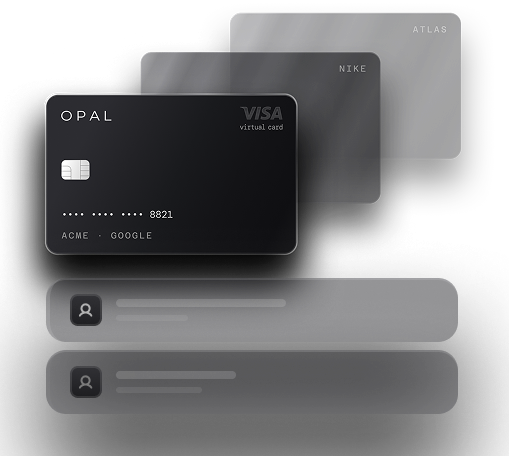
An agency charge card limit caps the total balance outstanding across every card on the account, and it resets as each full payment clears. Inside that ceiling, each virtual card carries its own limit, which is how one approval covers many clients.
Read the Account Limit and Card Limits Separately
The account limit is the number the provider approves, and card limits are the shares you assign to each client, platform, or campaign. Our glossary entry on how card limits work covers the per-card options. A charge clears only when the card has room under its own limit and the account has room under the total, which is why a client card can decline while the account still shows unused capacity.
Paying in Full Resets Capacity Each Cycle
A charge card carries no revolving balance, so the whole statement is due on each due date and capacity comes back in one step once that payment clears. Our charge card comparison covers interest, utilization, and the other differences from revolving cards. The trade-off is timing: until payment clears, the closed statement still counts against the limit while new spend posts on top of it.
What Decides How High an Agency's Limit Can Go?
At $500,000 to $1 million a month, the core agency credit limit requirements are the advertising volume the card will carry, cash flow that can settle a statement of that size on every due date, and a clean record of past cycles. Revenue and assets still count with some providers, but rarely explain a seven-figure limit alone.
Show the Ad Volume the Card Will Carry
Underwriters for high-limit business cards for advertising start with the spend the card has to support. An agency moving $750,000 a month through Google, Meta, and TikTok needs capacity near that figure, whatever its own fee income looks like. Our seven-figure limit guide covers the application itself, including records and the personal guarantee question.
Credit Limits Based on Cash Flow
Because a charge card is paid in full, the provider needs confidence that a $1 million statement can be collected on its due date. That puts weight on your operating account: how much arrives each month, when client payments land, and what the balance looks like on the due date.
Build a Record of Settled Cycles
Every statement paid in full and on time adds to the record a provider reads at its next review. When a new client will add a large budget, share the expected monthly figure before the first charges post, so the jump reads as planned growth.
How Do Payment Cycles Change the Capacity You Can Use Each Day?
Usable capacity shrinks through each statement period, bottoms out just before payment clears, and jumps back once the full balance settles. Platform billing schedules then decide when spend posts against that capacity.
Track Available Capacity, Not the Limit
Say your agency spends $1 million a month on an account with a $1.5 million limit, charges post evenly, the statement closes on day 30, and payment clears 6 days later. This table shows what stays available:
Point in the Cycle |
Outstanding Balance |
Available Capacity |
|---|---|---|
Day 15 |
$500,000 |
$1,000,000 |
Day 30, statement closes |
$1,000,000 |
$500,000 |
Day 36, before payment clears |
$1,200,000 |
$300,000 |
Day 36, after payment clears |
$200,000 |
$1,300,000 |
The tightest moment comes 6 days after close, with $1.2 million outstanding. At $500,000 a month on the same dates, the balance tops out at $600,000. Our guide to Google Ads high limits shows how to turn that peak into a limit request.
Know When Each Platform Posts Its Charges
Spend reaches your card when a platform bills it, not when the ads run. Under Google's postpay setting, Google charges when costs reach your payment threshold and on the first day of the month, can charge several times a month, and can raise the threshold automatically when costs reach it early.
Our explainer on Meta billing thresholds walks through Meta's pattern.
Two effects follow. Costs billed on the first of the month can land in your next statement, depending on your close date, and a raised threshold means fewer, larger charges, so each client card needs room for its largest single charge.
Remove Invoiced Spend From the Card Math
Google's monthly invoicing works as a credit line that Google extends for advertising costs, generally for businesses registered at least 1 year that spent at least $5,000 in any 3 of the last 12 months.
Invoices are repaid by check, bank transfer, or another payment method available in your location. Invoiced accounts stop drawing on your card limit, but your cash still has to cover each invoice.
How Should You Divide One Limit Across a $500K to $1M Client Book?
Divide it by each client's peak balance rather than its monthly budget, and keep part of the account limit unassigned. That way one client's busy week can't starve the cards running everyone else.
Size Each Client Card From Its Own Peak
Take each client's monthly spend, add the spend that builds before payment clears, and set the card limit roughly 10% to 20% above that peak. Here's how that plays out for an example book of $750,000 a month on a $1.2 million account limit, using the same 6-day gap:
Client |
Monthly Spend |
Peak Before Payment Clears |
Card Limit |
|---|---|---|---|
Client A |
$300,000 |
$360,000 |
$400,000 |
Client B |
$200,000 |
$240,000 |
$270,000 |
Clients C to F (4 cards) |
$50,000 each |
$60,000 each |
$70,000 each |
Testing and launches |
$50,000 |
$60,000 |
$70,000 |
Total |
$750,000 |
$900,000 |
$1,020,000 |
The card limits add up to $1,020,000, which leaves a $180,000 reserve unassigned. Client A's card alone takes a third of the account limit.
Hold a Reserve for Launches and Spikes
The reserve lets you raise a card mid-month without asking the provider for anything. Lift Client A's card when a promotion raises its budget, then lower it afterward so the reserve is ready again. When the reserve falls below 1 week of your largest client's spend, ask for a limit review.
What Can Push a High-Spending Agency Past Its Limit?
Three events can push spend past a limit that looked comfortable: a large client starting mid-cycle, seasonal budgets stacking up, and a failed payment. Each is easier to absorb when you've modeled it in advance.
A Large Client Joins Mid-Cycle
Say the agency in the example above signs a client spending $200,000 a month and launches on day 15. That client adds about $140,000 before the next payment clears, covering 15 days to statement close plus 6 days to clearing. The reserve absorbs it but leaves only $40,000 for the rest of the month.
Seasonal Budgets Stack on Normal Spend
If Clients A and B each add 50% for a holiday push, the book's peak balance grows by $300,000, well beyond the reserve. Ask for a limit review several weeks before the season starts, with each client's planned budget in writing.
A Failed Payment Stops Every Card at Once
On a pay-in-full account, the full statement comes due in one payment, and a payment that can't be processed can leave the card locked until it's repaid.
With every client card on the same account, the issuer then declines charges across all of them, and each ad platform pauses delivery once its charge fails. Confirm the funds are in place 2 business days before each due date.
What Should You Ask a Provider Before Relying on a High Limit?
Ask how the limit is structured, when capacity returns after each payment, and what happens if a payment fails. The answers turn a headline limit into a number you can plan around.
Ask These Six Questions in Writing
Put these questions to any provider before you move a client book onto its card:
Question to Ask |
Why It Matters at $500K to $1M a Month |
Where to Check the Answer |
|---|---|---|
Is the limit set for the whole account, with separate limits per card? |
Client cards need their own ceilings inside one approval |
A demo of the card settings screen |
When does the statement close, and when is payment collected? |
These dates set your lowest capacity point |
The cardholder agreement |
Does capacity return when payment starts or when it settles? |
Each day of settlement adds a day of spend to your peak |
A written answer from the provider |
How are limit increases reviewed? |
Seasonal budgets need room before they launch |
The provider's credit terms |
Which ad platforms can the card pay? |
Spend outside supported platforms needs another card |
The provider's supported platform list |
What happens if the full balance can't be collected? |
One failed payment can stop every client card |
The cardholder agreement |
Test the Answers Against Your Own Numbers
Plug the provider's close and payment dates into the capacity table above, using daily spend from your recent platform billing. Then set each client card from its peak, and if less than 15% of the limit stays unassigned, the advertising credit limits on offer are likely too tight for a book that's still growing.
Run High-Volume Client Media on an Opal Card
We built the Opal Card as a high-limit charge card for agencies paying client media across ad platforms. Here's what every account covers and where it fits.
See What Every Opal Account Includes
We provide the card, with credit limits of up to $10 million, subject to underwriting and based on your monthly advertising spend and cash flow, so not every applicant receives the maximum.
You get unlimited virtual cards for free, and each one carries its own spending limit and merchant restrictions, plus approvals and employee permissions.
You earn up to 1.5% cashback on eligible ad spend. There's a $0 annual fee, no personal guarantee, no hard credit check, and no bank switch required, and transactions sync to QuickBooks. We may periodically review your account's performance and offer a credit increase you can choose to accept.
Check the Fit Before You Apply
You configure the cards, limits, and permissions. The Opal Card is a pay-in-full charge card, with the full statement balance collected automatically on each monthly due date, and a payment that can't be processed may lock the card until it's repaid.
It's for U.S.-based businesses and works on supported advertising and media platforms, including Google Ads, Meta, TikTok, Snapchat, LinkedIn, Amazon Ads, The Trade Desk, and Apple, so keep a general business card for other expenses.
For invoiced Meta and Google accounts, Ad Pay is a separate product, currently on a waitlist, that pays those invoices for a 3% fee on Opal credit or 3.5% on another card, processes in 3 to 5 business days, and can extend your cash-flow window by up to 55 days where applicable.
Applying takes 2 to 3 minutes, and virtual cards are typically issued within 24 to 48 hours. See how Opal for agencies works, then apply from our site or book a demo.
Frequently Asked Questions (FAQs)
Do Business Charge Cards Have a Spending Limit?
Business charge cards do have spending limits, although the form varies. Some state a fixed limit, while others let capacity move with how the account pays and performs, and neither type is unlimited. The Opal Card states its ceiling: credit limits of up to $10 million, subject to underwriting and based on monthly advertising spend and cash flow.
How High a Limit Does an Agency Spending $1 Million a Month Need?
An agency spending $1 million a month needs a limit that covers a full statement, the spend posting before payment clears, and a reserve. If payment clears 6 days after close, the balance peaks near $1.2 million. Holding 15% to 20% of the limit unassigned for launches puts a workable limit at about $1.4 million to $1.5 million.
Why Did My Ad Card Decline When Monthly Spend Is Under the Limit?
An ad card can decline under its limit because the outstanding balance often exceeds one month of spend. Between statement close and payment clearing, the closed statement and new charges both count against the limit. A client card can also hit its own limit while the account has room, or a failed due-date payment can lock the card.
Are Agency Credit Limits Based on Cash Flow or Revenue?
For pay-in-full cards built around advertising, cash flow is central, because the full statement has to be collected on every due date. Revenue still shows the business is sound, but an agency's fee revenue is small next to the client media it pays. We base Opal limits on monthly advertising spend and cash flow, subject to underwriting.
Does a Higher Charge Card Limit Require a Hard Credit Check?
Whether a higher charge card limit needs a hard credit check depends on the provider, and some run a new inquiry for each increase request. Opal's application involves no hard credit check, and increases come through periodic reviews of your account's performance, which can end in an offer you choose whether to accept.
What Happens to Card Capacity If an Account Switches to Google Monthly Invoicing?
When a Google Ads account switches to monthly invoicing, its costs stop posting to your card and free up that share of your limit. Google extends a line of credit instead, repaid by check, bank transfer, or another available method. Your cash still has to cover each invoice, so plan its due date alongside your card's.
Ad Spend Management: The Complete Guide for Agencies and Brands (2026)

Charge Card vs. Credit Card for High Ad Spend: What Actually Matters
5 Best Virtual Business Cards for Ad Spend in 2026