
Card-Not-Present Transaction
A card-not-present transaction is a card payment made without the physical card being read by a payment terminal. Online purchases, phone orders, subscriptions, and payments with stored card details all count. Because the merchant cannot check the card or the cardholder in person, these payments carry more fraud risk than in-store payments and are handled under different rules.
Last updated: November 2026
Card-not-present vs. card-present
- How the card is read: card-present payments use the chip, a tap, or a swipe. Card-not-present payments use details that are typed in or already stored.
- Fraud risk: higher when the card is not present, because a stolen card number is enough to attempt a purchase.
- Cost: merchants usually pay higher processing fees on card-not-present payments.
- Fraud losses: on card-not-present fraud the merchant usually bears the loss, unless the payment was authenticated in a way that shifts it to the card issuer.
Examples of card-not-present transactions
Buying from an online store. Giving a card number over the phone. A software subscription that renews each month. A ride-hailing app charging a saved card. An ad platform charging the card on an advertiser's account.
How are card-not-present transactions secured?
- Security code: the three or four digit code that shows the buyer has the card details in full.
- Address verification: a check of the billing address against the issuer's records.
- 3-D Secure: an extra step where the issuer confirms the cardholder, often with a one-time code or an app approval.
- Tokenization: replacing the stored card number with a token.
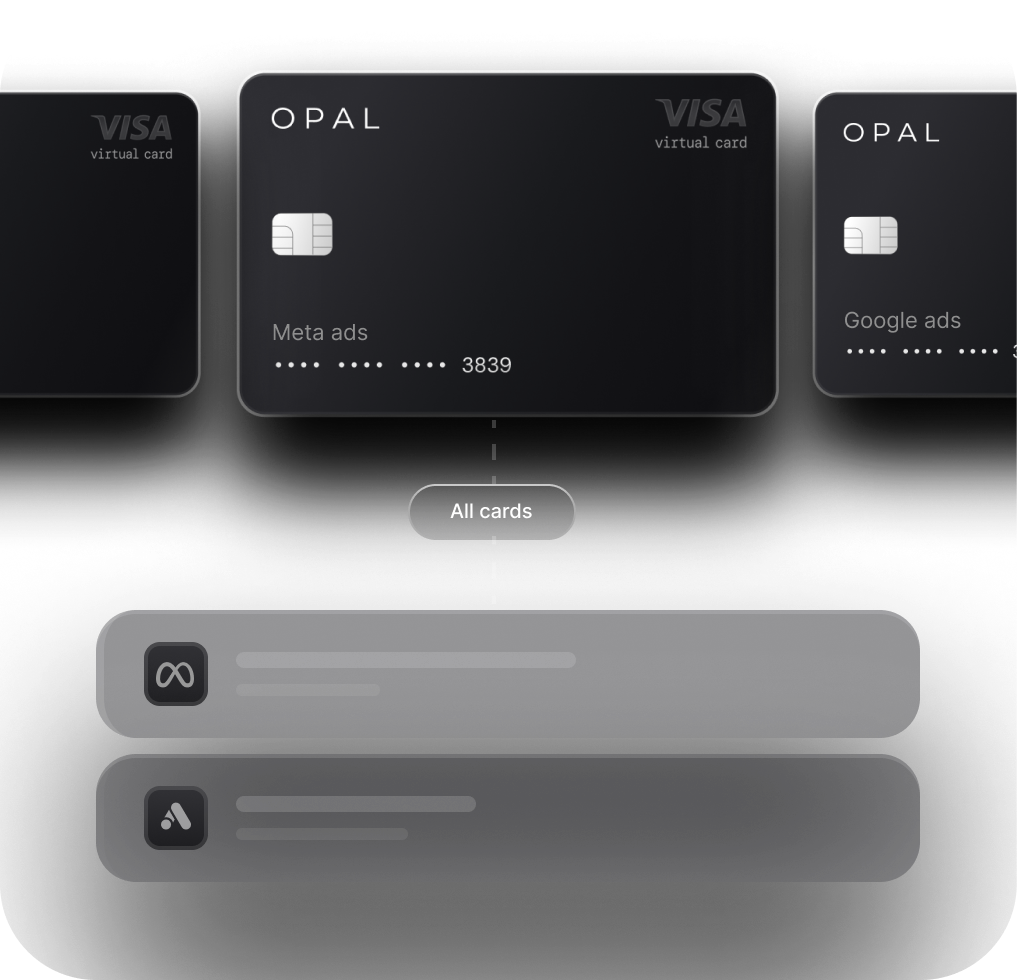
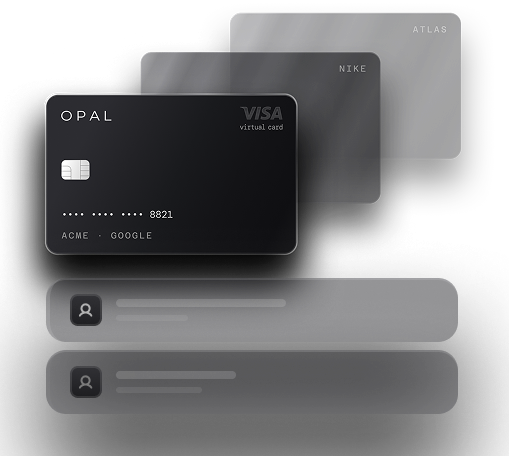
- Virtual cards: a separate card number for one merchant or one purpose, with its own limit.
Card-not-present chargebacks
When a cardholder says they did not make a card-not-present purchase, the issuer can reverse it through a chargeback. The merchant can contest it with evidence, but without proof that the real cardholder took part it usually loses the sale and pays a fee.
Why every ad payment is card-not-present
Ad platforms charge a stored card with nobody at a terminal, so every charge is a card-not-present transaction. Issuers watch these closely, and a large or unusual charge can be declined by a fraud check even when the card has room. Declined ad payments are a common result on cards that were not set up with ad spend in mind.
How Opal helps
Opal is a charge card built for ad spend, with credit limits sized on managed ad spend and cash flow. Unlimited free virtual cards give each ad platform or client a dedicated card number and spending limit, which contains the damage if one set of details is exposed. See how Opal works for agencies.



Frequently asked questions
Yes. Any payment where the card is not physically read by a terminal is card-not-present. That covers purchases on websites and in apps, phone and mail orders, and payments charged to a card saved with a merchant.
In most cases the merchant. If a cardholder disputes a card-not-present purchase as fraud, the merchant generally absorbs the loss. Using cardholder authentication such as 3-D Secure can shift that liability to the card issuer.
It depends where it happens. Tapping a phone on a terminal in a store is treated as card-present. Paying with the same wallet inside an app or on a website is card-not-present, although the wallet adds its own authentication.
See what Opal can do for you
Learn how our spend platform can increase the strategic impact of your finance team and future-proof your company