
Prepaid Card
A prepaid card is a payment card loaded with money in advance. Purchases are deducted from the loaded balance, and the card stops working when the balance runs out unless more money is added. It is not tied to a credit line or directly to a bank account, so there is no borrowing, no interest, and usually no credit check to get one.
Last updated: November 2026
How does a prepaid card work?
Money is loaded onto the card by bank transfer, cash, or another card. Each purchase reduces the balance. When the balance reaches zero the card is declined until it is reloaded, and some prepaid cards, such as gift cards, cannot be reloaded at all. Many prepaid cards run on the major card networks, so they are accepted in most places that take debit or credit cards.
Prepaid card vs. debit card vs. credit card
- Prepaid card: spends money loaded onto the card in advance. No bank account or credit line sits behind it.
- Debit card: spends money directly from a linked bank account.
- Credit card: spends borrowed money up to a credit limit, repaid later.
A charge card also extends credit, but the balance is paid in full each cycle.
Prepaid card vs. virtual card
The two terms describe different things. "Prepaid" describes how a card is funded. "Virtual" describes its form: a card number with no plastic. A virtual card can be prepaid, debit, or credit. A virtual credit card spends against a credit line, while a prepaid virtual card spends only what has been loaded.
Do ad platforms accept prepaid cards?
Acceptance varies by platform and by billing setup. Google, for example, does not accept prepaid cards for postpay, the Google Ads setting where an account is charged automatically after ads run.
Where a prepaid card is accepted, the balance becomes the weak point. Ad platforms charge whenever spend reaches a threshold, and an authorization hold can tie up part of the balance. If the next charge is larger than what is left, it is declined and campaigns can pause.
How Opal differs from a prepaid card
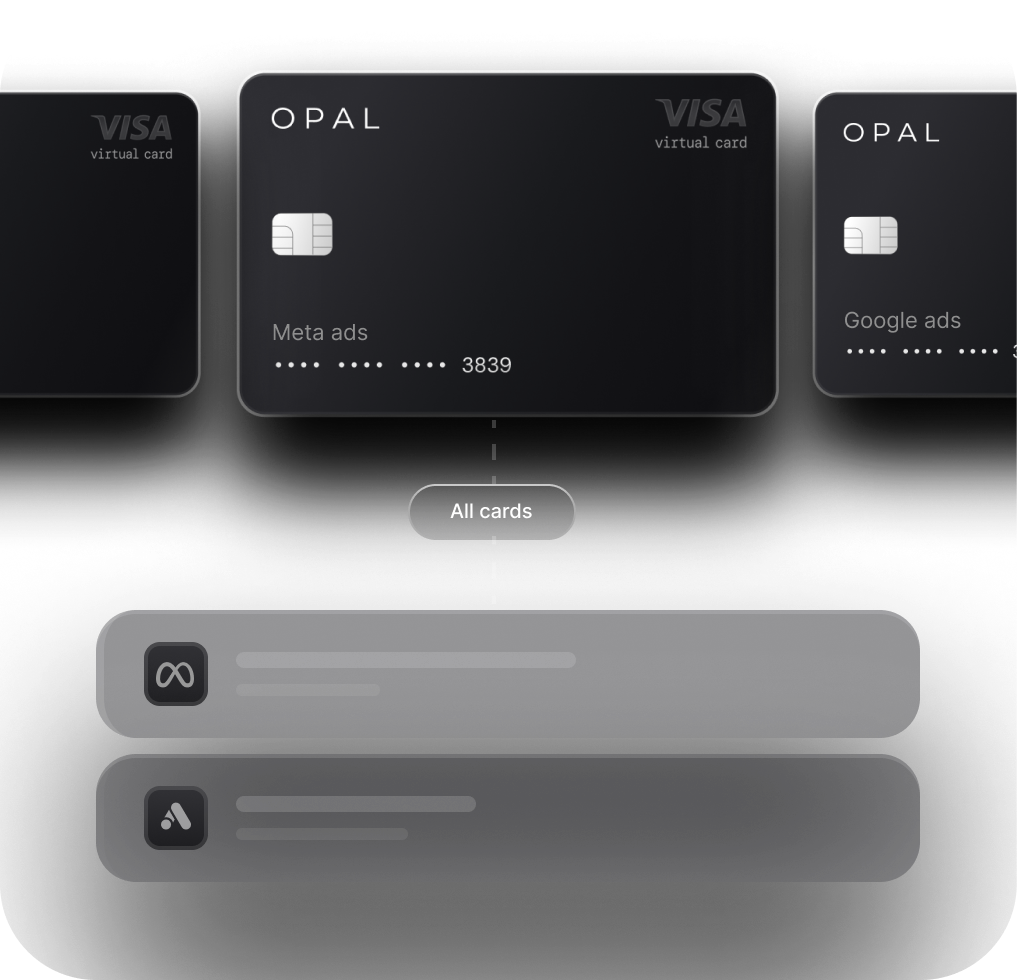
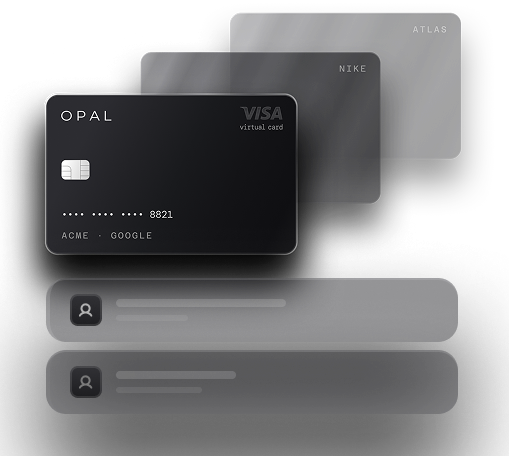
Opal is a charge card, not a prepaid card. Credit limits go up to $10 million and are sized on managed ad spend and cash flow, with no personal guarantee and no annual fee. Unlimited free virtual cards give each client or ad platform its own card and spending limit. See how Opal works for agencies.



Frequently asked questions
No. A credit card lets the holder borrow up to a limit and repay later. A prepaid card can only spend money that has already been loaded onto it, so there is no borrowing and no interest.
Generally not. Prepaid cards do not involve borrowing, so activity on them is not usually reported to credit bureaus. Building a credit history normally requires a credit product such as a credit card or a loan.
Yes. Businesses use prepaid cards to give employees a fixed budget for expenses. They suit small, predictable spending. They are a poor fit for large or frequent charges, because a card with too little balance is declined.
See what Opal can do for you
Learn how our spend platform can increase the strategic impact of your finance team and future-proof your company