
Virtual Debit Card
A virtual debit card is a debit card that exists only as digital card details: a card number, an expiry date, and a security code, with no plastic. It is linked to a bank account or a stored balance, and each purchase draws on that money straight away. It can be used for online payments and, when added to a mobile wallet, for contactless payments in stores.
Last updated: November 2026
How does a virtual debit card work?
A bank or card provider issues the card details inside its app, often within seconds. The holder pays online by entering those details, or adds the card to a mobile wallet and taps to pay in a store. Each purchase is taken from the linked account or balance. Nothing is borrowed, so a purchase larger than the money available is declined. Many providers let a customer hold several virtual debit cards and freeze or delete any of them.
Virtual debit card vs. virtual credit card
- Funding: a virtual debit card spends the holder's own money. A virtual credit card spends against a credit line.
- Repayment: there is nothing to repay on a debit card. A credit card produces a statement that is paid later.
- Cash flow: debit purchases leave the account at once. Credit purchases leave it on the due date.
- Ceiling: a debit card is capped by the account balance and any daily limit. A credit card is capped by its credit limit.
Virtual debit card vs. prepaid card
A virtual debit card usually draws on a bank account. A prepaid card spends a balance that was loaded onto the card in advance. The two overlap, because some virtual debit cards are issued against a stored balance, not a full bank account.
Can a virtual debit card be used for ads?
Often, yes. Google Ads, for example, accepts debit cards that carry a card network logo. The drawback shows up as spend grows. Every platform charge takes cash out of the account immediately, and a daily limit on the card can block a charge triggered by a billing threshold, which can pause campaigns.
How Opal differs
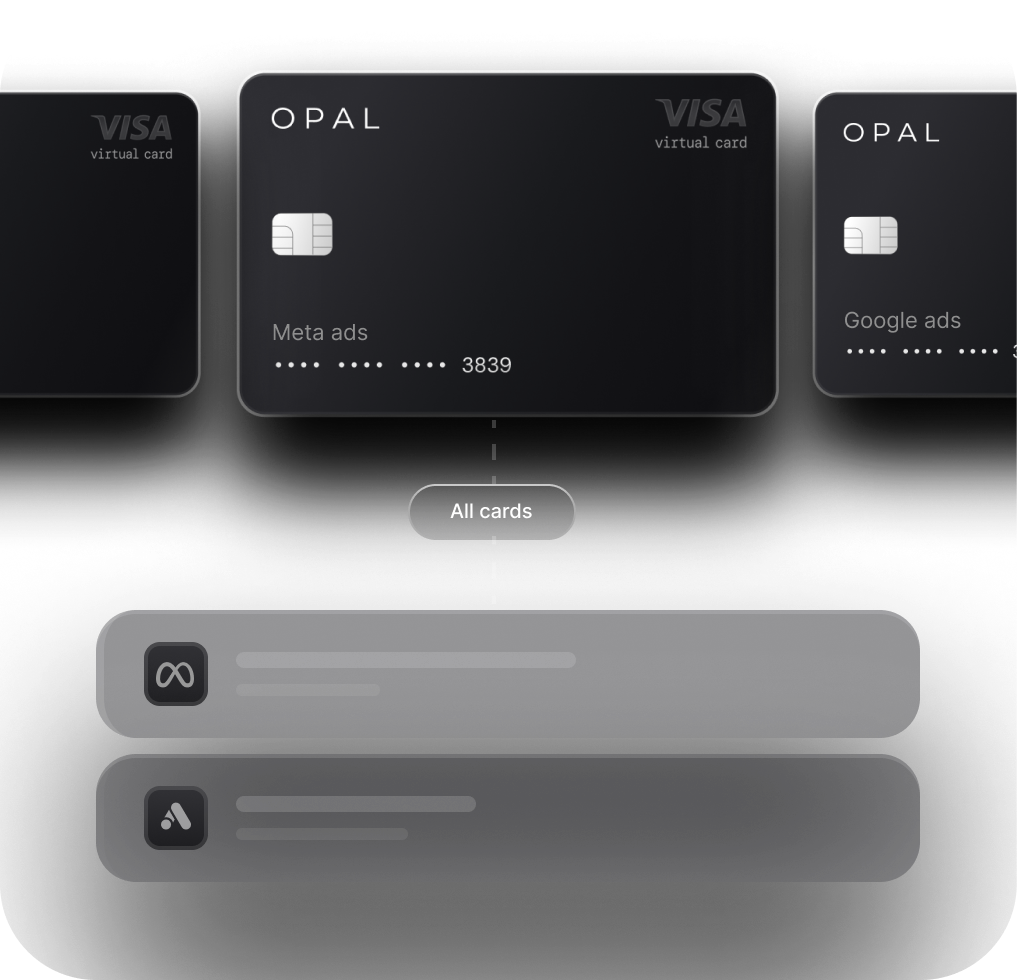
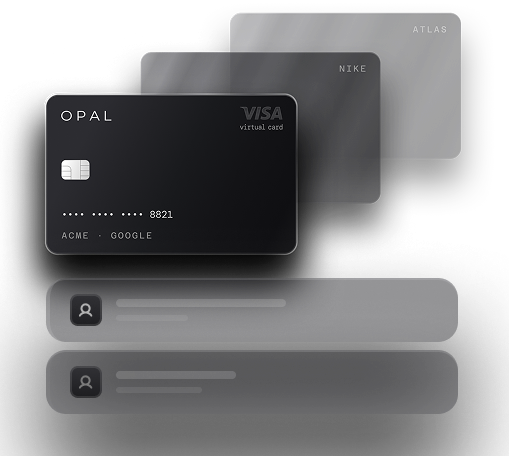
Opal is a charge card, not a debit card. Credit limits go up to $10 million and are sized on managed ad spend and cash flow, and the statement balance is paid on the due date, so ad charges do not leave the bank account one by one. Unlimited free virtual cards give each client or ad platform its own card and spending limit. See how Opal works for agencies.



Frequently asked questions
It is generally safer for online payments than sharing a physical card's details, because a virtual card can be frozen or replaced without touching the main card or account. The usual precautions still apply, since a virtual debit card draws on real funds.
Yes, if the card can be added to a mobile wallet and the store accepts contactless payments. Without a wallet, a virtual debit card works only where card details can be typed in, such as online or over the phone.
Generally not. A debit card does not involve borrowing, so its activity is not usually reported to credit bureaus. Building a credit history normally requires a credit product.
See what Opal can do for you
Learn how our spend platform can increase the strategic impact of your finance team and future-proof your company