
Ghost Card
A ghost card is a card number issued to a department or assigned to a single supplier, with no physical card attached. Several employees can use the same number to make approved purchases, and all charges are billed to that department or supplier account. Companies use ghost cards to simplify frequent buying from the same vendors without issuing a separate card to every employee.
Last updated: November 2026
How does a ghost card work?
A company asks its card provider for a card number that belongs to a department, such as marketing, or to one supplier, such as a travel agency or an office supplies vendor. No plastic card is produced. The number is kept on file with the supplier or shared with the employees allowed to use it, and every purchase made with it is billed to the same account.
Ghost card vs. virtual card
- Assignment: a ghost card belongs to a department or supplier and is shared. A virtual card can be issued to one person, one vendor, or one purchase.
- Lifespan: a ghost card usually stays open for a long time. A virtual card can be long-lived or expire after a single use.
- Traceability: with a shared ghost card it can be hard to see who made a purchase. A dedicated virtual card ties each charge to one user or one purpose.
In practice the terms overlap, because most ghost cards today are issued as virtual card numbers. See virtual credit card and single-use virtual card.
Ghost card vs. p-card
A p-card is normally issued to a named employee, who is responsible for the purchases made on it. A ghost card has no named cardholder. It is a shared number, which is why it suits a single supplier relationship better than general purchasing.
Risks of ghost cards
- Shared credentials: more people know the number, so there are more ways for it to leak.
- One point of failure: if the number is compromised or declined, every purchase that depends on it stops.
- Weak attribution: charges show the department or supplier, not the person or project behind them.
Ghost cards and ad spend
An agency that pays for every client's ad accounts with one shared card number is, in effect, running a ghost card. It works until that card is declined or replaced, at which point billing fails on every account at once, and month-end means splitting one statement across all clients. Card controls on dedicated cards avoid both problems.
How Opal handles it
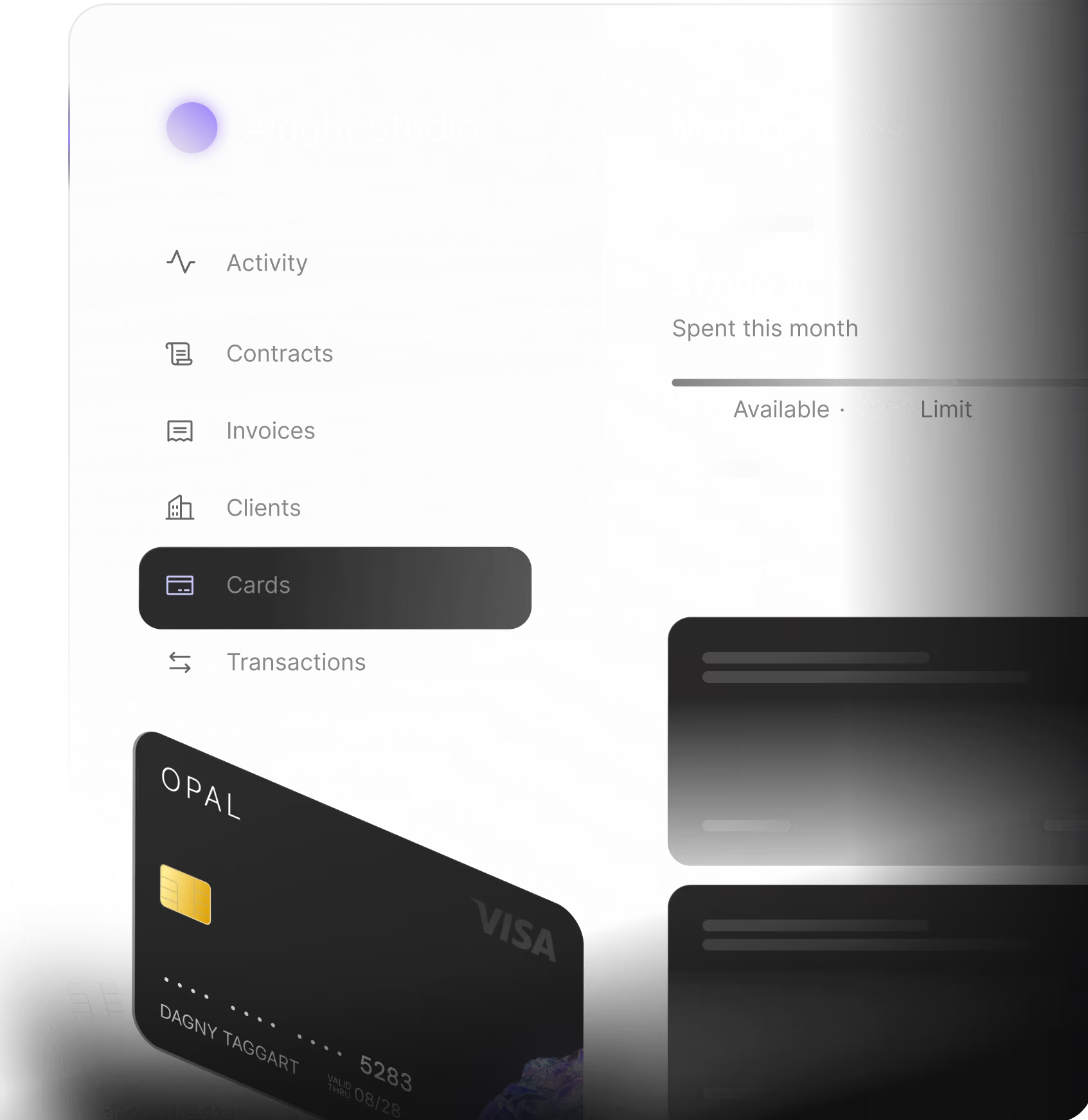
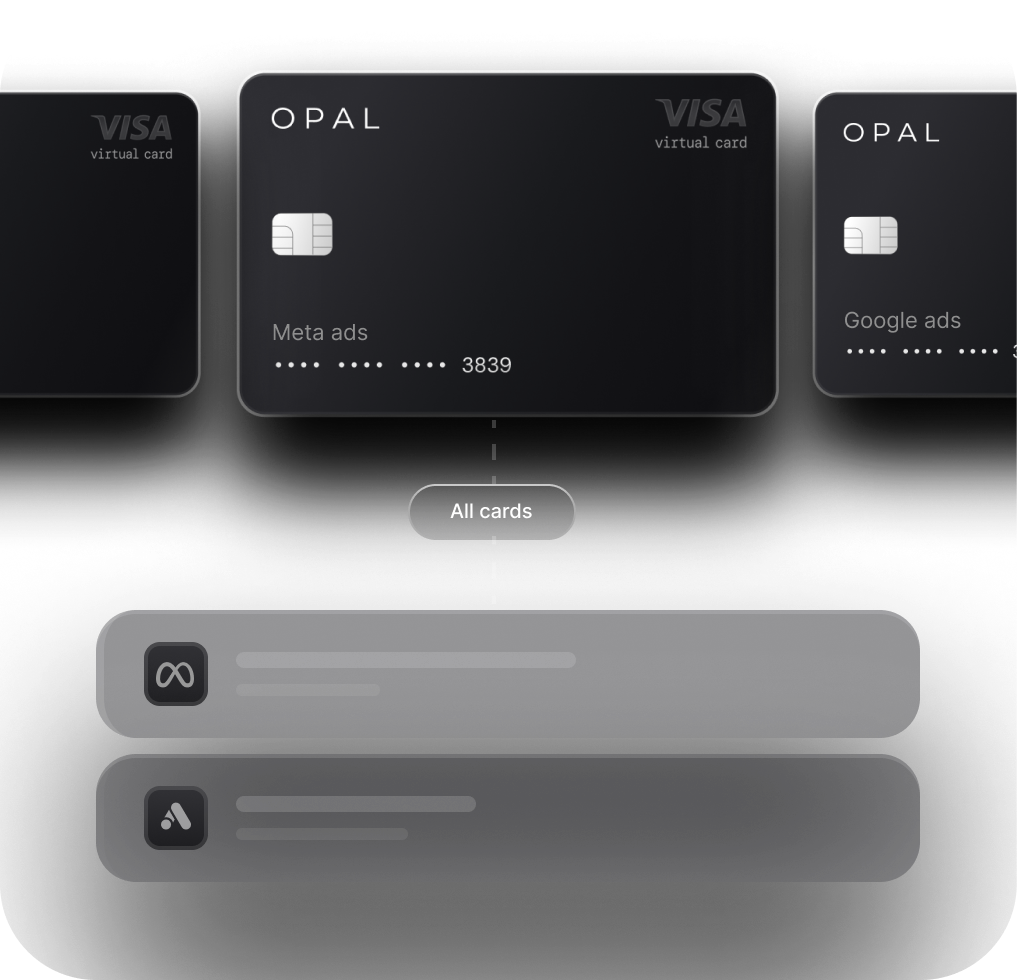
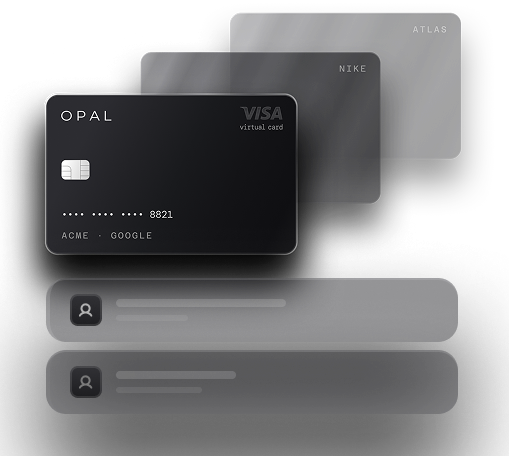
Opal is a charge card built for agencies, media buyers, and brands that run paid media. It includes unlimited free virtual cards, so each client or ad platform gets its own card number and spending limit instead of sharing one. See how Opal works for agencies.



Frequently asked questions
Because there is no physical card. The account exists only as a card number held by a department or kept on file with a supplier, so purchases are made with a card that nobody carries.
They overlap but are not identical. A ghost card is a shared number tied to a department or a supplier. A virtual card is any card number issued without plastic, and it can be dedicated to one user, one vendor, or a single purchase.
They can be, when limits and merchant restrictions are set on the number. The main risk is sharing: the more people and systems that hold the number, the greater the chance of misuse, and the harder it is to trace a charge to one person.
See what Opal can do for you
Learn how our spend platform can increase the strategic impact of your finance team and future-proof your company